




1. What is PC?
PC is physical contact. It is the most common grinding method of optical fiber connector on optical fiber jumper, which is widely used in the equipment of telecom operators. Although the end face of the optical fiber connector looks flat, it is actually slightly bent and polished, and the highest point of bending is the center of the fiber core, which can effectively reduce the air gap between optical fiber components. In general, the return loss of fiber jumper with PC grinding mode is - 40dB.
2. What is UPC?
UPC, or superphysical contact. It is evolved from PC, which optimizes the end face polishing, so as to obtain better surface finish. Like PC, the highest bending point of UPC is in the center of fiber core, but the return loss of UPC is higher than that of PC, which is generally - 50dB (or even higher). It is usually used in Ethernet network equipment (such as ODF fiber distribution frame, media converter and optical switch), and also used in telephone system.
3. What is APC?
APC (angle physical contact) is called inclined plane physical contact. The end face of optical fiber is usually ground into 8 ° inclined plane. The 8 ° angle ramp makes the fiber end face tighter and reflects light through its ramp angle to the cladding rather than directly back to the light source, providing better connectivity. Its industrial standard return loss is - 60dB, and APC can only be connected with APC.APC is generally used in optical RF applications with high wavelength range such as CATV.

How to distinguish UPC from APC?
1. Different end faces. UPC connector is polished without angle, but APC connector end face has 8 degree angle.
2. Light reflection mode. The UPC connector will directly reflect any reflected light back to the light source in use, but the APC connector makes the reflected light reflect into the cladding at a certain angle instead of directly reflecting to the light source.
3. Return loss. APC connector provides - 65 dB return loss and UPC - 50 dB. If the return loss is low, the connector can achieve better matching performance.
4. Connector color. This is the most obvious difference that can be seen from the surface. UPC connectors are usually blue and APC connectors are usually green.
When choosing fiber optic jumper, it should be based on your actual application. The performance of UPC is better than that of APC. APC is most suitable for high bandwidth applications and long distance links. For example, FTTx, PON and WDM are more sensitive to return loss, so APC is a better solution to provide the lowest return loss. However, the use of APC machines will greatly increase the cost. If the requirement of return loss is not high, UPC is a better choice.
Introduction of several types of optical fiber interface
Optical fiber connector (also known as fiber skipping) refers to that both ends of the light are installed with connector plug to realize the active connection of optical path; the receiving and sending wavelengths of optical modules at both ends of optical fiber jumper must be consistent, that is to say, both ends of optical fiber must be optical modules with the same wavelength, and the simple way to distinguish them is to have the same color of optical modules. In general, the short wave module uses multi-mode fiber (orange fiber), and the long wave module uses single-mode fiber (yellow fiber) to ensure the accuracy of data transmission.
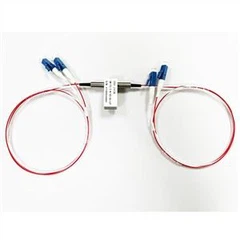
One end with a plug is called a pigtail. The function of the pigtail is mainly used to connect the joints at both ends of the optical fiber. One end of the pigtail is fused with the optical fiber connector, and the other end is connected with the optical fiber transceiver or optical fiber module through special connectors (FC, St, SC, LC, MTRJ), forming an optical data transmission path.
1. FC type optical fiber connector: the external reinforcement method is metal sleeve, and the fastening method is screw buckle. Generally used on ODF side (most used on distribution frame)
2. SC type optical fiber connector: it is used to connect GBIC optical module or common optical fiber transceiver. Its shell is rectangular, and the fastening method is plug-in pin latch type without rotation. (most used on router switches)
3. ST type optical fiber connector: commonly used in optical fiber distribution frame, the shell is round, and the fastening method is screw buckle. (for 10base-f connections, the connector is usually st type. Commonly used in fiber distribution frame)
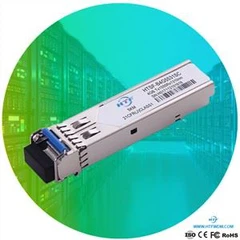
4. LC type optical fiber connector: the connector connecting to the SFP module, which is made of convenient operation modular jack (RJ) latch mechanism. (commonly used in routers)

Return loss and insertion loss
Return loss and insertion loss: different lapping methods determine the transmission quality of optical fiber, mainly reflected in return loss and insertion loss. Insertion loss refers to the signal loss generated through the connector or cable. In general, the typical insertion loss of PC, UPC and APC connectors should be less than 0.3dB. Compared with APC connector, UPC / PC connector is usually easier to achieve low insertion loss due to smaller air gap. Insertion loss may also be caused by dust particles between the end faces of the connector.
Return loss (return loss), also known as reflection loss, is a parameter representing the reflection performance of a signal. It is usually expressed as a negative dB value. The higher the value parameter, the better. The end face of APC connector is beveled polished, so the return loss of APC connector is usually better than that of UPC connector. In general, the return loss of optical fiber jumper with PC grinding mode is - 40dB. The return loss of UPC is higher than that of PC, which is generally - 55dB (or even higher). The return loss of APC industry standard is - 65dB. When UPC connector is used, some reflected light will be emitted back to the light source, while the inclined end face of APC connector will make a part of reflected light reflect to the cladding at a certain angle, thus reducing more reflected light returning to the light source. This is the main factor leading to different return loss.
Application scenario: PC is the most common grinding method of optical fiber connector on optical fiber jumper, which is widely used in the equipment of telecom operators. UPC is usually used in Ethernet network equipment (such as ODF fiber distribution frame, media converter and optical fiber switch), digital, cable TV and telephone systems. APC is generally used in high wavelength optical RF applications such as CATV, as well as optical passive applications, such as PON network structure or passive optical LAN.
Contact:support@htfuture.com
Skype:sales5_ 1909,WeChat:1663502502