




Driven by the high demand for broadband from private cloud, public cloud data center and service providers, the penetration rate of 25G and 100G is getting higher and higher, and the production and delivery of 200G/400G optical devices will start from 2019, which means network upgrading has become an inevitable trend of development. So far, most server vendors have started offering 25G fiber-optic Ethernet CARDS as the I/O (input/output) option for servers, and Ethernet signal speeds have increased from 10G earlier to 25G, 100G or more. While 1G, 10G, and 40G currently dominate the Ethernet port market, future demand for 25G and 100G will be stronger than ever, as high bandwidth is undeniably driving data centers toward greater scalability and flexibility.

25G Ethernet overview
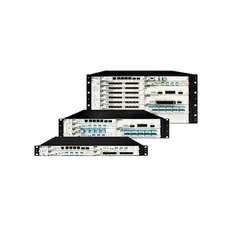
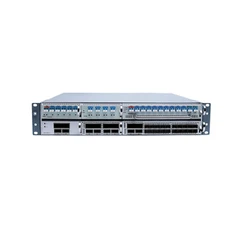
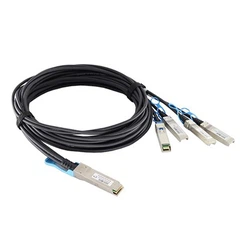
Since the introduction of 25G in 2014, some big companies have been pushing for the 25G Ethernet standard, which aims to implement a 25G rack top server network. So far, 25G series products such as 25G network switches, 25G SFP28 optical modules, 25G DAC and 25G AOC have been recognized by more and more users, and 25G servers are also being popularized in preparation for 100G network upgrade. Among them, 25G network switches are usually used as ToR switches or leaf switches in the network to connect servers and terminal devices.
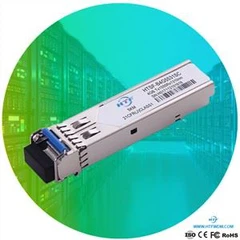
25G Ethernet is the equivalent of an upgraded version of 10G Ethernet, both using single-channel SerDes technology, but 25G Ethernet has a channel rate 2.5 times that of 10G Ethernet, which means 25G Ethernet, has a bandwidth 2.5 times that of 10G Ethernet and superior performance. Because the 25G SFP28 optical module has the same size and interface as the 10G SFP+ optical module, and the 25G switch and the 10G switch have the same port density, 25G Ethernet can increase the link bandwidth without adding the cable wiring, which helps to reduce the system power consumption and cost. As the popularity of 25G continues to rise and 25G spreads rapidly in the market, 25G will provide a comprehensive solution for the connection between server and switch in the future. The figure below shows the key milestones for 25G Ethernet from 2014 to 2018.
10G-25G-100G network upgrade path
Data centers are expanding at an unprecedented rate, driving the demand for higher bandwidth for connections between servers and switches. To meet this trend, access networks have been gradually upgraded from 10G to 25G, which also provides high-density, low-cost and low-power solutions for connections between servers and ToR switches. It can be seen from the above that 25G Ethernet adopts the same single-channel technology as 10G Ethernet, but the single-channel rate of 25G Ethernet is 2.5 times that of 10G Ethernet. Therefore, in the upgrade path of this network, only four 25 GB/s channels can be used in parallel to realize 100G, which will greatly save fiber resources. In very large data centers, 25G servers and 100G switches have become increasingly common and are gradually replacing the previous 10G servers and 40G switches. The 10G-25G-100G network upgrade path increases throughput by 2.5 times, but the actual cost is not high. With the continuous innovation of Ethernet technology, in order to pave the way for higher bandwidth network, such as 200G/400G, 25G-100G network upgrade path will provide an effective path for future data center network upgrade. The network upgrade path has the following three advantages:
(1) The realization of 100G by 4x25Gbit/s is more cost-effective than 10x10Gbit/s. With the popularization of 25G Ethernet and 100G Ethernet, the price of optical modules of 25G SFP28 and 100G QSFP28 will continue to decrease in the future.
(2) The power consumption of the network system deployed by 4x25Gbit/s is much lower than that of 10x10Gbit/s, which also indicates that 25G has more advantages due to its lower operating cost than 10G.
(3) For the fiber links in use, upgrading from 10G to 100G requires 10 fiber links, but 25G only requires 4 fiber links, which greatly saves fiber resources.
10G-40G-100G VS 10G-25G-100G
Before the release of the 25G Ethernet standard, 10G-40G was generally adopted as the network upgrade method for data centers such as enterprises and operators. With the official release of the 25G Ethernet standard, the 25G-100G network upgrade method gained more applications with advantages of low cost, low power consumption and high density, which promoted the rapid development of 100G Ethernet.
Through comparison, it can be found that 10G-25G-100G has obvious advantages over 10G-40G-100G network upgrade path, which are embodied in the following three aspects:
(1) A 10G-25G-100G network upgrade path can effectively save capital and operating expenses. Unlike the 40G, the 25G is a 10G upgrade and has the same design, reusable wiring infrastructure as the 10G, enabling seamless upgrades and effectively avoiding costly and complex wiring system changes.
(2) The 10G-25G-100G network upgrade path with lower power consumption. The single-channel 25G SerDes technology used for 25G-100G connections is similar to the single-channel 10G SerDes technology used for 10G-40G connections, but its performance is improved by 2.5 times, effectively reducing power and cost per gigabit, which means that the cooling requirements and operating expenses of the data center are effectively reduced.
(3) 10G-25G-100G network upgrade path with higher port density. Compared with the 10G-40G-100G network upgrade path, the 10G-25G-100G network upgrade path provides a lower unit bandwidth cost by taking full advantage of switch ports, so the cost of upgrading directly from 40G to 100G is higher than the cost of upgrading from 25G to 100G.
Recommended 100G network upgrade path selection
When planning network upgrades, focus on the size of the business and future network expansion.
For the leading giants, upgrading from 25G to 100G is the best way. Because 25G has obvious advantages, it can meet the growing demand for network. In addition, some large enterprises and large-scale data centers are willing to pay high cost for high-performance network systems in order to ensure network availability and meet the requirements of long-term development.
For some small and medium enterprises, it is not necessary to give up the current deployment of 40G and rush to pursue 100G. Because the devices (such as servers) in the current network do not necessarily support 25G, in this case, you need to replace the network devices and the optical modules, cables, etc. used for wiring, resulting in increased network costs. In short, choosing the 10G-25G-100G network upgrade path may mean paying an additional fee. If your current network meets your existing needs and your budget is limited, it is recommended that you keep your current 40G and upgrade your network from there. However, if you are planning to optimize your network architecture or deploy a new network, it is recommended that you choose 10G-25G-100G, given the future growth of your business and the trend of Ethernet.
The demand for higher rates and performance in future data centers will never stop. If you review the evolution of 25G over the past few years, you will see that 25G is a milestone in the expansion of bandwidth and channel capacity in the next generation of data center networks. The 25G-100G network upgrade has overturned the traditional 10G-40G network by providing higher bandwidth and port density, reduced power consumption and cost, improved data center efficiency, and laid a solid foundation for the 200G/400G upgrade. However, whichever path you choose for network upgrading depends on the actual situation.