


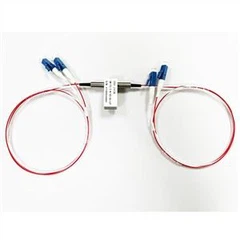
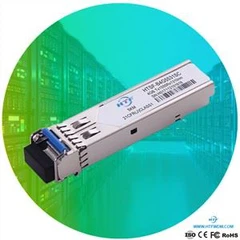


Why Choose Us?
Rich Experience: Our company is a professional supplier of fiber optic products and WDM systematic solution. Was built by a team who has more than 10-year experiences in optical communication product R&D, fiber solution, component developing and manufacturing.
Customer Service: The HTF team gathered a group of top professionals in the industry, and established a complete management system throughout the R & D-production-sales-service, which aim to provide professional, fast, customized product design and services to meet the needs of customers in all directions. HTF had design and customized many WDM solutions to many project.
Diversified Product Categories: Currently our products are widely used in Telecommunication, CATV, FTTX, WANs, LAN, Gigabit&10 G Ethernet, SDH/SONET, Fiber Channel, Roadway safety, Data-video Transmission, Long-distance monitoring, Military and many other fields.
Competitive Pricing: We offer competitive pricing without compromising on quality, making our products accessible to a wide range of customers.
Definition of Optical Switch
Optical Switch, An all-optical fiber-optic switching device that maintains the signal as light from input to output. Traditional switches that connect optical fiber lines are electro-optic. They convert photons from the input side to electrons internally in order to do the switching and then convert back to photons on the output side. Optical switches utilizing MEMS architectures appear very promising in optical cross-connect, wavelength selective cross-connect, optical add/drop multiplexer, etc. MEMS technology is recognized as one of the best candidates for optical switch application because of enabling an all-optical solution. Different architectures of MEMS-based switches including 2D and 3D structures have been reported. However, there are still important issues such as architectural design, fabrication and packaging that need to be addressed before the MEMS approach can become the technology of choice for the next-generation optical switches. In addition, reliability and scalability are the challenges surrounding MEMS -based optical switches.
-
![Fiber Optical Switch]() Fiber Optical SwitchOptical Switch,which is famous for its high performance, low insertion loss and compact dimension. It is an ideal Component for OADM,OXC,system monitoring and protection. With compact package, it can
Fiber Optical SwitchOptical Switch,which is famous for its high performance, low insertion loss and compact dimension. It is an ideal Component for OADM,OXC,system monitoring and protection. With compact package, it can -
![optic equipment Rack-mounted 1×16 Optical Switch]() optic equipment Rack-mounted 1×16 Optical SwitchLow insertion loss, switching time short optical switch, automatic Scanning is available and the maximum interval time could be set as 99h 59m 59s, and the Start Channel and Terminal Channel of
optic equipment Rack-mounted 1×16 Optical SwitchLow insertion loss, switching time short optical switch, automatic Scanning is available and the maximum interval time could be set as 99h 59m 59s, and the Start Channel and Terminal Channel of -
![fiber transceiver Rack-mounted Optical Switch 1 In 64 Ports]() fiber transceiver Rack-mounted Optical Switch 1 In 64 Ports1×64 optical switch can switch from one input route to 64 channels One of the output routes.
fiber transceiver Rack-mounted Optical Switch 1 In 64 Ports1×64 optical switch can switch from one input route to 64 channels One of the output routes. -
![switch lite Optical Line Protection 1:1 Optical OLP]() switch lite Optical Line Protection 1:1 Optical OLPOptical line protection system is combined of OLP-Optical Line Protection and operation maintainance terminal,it can realize optical power monitoring、optical line auto-switching and network
switch lite Optical Line Protection 1:1 Optical OLPOptical line protection system is combined of OLP-Optical Line Protection and operation maintainance terminal,it can realize optical power monitoring、optical line auto-switching and network -
![multi mode single mode Fiber Optical Switch 1 In 2 Port]() multi mode single mode Fiber Optical Switch 1 In 2 PortHT-OSW-1×2 Optical Switch, which is famous for its high performance, low insertion loss and compact dimension: (L)27.0×(W)12×(H)8.2mm. It is an ideal component for OADM,OXC,system monitoring and
multi mode single mode Fiber Optical Switch 1 In 2 PortHT-OSW-1×2 Optical Switch, which is famous for its high performance, low insertion loss and compact dimension: (L)27.0×(W)12×(H)8.2mm. It is an ideal component for OADM,OXC,system monitoring and -
![Switch lite Fast Switching 8 Ports Rack-mounted Optical]() Switch lite Fast Switching 8 Ports Rack-mounted OpticalThe optical switch is a kind of optical path control device, which plays the role of controlling and converting the optical path.
Switch lite Fast Switching 8 Ports Rack-mounted OpticalThe optical switch is a kind of optical path control device, which plays the role of controlling and converting the optical path. -
![Ethernet 1×N Rack-Mounted Optical Switch]() Ethernet 1×N Rack-Mounted Optical Switch1×N ( 16≤N≤64) rack-mounted optical switch is a kind of functional device,with the ability of controlling and switching optical route.
Ethernet 1×N Rack-Mounted Optical Switch1×N ( 16≤N≤64) rack-mounted optical switch is a kind of functional device,with the ability of controlling and switching optical route. -
![single mode converter 1 In 4 Out Optical Switch]() single mode converter 1 In 4 Out Optical SwitchHT-OSW-1×2 Optical Switch, which is famous for its high performance, low insertion loss and compact dimension: (L)27.0×(W)12×(H)8.2mm.
single mode converter 1 In 4 Out Optical SwitchHT-OSW-1×2 Optical Switch, which is famous for its high performance, low insertion loss and compact dimension: (L)27.0×(W)12×(H)8.2mm. -
![Optical fiber tester transmission x64 1×64 Module Optical Switch]() Optical fiber tester transmission x64 1×64 Module Optical Switch1 in 64 out Optical switch is a kind of functional component, with the ability of switching optical route.
Optical fiber tester transmission x64 1×64 Module Optical Switch1 in 64 out Optical switch is a kind of functional component, with the ability of switching optical route. -
![1×32 Optical Switch System Monitoring]() 1×32 Optical Switch System Monitoring1 in 32 out Optical switch is a transmission port with one or more optional transmission ports.
1×32 Optical Switch System Monitoring1 in 32 out Optical switch is a transmission port with one or more optional transmission ports. -
![Modular Design 1x16 Optical Switch]() Modular Design 1x16 Optical Switch1 in 16 out optical switch is a functional device with the function of switching optical paths. In the optical fiber transmission system, it is used for multi-path optical monitoring, LAN,
Modular Design 1x16 Optical Switch1 in 16 out optical switch is a functional device with the function of switching optical paths. In the optical fiber transmission system, it is used for multi-path optical monitoring, LAN, -
![Single mode converter 1×12 Optical Switch Device]() Single mode converter 1×12 Optical Switch Device1 in 12 out Optical switch is a kind of functional component, used for multi-channel fiber monitoring, multi light source/ detector selection, and optical fiber path protection etc.
Single mode converter 1×12 Optical Switch Device1 in 12 out Optical switch is a kind of functional component, used for multi-channel fiber monitoring, multi light source/ detector selection, and optical fiber path protection etc.


The continuous demand for more data transmission capacity has driven considerable evolution in optical switching technology. From the primitive mechanical switches to more sophisticated all-optical (O-O) switches, the journey of optical switches underpins the relentless march of technology.
All-optical switches represent the next stage in the evolution of optical switches. These devices avoid the O-E-O conversion process altogether. Instead, they switch light signals directly, resulting in faster switching speeds and reduced power consumption.
The advantages of optical switches are manifold:
High Speed: Optical switches provide a high-speed data transmission capacity that surpasses that of traditional electrical switches.
Interference Resistance: They are immune to electromagnetic interference, ensuring a reliable data transfer.
Low Power Consumption: With no need for O-E-O conversion, all-optical switches consume significantly less power.

Optical switches, a key component in modern network infrastructure, are devices used in optical fiber networks for signal management. Unlike traditional electrical switches, which transmit data as electrical signals, optical switches handle data transmission in the form of light.
At their core, optical switches work on the principle of controlling light signals. They employ various techniques to manipulate these signals. One such method involves using tiny mirrors or prisms that can be mechanically controlled to direct the light signals. In other methods, changes in the properties of the optical medium itself are used to control the light path.
The advent of optical switches marked a significant advancement in data transmission technology. They boast high-speed data transfer rates, which is particularly beneficial in today's data-centric society where vast amounts of data are transmitted every second. Further, optical switches are immune to electromagnetic interference, thus providing a more reliable data transfer.
How to Design High-Performance Optical Switches?
Optical switches are devices that control the flow of light signals in optical networks. They are essential for applications such as telecommunications, data centers, and optical computing. As an optical engineer, you want to design optical switches that can deliver high performance in terms of speed, efficiency, reliability, and scalability. In this article, you will learn about some of the key factors that you should prioritize to create a high-performance product.
Switching Mechanism
The switching mechanism is the core of an optical switch. It determines how the light signal is directed from one input port to one or more output ports. There are different types of switching mechanisms, such as mechanical, thermal, electro-optic, magneto-optic, and micro-electro-mechanical systems (MEMS). Each type has its own advantages and disadvantages in terms of speed, power consumption, insertion loss, crosstalk, and stability. You should choose the switching mechanism that best suits your design goals and requirements.
Switching Speed
The switching speed is the time it takes for an optical switch to change its state from one configuration to another. It is a critical parameter for applications that require fast and dynamic switching, such as packet switching and optical burst switching. The switching speed depends on the switching mechanism, the driving voltage, the optical path length, and the environmental factors. You should aim to minimize the switching speed while maintaining the signal quality and integrity.
Switching Matrix
The switching matrix is the arrangement of the input and output ports of an optical switch. It defines the number of possible connections and the routing flexibility of the switch. The switching matrix can be classified into two categories: crossbar and non-crossbar. A crossbar matrix allows any input port to connect to any output port, while a non-crossbar matrix has some restrictions on the connectivity. You should design the switching matrix that can meet your network topology and capacity needs.
Switching Fabric
The switching fabric is the physical layer that implements the switching matrix. It consists of the optical components, such as waveguides, couplers, splitters, and combiners, that form the optical paths between the input and output ports. The switching fabric affects the performance of the optical switch in terms of insertion loss, crosstalk, polarization dependence, wavelength dependence, and footprint. You should optimize the switching fabric to reduce the optical losses and interference, and to increase the compactness and scalability.
Switching Control
The switching control is the logic layer that controls the switching mechanism and the switching fabric. It consists of the electronic circuits, such as drivers, amplifiers, and controllers, that provide the signals and power to the optical components. The switching control also interfaces with the external devices, such as sensors, monitors, and network controllers, that provide the feedback and commands to the optical switch. You should design the switching control to ensure the accuracy, stability, and adaptability of the optical switch.
Switching Testing
The switching testing is the process of verifying and validating the performance of the optical switch. It involves measuring and analyzing the optical and electrical parameters, such as switching speed, insertion loss, crosstalk, power consumption, and reliability, of the switch under different conditions and scenarios. The switching testing also helps to identify and troubleshoot the potential problems and failures of the switch. You should conduct the switching testing to ensure the quality, functionality, and compatibility of the optical switch.
Why Choose the Optical Switches?
The current optical switches, in fact, can also be called mechanical optical switches. The trigger method for both optical and mechanical switches is different but the keypress is similar to the mechanical switches.
Optical switches have a faster and more sensitive trigger response
Since optical switches are triggered by the acceptance of optical, as long as the displacement blocks the optical, it can produce a signal. So at a microscopic level, optical switches will respond faster than mechanical switches. In situations that require a high degree of low latency, such as gaming, for example, optical switches will offer a faster response rate.
Optical switches have a longer life span
When mechanical switches experience problems, it generally is related to problems with the foot pin or the flake trigger. With optical switches, they don't have these problems because they're triggered by light signal. As a result, optical switches is more durable and can last longer with over 100 million clicks lifespan. The mechanical switches normally have 50 million clicks lifespan.
Optical switches are easier to replace
An optical switch, as long as it's the same model, can be easily replaced. Mechanical switches on keyboards, if they're not hot-swappable, need to be soldered in order to replace the switch. For ease of customization, the optical switches are more convenient.

It seems a lot of people are not familiar with the Optical switch because it's a relatively new trending product. So, today we'll be talking about some of the differences between optical and mechanical switches.
As the name implies, the optical switch uses light induction to trigger the switches. It works with the mechanical switch to block the light beam. When the switch is pressed, the stem of the switch moves downward, triggering the light sensor on the PCB and activating the key.
That's why optical switches are faster than the traditional switch as no physical contact is needed to send an electrical signal; eliminating the need for a debounce delay.
Also, because there is no physical contact, these switches are usually more durable. The lifespan of the traditional switch is 50 million key presses while the optical switch can double that life span and can last 100 million.
To be clear, optical switches still have mechanical components. Just like a standard mechanical switch, they have physical moving parts. When you press the key cap, a stem moves within a shaft, and a spring pushes the switch back to its reset position. Optical switches can have the same physical characteristics as regular switches, similar to a linear action (like Reds), tactile (Browns), and clicky (Blues).
Additionally, optical switches remove the need for soldering switches to a PCB. However, since optical switches are not widely used in mechanical keyboards, there are limited switches to choose from, unlike mechanical switches.
Mechanical switches are similar to optical switches, but they have a much longer history. The key difference between the optical switch is their activation method. The switch core (trigger) and spring are sleeved on the internal switch column, which controls the operation of the entire switch when triggered. These switches rely on contact between two conductive materials to send a signal through a circuit board to the computer when a key is pressed.
Since mechanical switches have been popular for a long time, the market has so many different mechanical switches: blue switches, red switches, brown switches, black switches, silver switches, and so on. And there are three types of mechanical switches: linear, tactile, and clicky. They are defined by their keystroke behavior.
The advantages of traditional mechanical switches are obviously their customizability and availability. Users can choose different switches according to their preferences and needs.
Traditional mechanical keyboard switches are soldered in, so altering the original switches can be difficult. But with the latest technology, hot-swappable boards have hot sockets on the PCBs to make the changing switches in seconds possible.
What Are Optical Switches Used For?
Nowadays, optical switches are widely used, and they play an especially important role in the network. At present, the development of optical switches is very fast. The original optical switches have been improved a lot because they are technically inadequate, and the optical switch used now is very advanced already and can meet the requirements of the current network use.
However, do you really know what the application scope of the optical switch is and how to test it?
The optical switch plays a very important role in the optical network. It not only constitutes the switching core of the key equipment in the wavelength division multiplexing network, but also is a key device in the optical network itself. With its advantages of high speed, high stability and low crosstalk, the optical switch has become the focus of research of many major communication companies and research units. Optical switch has a broad market prospect and is one of the most promising optical passive device.
An optical switch is an optical device with one or more optional transmission ports, and its function is to physically switch or logically operate optical signals in an optical transmission line or integrated optical circuit. Optical switches can be classified by manufacturing process into mechanical switches, micro-optical-electro-mechanical MEMS system switches and other types of switches.The first two types of optical switches are currently the most mature and most widely used products in the market. The last category can be subdivided into liquid crystal optical switches, electro-optic optical switches, thermal optical switches, and acousto-optic optical switches.
Optical Switch
An optical switch is a device with one or more selectable transmission windows, which can perform mutual conversion or logical operation on optical signals in optical transmission lines or integrated optical circuits. The basic form of the optical switch is 2×2, that is, there are two optical fibers at the input end and the output end, and two connection states can be completed, parallel connection and cross connection. Larger space-splitting optical switching units can be composed of basic 2×2 optical switches and corresponding 1×2 optical switches cascaded and combined.
Network Monitoring
When it is necessary to monitor the network, it just needs to connect the multi-fiber optical switch to the network monitoring instrument (such as OTDR) at the remote monitoring point. When the optical path needs to be monitored, use the optical switch to switch each optical fiber in a cycle. Every fiber will be tested by the light source to realize online monitoring. The optical switch mainly plays the role of testing in the optical cable monitoring system. Using a 1×N optical switch can connect multiple fibers.
Optical Device Testing
Connect multiple optical devices to be tested through optical fibers and 1×N optical switches, the devices can be tested by monitoring the signal of each channel of the optical switch.
Build the Switching Core of OXC
OXC is mainly used in the backbone network to aggregate and switch services of different subnets. Therefore, it is necessary to switch the services of different ports. At the same time, the use of optical switches enables OXC to dynamically configure and switch services and support protection switching functions, and supports wavelength routing configuration and dynamic routing at the optical layer. Because OXC is mainly used in high-speed and large-capacity dense wavelength division multiplexing optical backbone network, it is required that the optical switch has the characteristics of transparency, high speed, large capacity and multi-granularity switching.
The Importance of Optical Switch
Optical switches play a very important role in optical networks. In Wavelength Division Multiplexing (WDM) transmission systems, optical switches can be used for wavelength adaptation, regeneration and clock extraction. In Optical Time Division Multiplexing (OTDM) system, an optical switch can be used for demultiplexing. In an all-optical switching system, an optical switch is a key device for an Optical Cross-connect (OXC) and an important device for wavelength conversion. According to the number of input and output ports of the optical switch, it can be divided into 1×1, 1×2, 1×N, 2×2, 2×N, M×N, etc. They have different uses in different occasions.
1×1 optical switch has the function of making the optical path on and off, and is usually used to block the light transmission in the optical path.
1×2 optical switch has a protection switching function and is usually used for network fault recovery. When the fiber breaks or other transmission failures occur, the optical switch is used to realize the detour route of the signal, and switch from the main route to the backup route.
2×2 optical switch is the most commonly used one in the optical switch series, widely used in FDDI, optical node bypass, loop test sensing system, etc., It also can be used in combination with other types of optical switches to make the switching system better and more flexible.
Our Factory
HTF has strong manufacture capabilities in whole series of optical transceivers with commercial grade and industrial grade, WDM transmission System design, The HTF team gathered a group of top professionals in the industry, and established a complete management system throughout the R & D-production-sales-service, which aim to provide professional, fast, customized product design and services to meet the needs of customers in all directions. HTF had design and customized many WDM solutions to many project.

HTF supplies a broad range of communication solutions products including wavelength division multiplexer (WDM/CWDM/DWDM/OADM), WDM systematic solution, Fiber Optic Transceivers (SFP, SFP+, XFP, 10G QSFP+, 40G QSFP+ and 100G CFP2), OEO Converter Repeater, Ethernet Media Converter, Fiber Optical Patch cord and Fiber Optical assembly.

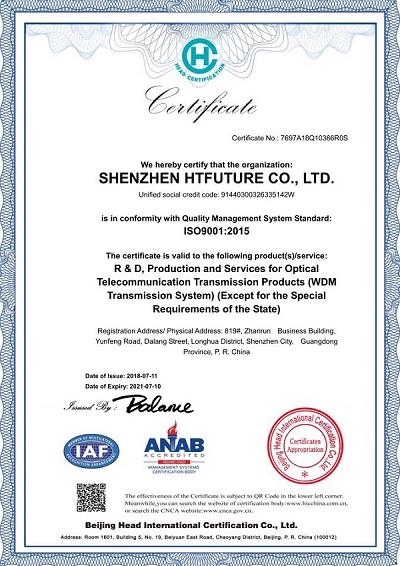
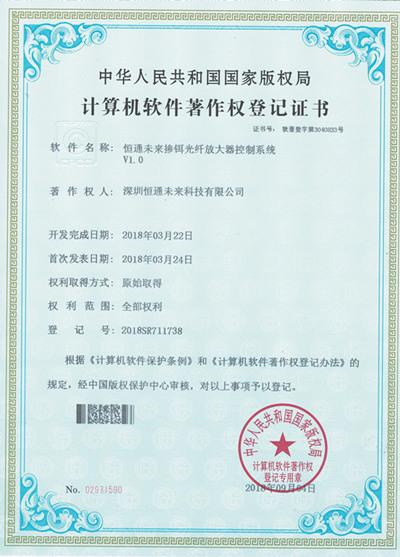
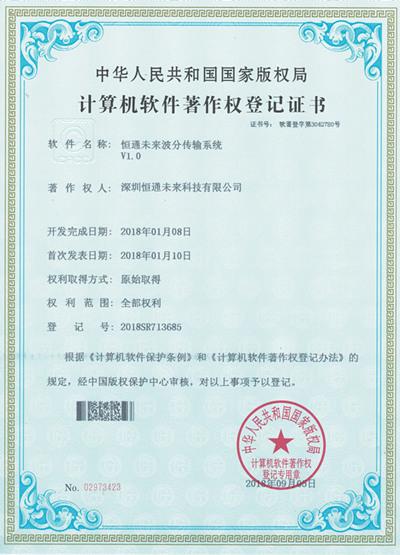
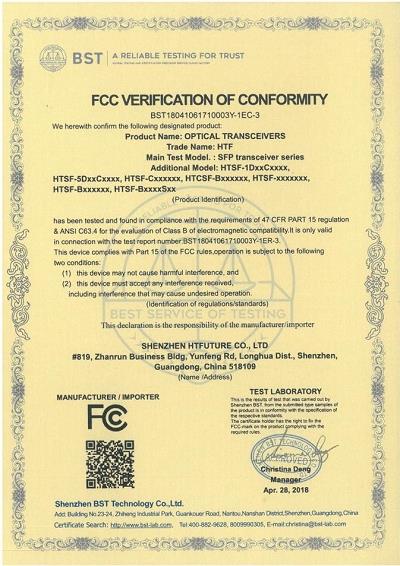
Certification
Reliable quality, Strictly abide by ISO9001:2008; Products passed ISO, FCC and CE certification; All products will pass rigorous test and inspection before shipping.





Ultimate FAQ Guide to Optical Switch
We're professional optical switch manufacturers and suppliers in China, specialized in providing customized service. We warmly welcome you to buy bulk optical switch from our factory. All products for compatible brands are with high quality and competitive price.
Modular Design 1x16 Optical Switch, Ring Network 1 8 Optical Switch, optical fiber switch multiple light monitoringPopular Products