


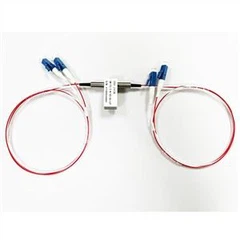
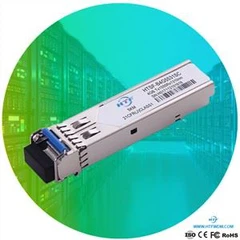


Why Choose Us?
Rich Experience: Our company is a professional supplier of fiber optic products and WDM systematic solution. Was built by a team who has more than 10-year experiences in optical communication product R&D, fiber solution, component developing and manufacturing.
Customer Service: The HTF team gathered a group of top professionals in the industry, and established a complete management system throughout the R & D-production-sales-service, which aim to provide professional, fast, customized product design and services to meet the needs of customers in all directions. HTF had design and customized many WDM solutions to many project.
Diversified Product Categories: Currently our products are widely used in Telecommunication, CATV, FTTX, WANs, LAN, Gigabit&10 G Ethernet, SDH/SONET, Fiber Channel, Roadway safety, Data-video Transmission, Long-distance monitoring, Military and many other fields.
Competitive Pricing: We offer competitive pricing without compromising on quality, making our products accessible to a wide range of customers.
Definition of Fiber Optic Transceivers
Fiber Optic Transceivers, also known as Optical Transceiver or Optical Module. It is a small packaged device that uses fiber optic technology to transmit and receive data. 'Transceiver' combines two words, 'transmitter' and 'receiver'. In other words, the optical transceiver comprises an optical transmitter and an optical receiver. Fiber Optic Transceivers are combined and share common circuitry or a single housing. It is the core device for connecting communication equipment with optical fibers. The optical module usually comprises Transmitter Optical Subassembly (TOSA, containing a laser LD Chip), Receiver Optical Subassembly (ROSA, containing a photodetector PD Chip), a driving circuit, and an optical and electrical interface.
-
![100G QSFP28 ER4 40KM]() 100G QSFP28 ER4 40KM100G QSFP28 ER4 40KM compatible with Cisco, huawei, Juniper etc brand.. You can contact HTF sales to know more.
100G QSFP28 ER4 40KM100G QSFP28 ER4 40KM compatible with Cisco, huawei, Juniper etc brand.. You can contact HTF sales to know more. -
![25G SFP28 Tunable DWDM 15km Transceiver]() 25G SFP28 Tunable DWDM 15km Transceiver25G SFP28 Tunable DWDM 15km Transceiver
25G SFP28 Tunable DWDM 15km Transceiver25G SFP28 Tunable DWDM 15km Transceiver -
![100G PAM4 LR1 CWDM4 10KM]() 100G PAM4 LR1 CWDM4 10KMData Center 100GBASE-LR1 Ethernet switches and router applicationsThe wavelength can choose by customer. Note: 1271nm, x=6; 1291nm, x=7; 1311nm, x=3; 1331nm, x=8.
100G PAM4 LR1 CWDM4 10KMData Center 100GBASE-LR1 Ethernet switches and router applicationsThe wavelength can choose by customer. Note: 1271nm, x=6; 1291nm, x=7; 1311nm, x=3; 1331nm, x=8. -
![400g Coherent Qsfp Dwdm Transceiver]() 400g Coherent Qsfp Dwdm TransceiverThe module support for wide applications with Host interfaces: 400GAUI-8/100GUI-2. The Host interface conform to existing protocol standards and operate over standard physical layer specifications.
400g Coherent Qsfp Dwdm TransceiverThe module support for wide applications with Host interfaces: 400GAUI-8/100GUI-2. The Host interface conform to existing protocol standards and operate over standard physical layer specifications. -
![200G QSFP-DD LR4 10km Optic Module]() 200G QSFP-DD LR4 10km Optic Module200GBASE-LR4 Ethernet (PAM4). 5G Back-haul. Data center. Cloud application
200G QSFP-DD LR4 10km Optic Module200GBASE-LR4 Ethernet (PAM4). 5G Back-haul. Data center. Cloud application -
![400G QSFP-DD ER4 40km Optic Module]() 400G QSFP-DD ER4 40km Optic Module400GBASE-ER4. 400G Ethernet. Data center/Cloud application
400G QSFP-DD ER4 40km Optic Module400GBASE-ER4. 400G Ethernet. Data center/Cloud application -
![400G QSFP-DD LR 10km Optic Module]() 400G QSFP-DD LR 10km Optic Module400GBASE-LR4. 400G Ethernet/DCI/Metro network
400G QSFP-DD LR 10km Optic Module400GBASE-LR4. 400G Ethernet/DCI/Metro network -
![200G QSFP-DD LR4]() 200G QSFP-DD LR4200G QSFP-DD LR4, Up to 10km transmission on SMF
200G QSFP-DD LR4200G QSFP-DD LR4, Up to 10km transmission on SMF -
![QSFP28 100G PAM4 DWDM Optic Module]() QSFP28 100G PAM4 DWDM Optic ModuleHelp ISPs, CSPs, Data center operators do the cost-performance DWDM data link up solution below 80km fiber distance point to point link.
QSFP28 100G PAM4 DWDM Optic ModuleHelp ISPs, CSPs, Data center operators do the cost-performance DWDM data link up solution below 80km fiber distance point to point link. -
![100Gbps QSFP28 PSM4 O-band DWDM Module]() 100Gbps QSFP28 PSM4 O-band DWDM Module100Gbps QSFP28 PSM4 O-band DWDM
100Gbps QSFP28 PSM4 O-band DWDM Module100Gbps QSFP28 PSM4 O-band DWDM -
![100Gbps QSFP28 PSM4 C-band DWDM]() 100Gbps QSFP28 PSM4 C-band DWDM100Gbps QSFP28 PSM4 C-band DWDM is Four-Channel, Pluggable, Parallel, Fiber-Optic QSFP28 PSM4 for 100G or 40 Ethernet Metro-Access over DWDM applications. The transceiver is a high performance module
100Gbps QSFP28 PSM4 C-band DWDM100Gbps QSFP28 PSM4 C-band DWDM is Four-Channel, Pluggable, Parallel, Fiber-Optic QSFP28 PSM4 for 100G or 40 Ethernet Metro-Access over DWDM applications. The transceiver is a high performance module -
![100G QSFP28 CWDM4 2KM]() 100G QSFP28 CWDM4 2KM100G QSFP28 CWDM4 2KM
100G QSFP28 CWDM4 2KM100G QSFP28 CWDM4 2KM


Benefits of Fiber Optic Transceivers
Delivering high-speed data communications while eliminating heavy, costly copper cabling often associated with fiber-optic data transmission, the fiber optic transceivers is engineered to bring quad-channel 10Gb Ethernet to modular open system approach systems without the need for chassis modification. This fiber optic transceivers provides system integrators with the benefits of fiber-optic to deliver a 10 GbE solution today while offering an easy path to upgrade as bandwidth requirements change and technology advances.
The fiber optic transceivers "pigtail" cable features a midline connector that enables the module to be easily removed from the carrier card without disturbing the system's fiber-optic cabling or requiring custom modification of the carrier card's heat frame. This design feature can eliminate the additional time and cost incurred if analysis or requalification of the system's thermal management performance is ever needed.
Other modules feature fiber-optic transceivers that are soldered onto the board, making it necessary to ship the entire board back to the factory for service. The fiber optic transceivers's design enables its fiber-optic transceiver to be replaced without the need for soldering equipment and other factory processes that support greater depot serviceability and integration capabilities.
Compared to competing two-channel designs, the fiber optic transceivers reduces slot count and size, weight and power (SWaP) burdens by half while delivering four independent channels of 10 GbE.
Fiber-optic cards that use a front-of-card connector approach introduce rigid cable length and bend radius requirements, increasing the space provided at the front of the card within the chassis. The fiber optic transceivers system designers an inch or more of space at the front of the carrier card, enabling the use of smaller, lighter chassis using a single quad transceiver and providing an aperture in the fiber optic transceivers's PCB for cabling access.
Engineered for optimal performance in embedded systems, the fiber optic transceivers has specific retention features to ensure operation in the harsh shock and vibration environments encountered in military and aerospace applications. In addition to an operating temperature range of -40°C to +85°C, the transceiver directly connects to the heatsink to ensure adequate cooling at high temperatures in conduction-cooled implementations.

An fiber optic transceivers is a small yet powerful device that can both transmit and receive data. In fiber optics, this data is sent in the form of pulses of light over an optical fiber, at very high speeds and across long distances. The transceiver is an important part of a fiber optics network and is used to convert electrical signals to optical (light) signals and optical signals to electrical signals. Fiber optic transceivers can be plugged into or embedded into another device within a data network that can send and receive a signal.
Fiber optic transceivers come in different shapes and sizes, called form factors. Which form factor to use depends on the type of data, speed and distance needed. Different rules, called protocols, determine how the different kinds of data are transmitted.
Types of Fiber Optic Transceivers
Fiber optic transceivers couple and align transceivers so that light can pass through the core. Transceiver modules can be classified into different groups based on their connector types. There are four main types of fiber optic transceivers used in conjunction with optical transceivers today: SC, LC, MPO, and ST.
|
Connector |
Description |
Form Factors Using |
|
SC |
Subscriber Connector (snap-in connector) |
GBIC, X2, XENPAK, some QSFP (40G) and CFP (100G) |
|
LC |
Lucent Connector |
SFP, SFP+, XFP |
|
(small form-factor version of the SC connector) |
||
|
MPO |
Multi-fiber Push-On |
Some QSFP (40G) and CFP (100G) |
|
(commonly 12 or 24 fibers per) |
||
|
ST |
Straight Tip Connector |
Not used on optical transceivers but |
|
(bayonet mount connector) |
popular at optical patch panels |
Most fiber optic transceivers use duplex connectors, one for transmit and one for receive. There are Bi-Directional (BiDi) optical transceivers that are deployed in pairs with each end transmitting on a different wavelength (e.g., 1310nm and 1490nm). Each BiDi transceiver includes a 2-channel wavelength division multiplexer to separate/combine the two wavelengths.
For the newer QSFP and CFP modules that utilize a MPO connector, there is only a single connector but, as described in the table above, each connector may have 12 or 24 fibers, each of which connect to separate transmitters/receivers within the optical transceiver.
Connector types generally follow a color code system. If a connector is compatible with singlemode fiber, it will be yellow. Connector types compatible with multimode fiber will be orange, black or gray. If a boot is used over the connecter, then a blue boot symbolizes compatibility with singlemode fiber and a beige boot symbolizes compatibility with multimode fiber.
The fiber optic transceivers is a hot-pluggable optical transceiver used for connecting network switches. It converts electrical signals to optical signals and vice versa. For 1G fiber optic transceivers, there are fiber SFP and RJ45 transceivers. The fiber fiber optic transceivers can support SONET, Gigabit Ethernet, Fiber Channel, and other communication standards. This SFP type uses fiber patch cables to transmit and receive data, while RJ45 transceiver transmits via Ethernet cables like Cat5e, Cat6 cables.
Media converters receive data signals from one media and transmit them to another. There are two kinds of conversion: copper-to-fiber and fiber-to-fiber. Copper-to-fiber media converters are used when the transmission distance of copper ports needs to be extended via fiber optic cabling. For the fiber-to-fiber media converter, they support conversion not only between multimode fiber and single mode fiber but also a dual fiber link and single fiber using Bi-directional (BIDI) flow. Conversions between different wavelengths can also be achieved by some fiber-to-fiber media converters.

Fiber Optic Transceivers vs Media Converter: What are the Differences?
Working principle
Clearly, fiber optic transceivers are functional modules or accessories. They act as passive devices that can not be used alone. Fiber optic transceiversare usually deployed in network switches or other devices with SFP slots, and powered by matching equipment. Then, these fiber optic transceivers perform the conversion between electric and fiber by fiber patch cables, and sometimes use Ethernet cable if RJ45 transceivers are deployed. While media converters are separate active devices, and can be used alone. They use individual power supply.
Application
Fiber optic transceivers usually are used in optical network communication equipment like network switches, core routers, or servers. Two 1G SFP LX modules are deployed separately on two 1G network switches. One OS2 fiber cable connects the two fiber optic transceivers to achieve this 1G link.

Media converters are a suitable choice when Ethernet cable can not be covered and optical fiber must be used to extend the transmission distance. Each Gigabit Ethernet media converter is deployed on both side A and side B. Side A switch delivers data via Ethernet cable to the media converter A. This media converter converts copper to fiber and uses a 1G SFP fiber module and OS2 fiber to transmit data to converter B. Media converter B receives the data by another 1G Fiber Optic Transceivers and sends data to Side B network switch also via Ethernet cable.

How Does a Fiber Optic Transceivers Work?
Fiber optic transceivers work by sending modulated light pulses transmitted by a diode through a fibre optic cable. The most common transceivers require two separate fibre optic cables, one to transmit the data one way and the other for the signal from the opposite direction. They are unable to send and receive a signal through the same fibre optic cable at the same time as this can cause signal interference.
It is possible to get multi-directional transceivers, Multi-directional transceivers do this by modulating the light transmitted at different wavelengths meaning they can transmit and receive signals that don' t interfere with each other as they pass through the cable.
Many modern fiber optic transceiverss are now hot-pluggable, meaning they are easy to integrate into existing networks and can be used instantly with minimal setup.
How to Choose Fiber Optic Transceivers?
There are countless numbers of fiber optic transceivers and SFP cables on the market, so what makes them different and how do you know which is best for you?
Distance
The first differentiation users need to consider is distance. Do you need a Short Reach (SR) SFP or Long Reach (LR) SFP?
Single mode fiber optic transceivers can transmit anywhere from 2km all the way to 80km in distance. Standard Single mode SFPs can transmit up to 10km, while Extended Single mode SFPs, up to 80km.
For shorter distances, and a cheaper option, multi mode SFPs are a great solution. A Standard multi mode SFP can transmit up to 500m, while an Extended multi mode SFP, up to 2km.
Rate
Another aspect to consider when choosing an SFP is transfer rate. What speed does your network require?
SFP data transfer rates can range between 10 Mbps to 1000 Mbps (1 Gbps). For a more powerful data transmission and faster gigabit ethernet, SFP+ transceivers can provide up to 10 Gbps rates and for optimal speeds, QSFP/QSFP+ can reach up to 40 Gbps.
Fiber Optic
Lastly, consider copper vs fiber optic SFPs. Which is best suited for you truly depends on your server or network setup. For short distances, due to cost advantages, many professionals are sticking with copper cable infrastructure – in this case the network infrastructure would likely include copper transceivers. However, in terms of distance, price and sustainability, fiber optic transceivers are a great choice as they are typically more cost-effective over long distances, more reliable than copper cabling solutions, can transmit data further and can operate at higher bandwidth relative to copper. Therefore, many forward-looking networking professionals are looking at fiber solutions in their server setups to better adapt to and manage the continuously evolving technology.
Why Are Fiber Optic Transceivers Useful?
There are several benefits to using fiber optic transceivers over traditional copper. In many cases, they are more efficient and often safer, and more secure than copper. Here we list some of the key benefits of using fibre.
Lack of signal degradation
One of the key advantages of a fibre optic transceiver is that they're able to transmit data over a considerable distance without losing signal integrity. In traditional telecommunications, copper cables were used with the signal being sent using electricity. Over distance, this signal could degrade, causing the final data to become corrupted. Because the light used in fibre optics travels considerably faster than electricity, it is capable of travelling over a longer distance, whilst experiencing a lesser degree of signal degradation.
Fibre is not susceptible to EM interference
Electromagnetic interference (EMI) is a considerable challenge when using traditional copper wiring to transmit and receive signals. The performance of copper is particularly prone to interference from environmental EM radiation, and unfortunately, there is an abundance of this in the modern world. Whether it be from your mobile phone or microwave, there are hundreds of sources of EMI that can corrupt a signal running through a copper wire. With fibre cables this isn't a problem because the light signals sent via optic cables cannot be affected by EMI radiation.
Fibre is more secure
With fibre optical cable, the fibre core is enclosed making it impossible to 'tap' a fibre cable. The only way to access the signal being sent via a fibre cable is to access the optical interface connection at either end of the cable. Unlike a copper cable, where the cable itself can be accessed. This makes fibre a more secure connection, which is preferable if sensitive data is being sent.
They reduce the risk of sparks
In certain environments, fire hazards are a considerable concern. With traditional copper wiring, data is transmitted through the use of an electrical signal, meaning there is the possibility of sparks being created if the electrical cable becomes damaged. With a fibre cable that only carries light rather than electricity, you are reducing the possibility of sparks in the event that a cable experiences a fault. Overall this makes fibre optics a safer method of data transmission in high fire-risk environments.
Our Factory
HTF has strong manufacture capabilities in whole series of optical transceivers with commercial grade and industrial grade, WDM transmission System design, The HTF team gathered a group of top professionals in the industry, and established a complete management system throughout the R & D-production-sales-service, which aim to provide professional, fast, customized product design and services to meet the needs of customers in all directions. HTF had design and customized many WDM solutions to many project.

HTF supplies a broad range of communication solutions products including wavelength division multiplexer (WDM/CWDM/DWDM/OADM), WDM systematic solution, Fiber Optic Transceivers (SFP, SFP+, XFP, 10G QSFP+, 40G QSFP+ and 100G CFP2), OEO Converter Repeater, Ethernet Media Converter, Fiber Optical Patch cord and Fiber Optical assembly.

Certification
Reliable quality, Strictly abide by ISO9001:2008; Products passed ISO, FCC and CE certification; All products will pass rigorous test and inspection before shipping.





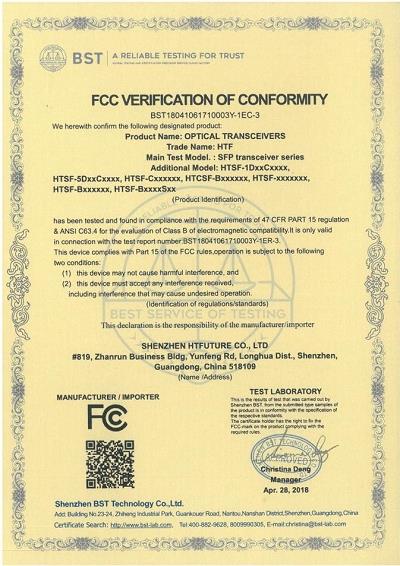


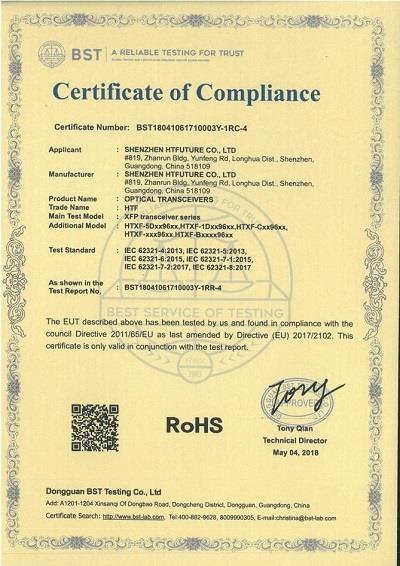
Ultimate FAQ Guide to Fiber Optic Transceivers
We're professional fiber optic transceivers manufacturers and suppliers in China, specialized in providing customized service. We warmly welcome you to buy bulk fiber optic transceivers from our factory. All products for compatible brands are with high quality and competitive price.
40Gb s QSFP Active Optical Cable, 100Gb s QSFP28 AOCPopular Products