






Fiber Media Converter ( Electric to Optic Converter )
Commercial type, Industrial type.
10M/100M, 10M/100M/1000M.
Why Choose Us?
Rich Experience: Our company is a professional supplier of fiber optic products and WDM systematic solution. Was built by a team who has more than 10-year experiences in optical communication product R&D, fiber solution, component developing and manufacturing.
Customer Service: The HTF team gathered a group of top professionals in the industry, and established a complete management system throughout the R & D-production-sales-service, which aim to provide professional, fast, customized product design and services to meet the needs of customers in all directions. HTF had design and customized many WDM solutions to many project.
Diversified Product Categories: Currently our products are widely used in Telecommunication, CATV, FTTX, WANs, LAN, Gigabit&10 G Ethernet, SDH/SONET, Fiber Channel, Roadway safety, Data-video Transmission, Long-distance monitoring, Military and many other fields.
Competitive Pricing: We offer competitive pricing without compromising on quality, making our products accessible to a wide range of customers.
Definition of Fiber Media Converter
A media converter, also known as a Fiber Media Converter, is a network device that connects two different types of media, such as twisted pair and fiber optic cabling. It extends the network's transmission distance by converting data signals from electrical signals (copper) to optical signals (fiber optics) without causing signal degradation. Such devices play a vital role in modern networks, ensuring compatibility and integration between traditional cabling systems and newer high-speed fiber optic technologies. Available in a variety of form factors and supporting different data transmission rates, they are versatile tools for expanding and maintaining network infrastructure.
-
![8 Ports 100BASE RJ45 Industrial Ethernet Switch]() 8 Ports 100BASE RJ45 Industrial Ethernet SwitchHTIR08F provides 8-port 10/100/100BASE-TX RJ45 copper interfaces delivered in an IP40 rugged, strong case with redundant power system. Its slim case is suitable for such applications as surveillance
8 Ports 100BASE RJ45 Industrial Ethernet SwitchHTIR08F provides 8-port 10/100/100BASE-TX RJ45 copper interfaces delivered in an IP40 rugged, strong case with redundant power system. Its slim case is suitable for such applications as surveillance -
![5 Ports 100BASE TX Industrial Ethernet Switch]() 5 Ports 100BASE TX Industrial Ethernet Switch5 ports 100BASE TX Industrial Ethernet Switch is an hardened 5-port Industrial Ethernet Switch, provides non-blocking wire-speed performance in harsh industrial environment. It also provides 5-port
5 Ports 100BASE TX Industrial Ethernet Switch5 ports 100BASE TX Industrial Ethernet Switch is an hardened 5-port Industrial Ethernet Switch, provides non-blocking wire-speed performance in harsh industrial environment. It also provides 5-port -
![Media converter Industrial sc to rj45 1 Fiber Ports 4 RJ45]() Media converter Industrial sc to rj45 1 Fiber Ports 4 RJ45HTF 1 Fiber Port and 4 RJ45 Port 1000M industrial media converter is specially designed for industrial application. 10/100/1000M auto-negotiation , Full/Half duplex mode, auto-MDI-MDI-X,Super
Media converter Industrial sc to rj45 1 Fiber Ports 4 RJ45HTF 1 Fiber Port and 4 RJ45 Port 1000M industrial media converter is specially designed for industrial application. 10/100/1000M auto-negotiation , Full/Half duplex mode, auto-MDI-MDI-X,Super -
![1FX 2TX Industrial Fiber Media Converter]() 1FX 2TX Industrial Fiber Media ConverterSuper lightening protection, IP40 protection.Excellent heat elimination without cooling fan.Redundant dual DC power inputs. -40℃-85℃ operating temperature range
1FX 2TX Industrial Fiber Media ConverterSuper lightening protection, IP40 protection.Excellent heat elimination without cooling fan.Redundant dual DC power inputs. -40℃-85℃ operating temperature range -
![1000M Industrial Media Converter]() 1000M Industrial Media Converter1 Fiber Port and 1 RJ45 Port 10M/100M or 10M/100M/1000M Industrial Fiber Media Converter, HTF industrial media converter is specially designed for industrial application, which provides fast and
1000M Industrial Media Converter1 Fiber Port and 1 RJ45 Port 10M/100M or 10M/100M/1000M Industrial Fiber Media Converter, HTF industrial media converter is specially designed for industrial application, which provides fast and -
![SFP Media Converter]() SFP Media ConverterSFP Media converter is an Ethernet media converter that converts media transmission between UTP Copper cables and fiber SFP (Small Form-Factor Pluggable) transceiver. It is designed to meet the massi
SFP Media ConverterSFP Media converter is an Ethernet media converter that converts media transmission between UTP Copper cables and fiber SFP (Small Form-Factor Pluggable) transceiver. It is designed to meet the massi -
![Single Fiber Optic Transceivers 10/100/1000Mbps Media Converter]() Single Fiber Optic Transceivers 10/100/1000Mbps Media ConverterIn conformity to IEEE802.3 10base-T, IEEE802.3u 100 base-TX/FX, IEEE802.3ab 1000 base-T, IEEE802.3z,1000base-SX/LX, Stable performance more than 50thousand hours with fault-free,
Single Fiber Optic Transceivers 10/100/1000Mbps Media ConverterIn conformity to IEEE802.3 10base-T, IEEE802.3u 100 base-TX/FX, IEEE802.3ab 1000 base-T, IEEE802.3z,1000base-SX/LX, Stable performance more than 50thousand hours with fault-free, -
![Double Fiber Optic Transceivers 1000M Gigabit Media Converter]() Double Fiber Optic Transceivers 1000M Gigabit Media ConverterHTF Dual Fiber Media Converter 10/100/1000M Series is a kind of intelligent, adaptive and fast Ethernet converter devices. It can implement data transmission between twisted pair electrical signals
Double Fiber Optic Transceivers 1000M Gigabit Media ConverterHTF Dual Fiber Media Converter 10/100/1000M Series is a kind of intelligent, adaptive and fast Ethernet converter devices. It can implement data transmission between twisted pair electrical signals -
![Dual Fiber 10/100M Ethernet Fiber Media Converter]() Dual Fiber 10/100M Ethernet Fiber Media ConverterHTF dual fiber Fiber Media Converter (Electric To Optic Converter) is designed to convert data signal between 10/100 Base-TX and 100 Base-FX fast Ethernet. The media converter is connected between
Dual Fiber 10/100M Ethernet Fiber Media ConverterHTF dual fiber Fiber Media Converter (Electric To Optic Converter) is designed to convert data signal between 10/100 Base-TX and 100 Base-FX fast Ethernet. The media converter is connected between -
![Managed 10/100M Ethernet Media Converter]() Managed 10/100M Ethernet Media ConverterHTF 10/100M Fiber Media Converter is designed to make conversion between 100Base-FX to 10/100Base-TX Fast Ethernet. With SNMP agent and web-based management, the network administrator can logon the
Managed 10/100M Ethernet Media ConverterHTF 10/100M Fiber Media Converter is designed to make conversion between 100Base-FX to 10/100Base-TX Fast Ethernet. With SNMP agent and web-based management, the network administrator can logon the -
![Media converter ethernet Single Fiber 10/100M]() Media converter ethernet Single Fiber 10/100MHTF single fiber 10/100M WDM Fiber Media Converter (Electric To Optic Converter). It´s widely used in Telecommunications, Broadcasting, Broadband networks, Million high-definition video surveillance
Media converter ethernet Single Fiber 10/100MHTF single fiber 10/100M WDM Fiber Media Converter (Electric To Optic Converter). It´s widely used in Telecommunications, Broadcasting, Broadband networks, Million high-definition video surveillance


Benefits of Fiber Media Converter
Fiber media converters are networking devices capable of connecting two different media types. In most cases, they are used to connect twisted pair or coaxial cable to a fiber-optic cable, allowing the interconnection of newer fiber-optic networks and cable systems and older copper-based cabling systems. This permits partial upgrades of network infrastructure to fiber-optic technology, maintains the ability to connect to copper and other types of wired networks, and enhances fast Ethernet speeds.
Extend Communication Distance
Fiber media converters can significantly extend the reach of a network by converting electrical signals over copper cables to optical signals for fiber-optic cables, which can carry data much farther without losing signal quality.
Cost-effective
Fiber media converters facilitate the integration of different network types and technologies, enabling a seamless migration from traditional copper networks to the new technology of fiber optic networks, so you can continue to use your existing cabling infrastructure while expanding or upgrading your network without a complete overhaul.
Enhanced Security
Fiber optic connections are less susceptible to electromagnetic interference (EMI) and eavesdropping than copper, so using a media converter to convert to a fiber optic network improves overall security.
Flexibility and Scalability
Fiber media converters are versatile devices that can be used to connect different types of network media, such as copper to fiber, multimode to single-mode, or one type of fiber to another. In addition, media converters are compact and easy to deploy, so you can quickly add new devices to expand your network!
Applications of a Fiber Media Converter
A Fiber Media Converter is flexible and can be utilized in any field or scenario from industrial workstations to computers. These Fiber Media Converters make the configuration of computer network very versatile. They enable you to upgrade to a more superior and potentially powerful technology without the requirement of a full network retrofit. The primary application of a Fiber Media Converter is to extend the network farther. Fiber Media Converters integrate the fiber optic technology that supports a much larger cable than that of the custom twisted pair copper cables. The 10M and 100M copper cables have a range length limitation of 110 meters. This length limitation, after the setup is reduced to 90 meters in the case of CAT5e cables which is still permissible by industrial standards. In contrast, the fiber optic cable has a length limit of 2000 meters. Furthermore, different types of optical fibers showcase differential length limit. For example the single mode fibers support up to 3000 meters. The most usual application of media converters is in the case of twisted pair copper cable networks to fiber optic cables. The standard fiber connectors on these media converters are commonly ST or SC connectors. Here are their applications:
• 10-Mbps twisted-pair to 10-Mbps fiber optic single mode or Multimode. This setup is often termed as 10BastT to 10BaseFL
• 100-Mbps twisted-pair to 1000-Mbps fiber optic single mode or Multimode. This setup is usually termed as 100BaseTX to 100BaseFX
Types of Fiber Media Converter
Copper to Fiber Media Converter
Copper to fiber media converters enable connections of copper-based Ethernet devices over extended distances via a fiber optic link, which protects data from noise and interference and future-proofs a network with additional bandwidth capacity. Copper to fiber media converter includes Ethernet ones providing connectivity for Ethernet, Fast Ethernet, Gigabit, and 10 Gigabit Ethernet devices, ideal for point-to-point connections.
Fiber to Fiber Media Converter
Fiber to fiber media converters connect different fiber optic networks and support conversion from one wavelength to another. They provide connections between multimode and single-mode fibers, as well as between dual-fiber and single-fiber cables.
Commercial vs. Industrial Media Converter
Commercial media converters with operating temperatures of -10˚C to 55˚C are ideal for typical office and data center environments with controlled ambient temperatures. Industrial media converters, on the other hand, are designed for harsh environments offering efficient media conversion in extreme temperatures from -40˚C to 85˚C, high shock and vibration conditions. They are commonly used in building automation, oil and gas drilling and mining, traffic management, weather tracking, and other industrial and outdoor applications.
What Are The Use Cases For Fiber Media Converter?
Fiber media converter are used in a wide variety of applications, including:
Enterprise networks: Fiber media converter are used to connect devices in enterprise networks, such as computers, switches, and routers.
Telecom networks: Fiber media converter are used to connect telecom devices, such as telephones, routers, and switches.
Security systems: Fiber media converter are used to connect security devices, such as cameras, sensors, and controllers.
Industrial automation: Fiber media converter are used to connect industrial automation devices, such as robots, PLCs, and sensors.
Medical imaging: Fiber media converter are used to connect medical imaging devices, such as MRI machines and CAT scans.

Considerations for Using Fiber Media Converter in a Network
Fiber Media Converter are simply plug and play devices, yet you still have to consider some factors when connecting them to the network. It is better to choose a flat, secure place to install the media converter. Leave ample space around the converter for ventilation.
It is better to choose a flat, secure place to install the media converter. Leave ample space around the converter for ventilation.
The wavelengths of the transceivers on both media converters should be consistent. That is, if one transceiver is of the 1310nm/850nm wavelength, the same goes for the other transceiver. Besides, the data rate of the transceivers and the media converters must be the same: 1000BASE SFP transceivers are for Gigabit media converters. Also the transceiver type on a pair of media converters should be the same. Use either single mode or multimode optical transceivers at both sides.
The endface of the fiber patch cable should be in accordance with the media converter port. Generally, SC fiber patch cables are used to connect media converters with SC ports, while LC fiber patch cables are plugged into the SFP/SFP+ ports on fiber media converters.
Make clear whether the media converter supports full-duplex or half-duplex transmission. Using full-duplex media converters with switch or hub of half-duplex mode will cause serious packet loss in the network.
The operating temperature should be maintained in a proper range, or the media converter would fail to work. The parameters may vary for media converters of different vendors.
How do I know if my Fiber Media Converter is working?
To check if a fiber media converter is working or not, you can follow these steps:
Ensure that the fiber media converter is properly connected to the power source and the devices it is intended to convert between (e.G., ethernet cables connected to network devices).
01
Check the led indicators on the fiber media converter. Most fiber media converters have status lights that indicate power, link/activity, and speed. If these lights are not lit or are showing abnormal behavior, it may indicate a problem with the converter.
02
Verify the network connectivity by checking if the devices connected to the fiber media converter can communicate with each other. You can try pinging the devices or performing other network tests to ensure data is being transmitted correctly.
03
If possible, try connecting different devices to the fiber media converter to see if the issue lies with a specific device or connection.
04
If all else fails, consult the manufacturer's documentation or contact their support for further assistance in troubleshooting the fiber media converter.
05
Speed: Media converters can support 10/100/1000Mbps and 10Gbps. Extenders support speeds of 10/100/1000Mbps.
Distance: Media converters support distances up to 160 km (approximately 99 miles). Ethernet extenders allow 10/100Base-TX Ethernet data with High-Speed Digital Subscriber Lines (SHDSL) to reach 20 km (about 12 miles)—or allows 10/100/1000Base-T Ethernet using Very High Bit Rate Digital Subscriber Lines (VDSL) to reach up to 3 km (approximately 1.8 miles).
Both devices can be used to extend a LAN using legacy cabling. Media converters perform photoelectric conversion using fiber cables. An Ethernet extender deals with electrical signals together with Digital.
Subscriber Lines (DSL). In the long run, media converters have the best performance quality for long-range network extension—the catch here is that they can be expensive compared to an Ethernet extender.

Fiber can provide a straightforward and simple method for reaching distances unattainable by traditional UTP copper wiring. Once limited to local area networks (LANs), media converters are now used on a wide range of networks. Fiber media converter offer a variety of features and options to meet a wide range of network applications. When choosing a fiber media converter, there are a few factors you need to consider, such as the type of media you need to convert: Do you need to convert between copper and fiber optic cables?
• The distance you need to transmit data: How far do you need to extend your network?
• The data rate you need: How much data do you need to transmit?
• The security features you need: Do you need a media converter with security features, such as encryption?
Our Factory
HTF has strong manufacture capabilities in whole series of optical transceivers with commercial grade and industrial grade, WDM transmission System design, The HTF team gathered a group of top professionals in the industry, and established a complete management system throughout the R & D-production-sales-service, which aim to provide professional, fast, customized product design and services to meet the needs of customers in all directions. HTF had design and customized many WDM solutions to many project.

HTF supplies a broad range of communication solutions products including wavelength division multiplexer (WDM/CWDM/DWDM/OADM), WDM systematic solution, Fiber Optic Transceivers (SFP, SFP+, XFP, 10G QSFP+, 40G QSFP+ and 100G CFP2), OEO Converter Repeater, Ethernet Media Converter, Fiber Optical Patch cord and Fiber Optical assembly.

Certification
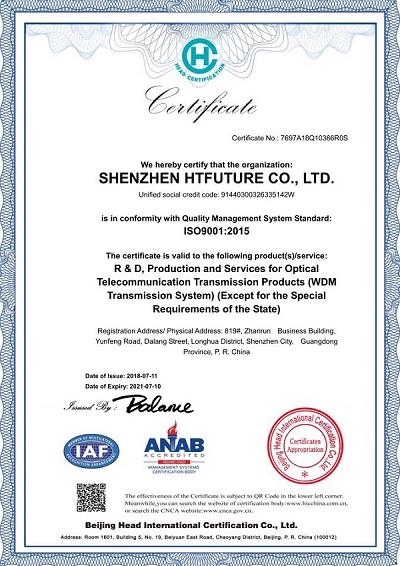
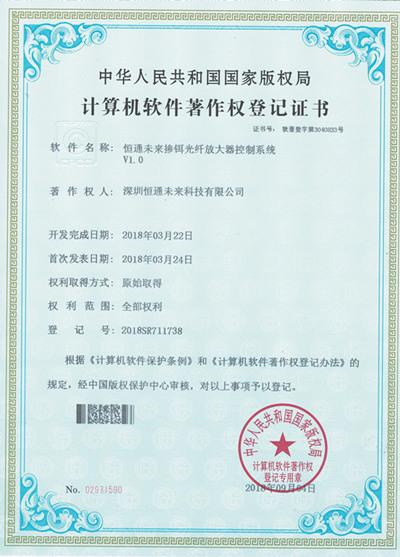
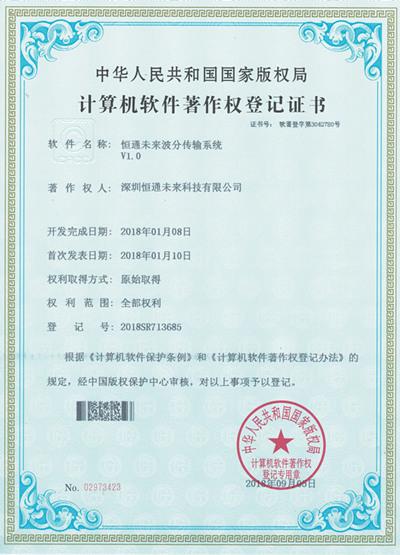
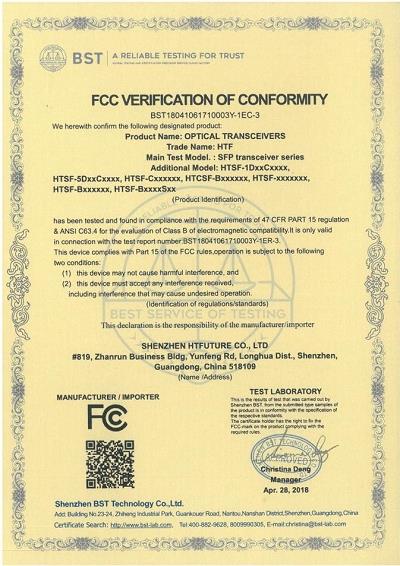
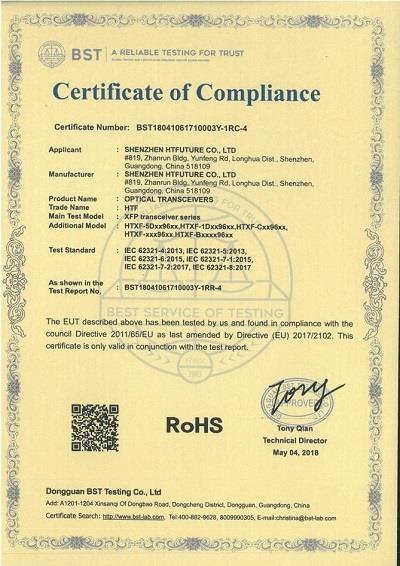
Reliable quality, Strictly abide by ISO9001:2008; Products passed ISO, FCC and CE certification; All products will pass rigorous test and inspection before shipping.




Ultimate FAQ Guide to Fiber Media Converter
We're professional fiber media converter manufacturers and suppliers in China, specialized in providing customized service. We warmly welcome you to buy bulk fiber media converter from our factory. All products for compatible brands are with high quality and competitive price.
1 25G GPON OLT 20km Module, CWDM DFB 1250M SFP 20km Module, 10Gb s Copper SFP TransceiverPopular Products
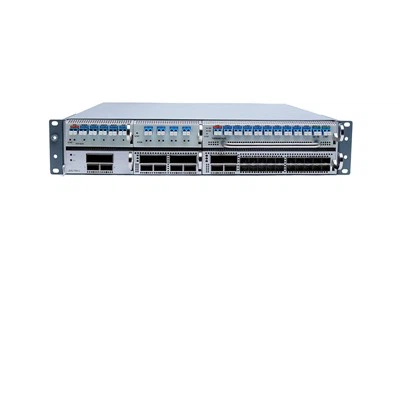
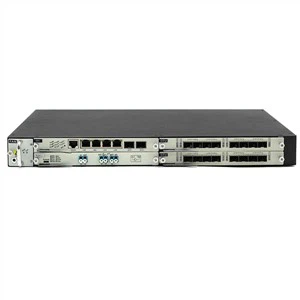
Compact Intelligent Next-Generation Optical Transmission System
The HT6000...
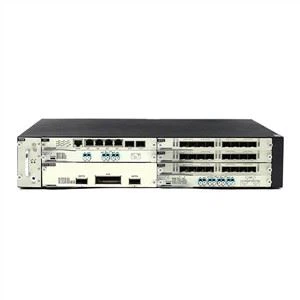
It adopts CWDM / DWDM common platform design, supports multi-service transparent...
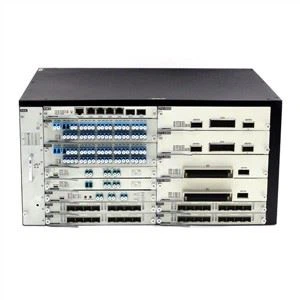
Multiple service card hybrid insertion
Support 10G/100G/200G/400G hybrid...

