




The signal transmission rate of Ethernet has increased from 10G to 25G, 100G and even higher. Although 1G, 10G and 40G currently occupy the main share of Ethernet port market, the demand for 25g and 100G will be stronger than ever in the future, because high bandwidth undeniably promotes the development of data center towards higher scalability and flexibility.
How to upgrade the network from 10G to 40G efficiently?
In data center, cloud computing and enterprise network, it is necessary to increase the network speed to meet the increasing demand of broadband, so as to realize the end-to-end high-speed transmission. With the further improvement of server performance and the upgrade from leaf to spine layer connection in data center to 100Gbps, it is of practical significance to upgrade servers from existing 10Gbps to 25Gbps / 40Gbps.
Upgrading the server interface from 10G to 25G brings many benefits, such as:
The performance of Ethernet is 2.5 times that of 10G interface;
It can provide higher port density for servers;
Lower power consumption per GB of data transmission (more energy saving);
Understand the meaning of 25G / 100G
The transmission rate of Ethernet interface has increased linearly over the past few decades (10 times every 10 years). Everyone's desktop computer or notebook computer cable network card is basically gigabit network card. In many current data centers, the interface between servers is 10Gbps, and the interface between switches is 40Gbps. Most of them are considering upgrading the network to the next generation of 25G / 100G network (the interface of server is 25Gbps, and the interface between switches is 100Gbps).

10G-25G-100G network upgrade path
The data center is expanding at an unprecedented speed, which promotes the demand for higher bandwidth between servers and switches. In order to meet this trend, the access network has been gradually upgraded from 10G to 25G, which also provides high-density, low-cost and low-power solutions for the connection between servers and tor switches.
25G Ethernet
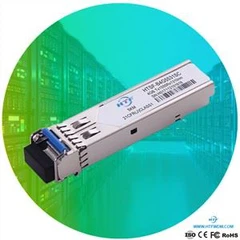
Up to now, 25G series products such as 25G network switch, 25G sfp28 optical module, 25G DAC and 25G AOC have been recognized by more and more users, and 25G server is also popular, which is ready for 100G network upgrade. Among them, 25G network switch is usually used as tor switch or leaf switch in order to connect server and terminal equipment. 25G Ethernet is equivalent to the upgraded version of 10G Ethernet, both of which adopt single channel technology. However, the channel speed of 25G Ethernet is 2.5 times of that of 10G Ethernet, that is to say, the bandwidth of 25G Ethernet is 2.5 times of that of 10G Ethernet, and its performance is better. Because the 25G sfp28 optical module has the same size and interface with the 10G SFP + optical module, and the 25G switch and 10G switch have the same port density, 25G Ethernet can increase the link bandwidth without increasing the cable routing, which helps to reduce the system power consumption and cost. As the popularity of 25G continues to rise, 25G is spreading rapidly in the market. In the future, 25G will provide a comprehensive solution for the connection between servers and switches.
In terms of resource investment and cost, 25Ge will be the best choice for server upgrade. 25Gbe uses four optical fibers and paired copper cables in parallel to achieve 100G Ethernet transmission rate through four 25 Gbit / s channels.
40G has a significant advantage over 25G
Compared with the existing 40G standard, 25Gbe technology value has been very obvious. 25Gbe provides higher port density and lower unit cost for bandwidth connection of rack servers. For applications that require high throughput of the terminal, 25G using two channels to achieve 50G is undoubtedly a better choice in terms of connection performance and physical channel efficiency than using four channels to achieve 40. The biggest advantage of 25Gbe technology for data center operators is to maximize bandwidth and port density under the space limitation of 1U panel. It can also use 25Gb / s single channel physical layer technology to achieve 100Gbe.
In summary, the advantages of 25G Ethernet are as follows:
1: Optimal input / output (I / O) performance and fiber capacity;
2: It is 2.5 times of the performance of 10G Ethernet;
3: Higher port density;
4: Saving capital expenditure and operating expenditure;
5: Fewer tor switches and cables are required;
6: Lower cost and lower power consumption;
7: It is complementary to 100G Ethernet standard.
Overview of 10G-25G-100G network upgrade path
However, the 10G channel can save only 2.5 times of the 10G channel in a single 10G channel. In the super large-scale data center, 25G servers and 100G switches have gradually become popular, and are gradually replacing the previous 10G servers and 40G switches. Although the 10G-25G-100G network upgrade path can increase the throughput by 2.5 times, the actual cost is not high. With the continuous innovation of Ethernet technology, in order to pave the way for higher bandwidth network, such as 200G / 400G, 25G-100G network upgrade path will provide an effective path for future data center network upgrade. The network upgrade path has the following three advantages:
1. Using 4x25Gbit / S mode to achieve 100G is more economical and efficient than 10x10Gbit / s. with the popularization of 25G Ethernet and 100G Ethernet, the price of 25G SFP28 and 100G QSFP28 optical modules will continue to decrease in the future.
2. Using 4x25Gbit / S mode to deploy the network system, the power consumption is much lower than the power consumption of 10x10Gbit / s, which also shows that the operating cost of 25G is lower than that of 10G, so it has more advantages.
3. For the used optical fiber links, upgrading from 10G to 100G requires 10 optical fiber links, but only 4 optical fiber links are needed for 25G, which greatly saves optical fiber resources.
Overview of 40G Ethernet
40G runs on four channel small pluggable (QSFP +) devices and can support high bandwidth applications, such as online video on demand. 40G switch can be used as convergence or leaf switch in large data center room, and as core or backbone switch in small and medium-sized enterprise network.
10G-40G-100G network upgrade path
The 10G-40G-100G network upgrade path mainly uses the pre deployed 10G equipment and wiring system to upgrade the network, in which 40G is realized through four 10G parallel channels, and 100G is realized through 10 10G parallel channels. Because the network upgrade path is based on 10G single channel, a large number of optical fiber jumpers are needed in the deployment, which leads to more complex wiring and higher cost. At the same time, when we want to achieve long-distance transmission, 40G QSFP + optical modules (such as 40G QSFP + LR4 optical modules) need to integrate four 10G channels into one link for transmission through WDM technology, especially for QSFP + optical modules used for ultra long distance transmission, such as QSFP+ For this reason, the cost of QSFP + optical module is always high, which leads to the high cost when choosing the network upgrade path.
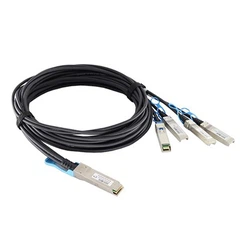
A 100Gbps connection can be broken down into four channels (25Gbps per channel) by a break out cable, so a 100G network is sometimes referred to as a 25G / 100G network. Similarly, 10G network is sometimes called 10G / 40G network.

Choosing a 10G-25G-100G network upgrade path may mean additional costs. If the current network can meet your existing needs and the budget is limited, it is recommended that you keep the existing 40g and upgrade the network on this basis. However, if you are planning to optimize the network architecture or deploy a new network, it is recommended that you choose 10G-25G-100G in consideration of the future business development and the development trend of Ethernet.
HTF's products are customized, the quality is guaranteed, and the accessories are imported.
Contact: support@htfuture.com
Skype :sales5_ 1909,WeChat :16635025029