




Nowadays, with the pursuit of high bandwidth by cloud data centers and operators, network upgrading to 100G or higher has become an inevitable development. Currently, 10G-25G-100G and 10G-40g-100G are two common ways to upgrade a network to 100G, among which the key to network upgrading lies in the deployment of 25G and 40G. So what's the difference between the two? Should you choose 25G Ethernet or 40G Ethernet for network deployment?
25G Ethernet vs. 40G Ethernet: What's the difference?
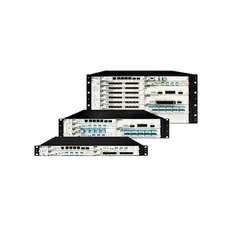
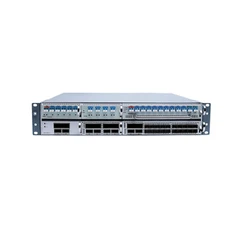
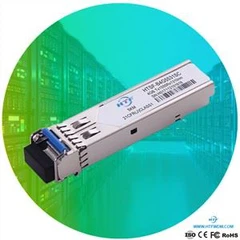
The 25G Ethernet standard (IEEE 802.3by), published by IEEE and IEEE-SA in 2014, compensates for the low bandwidth of 10G Ethernet and the high cost of 40G Ethernet. 25G Ethernet adopts 25 GB/s single-channel physical layer technology, which can realize 100G transmission based on four 25Gbps optical fiber channels. Because the SFP28 package is based on THE SFP+ package development, and the size of the two is similar, so the 25G SFP28 port is compatible with 10G SFP+ port, but the bandwidth of the 25G SFP28 optical module is 2.5 times that of the 10G SFP+ optical module. Compared with 40G Ethernet, 25G Ethernet has significant performance advantages, which can provide higher port density and lower bandwidth cost. This makes 25G products (such as 25G switch, optical module, DAC, AOC, etc.) widely recognized by users and widely used in cloud data centers and 5G networks in recent years.
The 40G Ethernet standard (IEEE 802.3BA) was published by IEEE in 2008. This standard appeared before the 25G Ethernet standard and was the only path used to achieve 100G transmission at that time. The 40G QSFP+ optical modules mainly realize the 40Gbps data transmission through four 10Gbps optical fiber channels. With the maturity of 40G Ethernet technology and the increase of 40G product suppliers in the market, the cost of 40G products (such as 40G switch, optical module, DAC, AOC, etc.) has been continuously reduced. However, the current development of 40G Ethernet is not optimistic due to its own reasons. For example, in the 100G network upgrade, 40G is not cost-effective and energy efficient for the ToR (rack top) switch provided by the cloud provider.
Features/requirements | 25GbE | 40GbE |
Number of PCIe 3.0 channels per port | 4 | 8 |
PCIe 3.0 bandwidth utilization | 78% | 62.5% |
Clock frequency | 25.78GHz | 10.31GHz |
SerDes channel | Single channel | four channels |
Server /ToR, 3:1 overutilization | 96 | 24 |
Joint | SFP28 | QSFP+ |
DAC cable | Thinner, 4 lines | Thicker, 16 lines |
Cable material cost | Low | High |
Easier transition to 100G support or not | Yes | No |
25G VS 40G Ethernet: How to choose?
It can be found from the above introduction that 25G Ethernet is different from 40G Ethernet, and 25G Ethernet is easier to deploy for 100G network. When facing network deployment, should you choose 25G Ethernet or 40G Ethernet? The following three aspects can be considered:
Application
25G is mainly used for access between ToR switches and servers (server access in next-generation data centers), as well as network upgrades of 100G or more. 40G is mainly used for the connection between switches in data centers, helping to break the bottleneck in connection between access switches and distribution switches. If 25G can be widely used in switch interconnection, it will promote the further development of 25G Ethernet. At the same time, with the arrival of 5G network, the demand for 25G WDM optical module in 5G prequel will promote 25G Ethernet to usher in a new peak of development. For 40G, because it is more efficient than 10G and costs less than 100G, it is still the best choice for high bandwidth.
Switches
Switch compatibility and port density are factors to consider when choosing a switch. First of all, for switch compatibility, the compatibility of 25G switch and 40G switch depends on the supplier. At present, most 25G switch and 25G optical network card (NIC) in the market support backward compatibility of 10G, which is convenient for network upgrade and more flexible. It can be seen from the above that although 25G Ethernet technology is a new technology, its compatibility is higher than 40G Ethernet.
Ethernet type | channel rate | Per port channel | Available ports | Total bandwidth (Gbps) |
10G | 10 | 1 | 128 | 1280 |
25G | 25 | 1 | 128 | 3200 |
40G | 10 | 4 | 32 | 1280 |
100G | 25 | 4 | 32 | 3200 |
Note: Take the Ethernet switch with capacity of 3.2Tbps and 128 ports as an example
Wiring
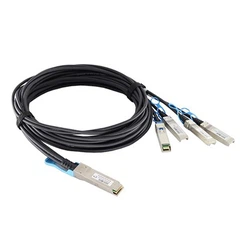
For 10G-25G, 25G SFP28 DAC/AOC can be directly used for short-distance switch interconnection; for long-distance transmission, SFP28 optical module and LC jumper are generally used, in which LC jumper can directly use the LC jumper used in the original 10G network, effectively saving wiring cost. For 10G-40g, 40G QSFP+ DAC/AOC can be directly used for short-distance switch interconnections. In case of long-distance transmission, QSFP+ optical module needs to be used in combination with 12-core MTP/MPO jumpers or LC jumpers. Among them, the 12-core MTP/MPO jumpers are more expensive than LC jumpers and incompatible with LC jumpers used in the original 10G network, which will increase wiring costs.
Conclusion
Although both 25G and 40G can be used as paths to upgrade to 100G, there are differences in application and other aspects. Typically 25G is used for switch-to-server connections, and 40G is used for interconnections between switches. For users deploying new networks, there is flexibility, depending on the volume of traffic. For users planning to upgrade their network to 100 gigabytes or higher, consider deploying 25 gigabytes.