




During the vision design of 5G, the maximum throughput rate of a single sector is 20Gbps, and the actual peak throughput rate is expected to reach several “G”. Therefore, extremely high requirements are put forward for the carrying network. At the same time, the network architecture of layer upon layer forwarding could not adapt to the demand of the future network for low delay, so it was inevitable that the OTN would sink and the optical layer would jump directly.
5G middlehaul and backhaul have basically the same requirements for the carrier network in terms of bandwidth, networking flexibility, and network slicing. At present, it seems that the existing urban OTN network architecture is a technology suitable for 5G carrying demand. The urban OTN network architecture includes core layer, aggregation layer and access layer, in which the core layer corresponds to 5G return network, while the aggregation layer and access layer correspond to the middlehaul/fronthaul. And the packet enhanced OTN formed by the fusion of OTN and PTN technology can better match the 5GIP bearing demand, which is expected to be widely adopted in the middlehaul and backhaul links.
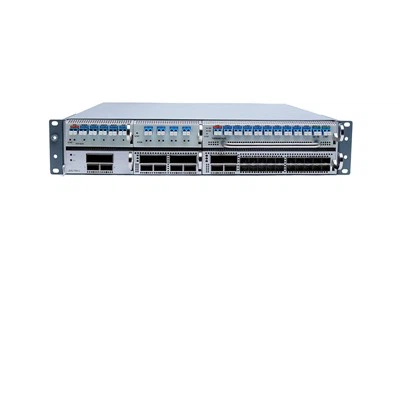
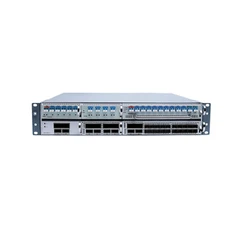
For 5G middlehaul, the current IP RAN device bandwidth is insufficient, while DU and CU dynamic performance is limited, so 100G OTN device combined with PTN packet function is suitable for realization.
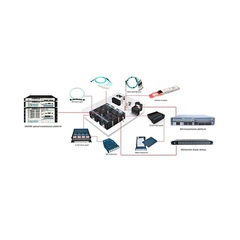
In the aspect of backhaul, not only the demand of mobile load, but also the comprehensive urban load demand of fixed-shift fusion should be considered. OTN technology will combine IP/MPLS/SR/EVPN technology and adopt 200G/400GOTN equipment. Therefore, it can be seen that in the future 5G middlehaul/backhaul will continue the current trend of OTN technology penetration to mobile transmission and backhaul, pushing it to further sink to the transmission/return link. At that time, there will be a large amount of incremental demand for 100G OTN devices in the middlehaul, and even a large number of applications of 200G/400G OTN technology as the solution in the backhaul, thus driving the demand for OTN optical devices and high-speed optical modules.
The development of 5G is actually aimed at meeting the needs of connection and business in 2020 and the future. Its network architecture will shift from 2/3/4G human-oriented connection to 5G human-oriented connection. In the future, mobile Internet and Internet of things will become the two main driving forces for the development of mobile communication, providing a broader prospect for 5G.