




The traditional LC cabling system has been unable to meet the high-speed and high-density requirements of 40g or 100g data center. In this case, two new connection methods, base-8 and base-12 MTP / MPO cabling system, were born. So what are base-8 and base-12 MTP / MPO cabling systems? In MTP wiring system, how to choose?
What is the base-8 MTP / MPO cabling system?
Base-8 MTP / MPO optical fiber jumper is a fixed MTP trunk jumper with polarity B. It uses MTP connector based on 8 optical fibers to increase the fiber link. The 8-core connection can easily realize 100% utilization of optical fiber in backbone network, and will not cause other losses. In addition, its wiring is more simple and flexible. The 8-core, 16 core and 24 core backbone cables belong to the base-8 MTP / MPO cabling system, but the 12 core backbone cables do not belong to the base-8 MTP / MPO cabling system. The base-8 MTP / MPO cabling system is shown in the following figure:

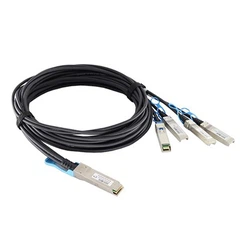
The base-8 MTP / MPO cabling system can be easily used in 2-core cabling systems because the number 8 can be divisible by the number 2. For example, an 8-fiber MTP / MPO fiber patch cord can be easily converted to four duplex LC jumpers. Of course, you can also use other solutions such as mtp-lc fiber distribution box to realize the conversion from base-8 MTP / MPO cabling system to 2-core cabling system.
What is the base-12 MTP / MPO cabling system?
Base-12 MTP / MPO fiber jumper is a non fixed MTP cable with a polarity in the backbone. It uses MTP connectors based on 12 fibers to increment the fiber link. The connection of base-12 MTP / MPO fiber optic cabling system is as follows:

Similarly, 1base-12 MTP / MPO fiber patch cord can be easily used in 2-core fiber cabling system, because the number 12 can also be completely divided by the number 2. The figure below shows the conversion from base-12 MTP / MPO fiber cabling system to 2-core fiber system using mtp-lc branch module.

We can choose base-8 or base-12 MTP / MPO cabling system from the following two main aspects:
1. Fiber utilization
In high density network cabling, base-12 MTP / MPO fiber patch cord has more advantages because it has more fiber cores and higher density. However, base-8 MTP / MPO fiber patch cord has better fiber utilization than base-12 MTP / MPO fiber patch cord. Although base-12 MTP / MPO cable is still the most common choice for most data center operators. Many optical modules (such as Sr4 optical module) only use 8 fiber interface. The base-8 MTP / MPO cable allows customers to connect fiber directly to the optical module without wasting any fiber. If we use a 12 core connector with only eight fibers in the optical module, it means that four fibers are not used. You can use a conversion cable to convert a base-12 MTP / MPO fiber patch cord to a base-8 MTP / MPO fiber patch cord (for example, converting two base-12 MTP / MPO fiber cords to three base-8 MTP / MPO fiber jumpers) to make the most of fiber. However, this can lead to additional insertion loss, which reduces the performance of fiber optic patch cords.
In addition, when MTP to LC duplex branch cables are used for connection, the base-8 MTP / MPO fiber patch cord can be divided into four LC duplex jumpers, because 8 can be divisible by 4. If you use a base-12 MTP to LC duplex branch cable, you will get six LC duplex jumpers. However, these cables cannot be fully connected to Jumpers with 16 or 32 cores because 6 cannot be completely divided by 16 or 32.
Because the fiber utilization rate of base-8 MTP / MPO cable is higher than that of base-12 MTP / MPO fiber jumper, base-8 MTP / MPO fiber jumper is a better choice for MTP high-density cabling. Of course, if you don't mind wasting fiber, you can also choose base-12 MTP / MPO fiber jumper.
2. Future cabling system
Base-8 and base-12 MTP / MPO fiber optic cabling systems can be seamlessly converted to 2-core cabling systems in smaller networks (such as 10g cabling systems). However, for the cabling of large data centers (such as 40g, 100g and even 400g cabling systems), the base-8 MTP / MPO cabling system can gain more market recognition because more 40g and 100g connections can be deployed using 8-core optical modules. The same is true for 400g direct connect scheme using 400g qsfp-dd optical module and mtp-16 trunk cable. In addition, since a base-24 MTP / MPO cable can be divided into three base-12 MTP / MPO fiber optic jumpers, the base-8 MTP / MPO fiber optic jumper can be used seamlessly with the base-24 MTP / MPO fiber optic jumper. Today, base-8 MTP / MPO fiber optic cabling system can still be used for 10G network deployment because it will be simpler and more economical to upgrade the network to 40g or 100g. However, the base-12 MTP / MPO fiber cabling system is not the best choice for optical modules with eight fibers.
Note: the optical fiber and MTP base / 12 can not be inserted into the optical fiber module of MPP base / 12 without optical fiber jumper. Because the base-12 MTP / MPO fiber patch cord usually has an unfixed MTP connector at both ends and needs to be used with the fixed 12 core branch cable module, while the base-8 MTP / MPO fiber jumper has fixed MTP connectors at both ends. Can base-8 and base-12 MTP / MPO fiber cabling systems be deployed in the same data center as long as their connections are separate.
New network applications have emerged, such as port breakthrough technology, which allocates high-speed ports (40g) to low-speed ports (10g) to reduce costs and increase density. Port breakthrough deployment has become a popular network tool, which is promoting the huge demand for parallel optical transceivers in the industry. Today, when 40 / 100g parallel optical transceivers operate as four 10 / 25g links, port breakthrough technology usually works. Breaking through the parallel port is beneficial to many applications, such as building large-scale ridge network and realizing high-density 10 / 25g network.
In addition to addressing the issues of fiber utilization, link loss, and costs associated with deploying high-density and high bandwidth networks, the last challenge for base-8 is the complexity of managing the cabling infrastructure, where MTP connectors plug directly into transceivers.
Historically, cabling solutions have used seamless MTP to MTP trunks for duplex tasks such as 10g. These trunks are plugged into the MTP to the LC branch module, and LC duplex jumpers are connected from the module to the data center electronics. Since the MTP pair requires a pin to pin connection, the MTP to LC module uses a fixed MTP connector inside the module. When moving to the parallel optical system, the trunk line is installed in the MTP adapter panel, and the MTP jumper is connected from the trunk line to the electronic device. This is where cabling challenges can arise.
contact:support@htfuture.com
Skype:sales5_ 1909,WeChat:16635025029