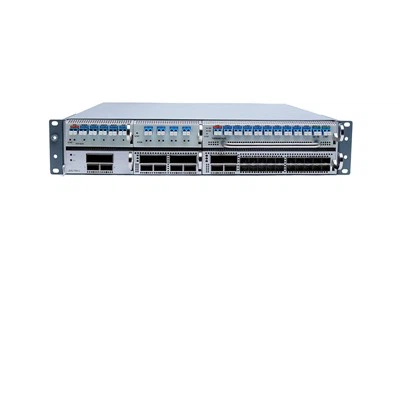



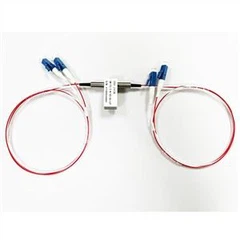
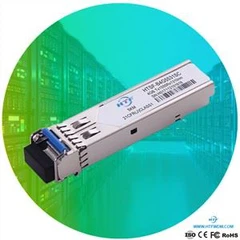


PON mainly adopts point-to-multipoint network structure, which is the main technology to realize FTTB / FTTH. PON technology contains a lot of content and is constantly updated iteratively. The development of xpon technology is from APON, BPON to GPON and EPON. These are simultaneous interpreting technologies and transmission standards developed in different periods.
What is APON?
At the end of 1990s, ITU first proposed APON for ATM packet communication. Apon makes use of ATM's centralized and statistical multiplexing, combined with the shared function of passive splitter on optical fiber and optical line terminal, which makes the cost 20-40% lower than the traditional PDH / SDH access system based on circuit switching.
What is BPON?
With the rapid development of Ethernet technology, APON is no longer used. At this point, the concept of BPON (broadband passive optical network) is proposed. BPON is based on ATM protocol, with up and down speeds of 155 and 622 Mbps respectively. In addition to dynamic bandwidth allocation, protection and other functions, BPON can provide Ethernet access, video transmission, high-speed leased line and other services.
What is EPON?
Because of the high cost of BPON deployment, it was later replaced by EPON with higher cost performance and faster speed. EPON (Ethernet passive optical network) is an Ethernet passive optical network. EPON is based on Ethernet PON technology, which combines the advantages of PON technology and Ethernet technology, adopts point to multipoint structure, passive optical fiber transmission, and provides a variety of services over Ethernet. Because EPON deployment is economical and efficient, it is the most effective communication method to realize "three networks in one" and "last kilometer".
What is GPON?
GPON (Gigabit capable passive optical network) is a gigabit passive optical network or a gigabit passive optical network. EPON and GPON adopt different standards. It can be said that GPON is more advanced, can transmit more bandwidth, and can bring more users than EPON. Although GPON has advantages over EPON in high speed and multi service, GPON technology is more complex and its cost is higher than EPON. Therefore, at present, EPON and GPON are widely used in PON broadband access. The choice of which technology is more determined by the cost of optical access and service requirements. GPON will be more suitable for customers with high bandwidth, multi service, QoS and security requirements and ATM technology as the backbone. The future development is higher bandwidth. For example, 10 g EPON / 10 g GPON is developed in EPON / GPON technology, and the bandwidth will be improved.
With the increasing capacity demand of network providers, the multi-functional access network must be expanded to meet the growing demand. Fiber to home (FTTH) passive optical network (PON) optical network access is the most widely used and implemented technology. The advantages of PON technology are that it can reduce the occupation of backbone optical fiber resources and save investment; the network structure is flexible and the expansion ability is strong; the failure rate of passive optical components is low, which is not easy to be interfered by the external environment; and the service support ability is strong.
HTF has many years of OEM / ODM manufacturing experience in the optical communication industry, and has a certain influence in the global industry. It focuses on providing customers with the design and development of optical communication passive basic optical devices, mainly including optical transceiver, optical fiber jumper, PLC splitter, WDM wavelength division multiplexer. The products are widely used in FTTH, data center, 5g network, telecommunication network and other fields