


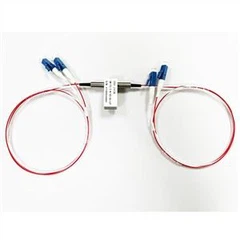
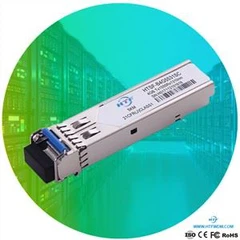


As a system concept, WDM technology usually has three multiplexing modes, namely wavelength division multiplexing at 1310 nm and 1550 nm, CWDM and DWDM.

Characteristic
(1) Ultra large capacity transmission.
The transmission capacity of the system can reach 300-400gbit / s or even more.
(2) Save optical fiber resources.
For WDM system, no matter how many SDH subsystems there are, the whole multiplexing system only needs a pair of optical fibers.
(3) Transparent transmission of each channel, smooth upgrade and expansion.
Each multiplexing channel of WDM system is independent of each other, so each channel can transmit different traffic signals transparently.
(4) Using EDFA to realize ultra long distance transmission.
EDFA has the advantages of high gain, wide bandwidth, low noise and so on. With a wide bandwidth EDFA, all multiplexed optical path signals of WDM system can be amplified at the same time, so as to realize the ultra long distance transmission of the system, and avoid the need for an optical amplifier in each optical transmission system. The ultra long transmission distance of WDM system can reach hundreds of kilometers, at the same time, it can save a lot of relay equipment and reduce the cost.
(5) Improve the reliability of the system.
(6) All optical network can be formed.
All optical network is the development direction of optical fiber transmission network in the future. WDM system can be mixed with OADM and OXC to form an all-optical network with high flexibility, high reliability and high survivability to meet the development needs of bandwidth transmission network.
Applications
● DWDM transmission
● Metro and long-haul networks
● Point-to-point DWDM fiber optimization
● Linear add/drop DWDM fiber optimizations
Environmental Conditions

CWDM
CWDM uses 1 200 ~ 1 700 nm wide window, which is mainly used in 1 550 nm system. Of course, 1 310 nm wavelength division multiplexer is also under development. The distance between adjacent channels of CWDM is generally more than or equal to 20 nm. The number of wavelengths is usually 4 or 8 waves, and the maximum is 16 waves. When the number of multiplexed channels is 16 or less, because the DFB laser used in CWDM system does not need cooling, in terms of cost, power consumption requirements and equipment size, CWDM system is more and more widely accepted by the industry. CWDM does not need to choose expensive dense wave decomposition multiplexer and "optical amplifier" EDFA, but only uses cheap multi-channel laser transceiver as relay, so the cost is greatly reduced. Nowadays, many manufacturers have been able to provide commercial CWDM systems with 2-8 wavelengths, which are suitable for use in cities where the geographical scope is not particularly large and the data business development is not very fast.
DWDM
DWDM can carry 8-160 wavelengths. With the continuous development of DWDM technology, the upper limit of its partial wave number is still growing, with the interval of less than 1.6 nm. It is mainly used in long-distance transmission system. Dispersion compensation technology is needed in all DWDM systems. In 16 wave DWDM system, conventional dispersion compensation fiber is used to compensate, while in 40 wave DWDM system, dispersion slope compensation fiber must be used. DWDM can combine and transmit different wavelengths in the same fiber at the same time. In order to ensure effective transmission, one fiber is converted into multiple virtual fibers. With DWDM technology, a single fiber can transmit data flow as high as 400 Gbit / s. as manufacturers add more channels to each fiber, the transmission speed of terabits per second is just around the corner. DWDM can combine and transmit different wavelengths simultaneously in the same fiber. In order to ensure the effectiveness, one fiber is converted into multiple virtual fibers. So if you plan to multiplex eight optical fiber carriers (OCs), that is, to transmit eight signals in one fiber, the transmission capacity will increase from 2.5 GB / s to 20 GB / s. Due to the use of DWDM technology, a single fiber can transmit up to 40 Gb / s of data flow. As manufacturers add more channels to each fiber, transmission speeds of megabits per second are just around the corner.

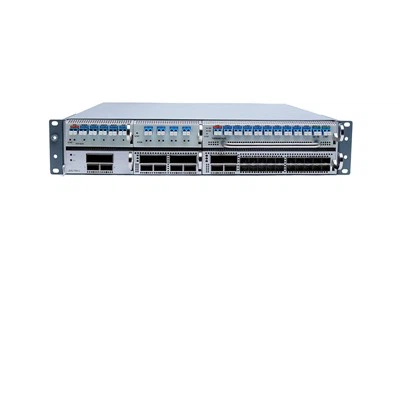
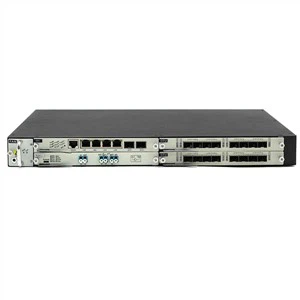
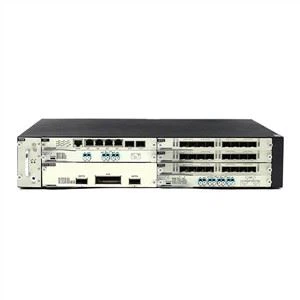
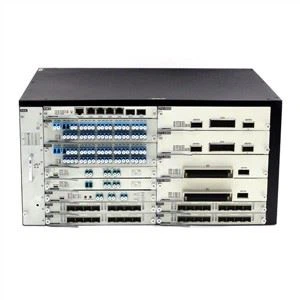
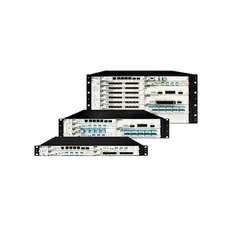
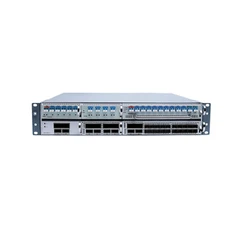
HTF products are mainly used in the backbone core layer, metropolitan core layer, metropolitan convergence layer, access layer and data center interconnection, etc., to achieve multi service, large capacity, fully transparent transmission function, which can meet the needs of operators for ultra large capacity and ultra long distance transmission, and provide a stable platform for operators' multi service operation and future network upgrade and expansion.
If you need anything, you can contact HTF Zoey.
contact:support@htfuture.com
Skype:sales5_ 1909,WeChat:1663502502