


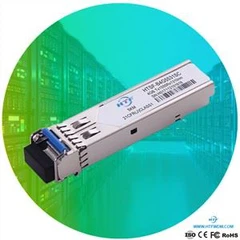


Main feature
WDM technology has many advantages and is developing rapidly. The bandwidth resources of the optical fiber can be used to increase the transmission capacity of an optical fiber several times to several tens of times compared with single-wavelength transmission; multi-wavelength multiplexing in single-mode optical fiber transmission can save a lot of optical fiber during large-capacity long-distance transmission; The installed cable has a small number of cores, and the wavelength division multiplexing can be used to expand the capacity without major changes to the original system; since the wavelengths of the signals transmitted in the same fiber are independent of each other, signals with completely different characteristics can be transmitted. Complete the integration and separation of various telecommunication service signals, including digital signals and analog signals, as well as the integration and separation of PDH signals and SDH signals; the wavelength division multiplexing channel is transparent to the data format, that is, it has nothing to do with the signal rate and electrical modulation mode.
A WDM system can carry multiple formats of "service" signals, such as ATM, IP, etc.; in network expansion and development, it is an ideal means of expansion, and it is also the introduction of new broadband services (such as CATV, HDTV and B-ISDN, etc.) Favorable means, adding an additional wavelength can introduce any new business or new capacity you want; using WDM technology to achieve network switching and recovery, which may realize a transparent and highly survivable optical network in the future; transmission in the national backbone network At the same time, the application of EDFA can reduce the number of SDH repeaters in long-distance trunk systems, thereby reducing costs.
The problem
The optical transmission network with add/drop multiplexing and cross-connect functions based on WDM technology has the advantages of easy reconfiguration and good scalability. It has become the development direction of high-speed transmission network in the future. It is beneficial to solve the following technical problems.
WDM is a new technology, and its industry standards are relatively rough. Therefore, the interoperability of WDM products of different businesses is extremely poor, especially in the upper network management. In order to ensure the large-scale implementation of WDM systems in the network, it is necessary to ensure the interoperability between WDM systems and the interconnection and intercommunication between WDM systems and traditional systems. Therefore, research on optical interface equipment should be strengthened.
The network management of the WDM system, especially the WDM network management with complex up/down path requirements, is not very mature. Large-scale adoption in the network requires effective network management of WDM systems. For example, in terms of fault management, since the WDM system can support different types of service signals on the optical channel, once the WDM system fails, the operating system should be able to automatically detect in time and find out the cause of the failure; the relevant operation and maintenance software is still not available so far. Mature; in terms of performance management, WDM systems use analog methods to multiplex and amplify optical signals. Therefore, the commonly used bit error rate is not suitable for measuring the quality of WDM services. A new parameter must be found to accurately measure the network provided to users.
The immaturity of some important optical devices will directly limit the development of optical transmission networks, such as tunable lasers. Usually 4 to 6 lasers that can be tuned in the entire network are used in optical networks, but it is difficult to commercialize such tunable lasers at present.