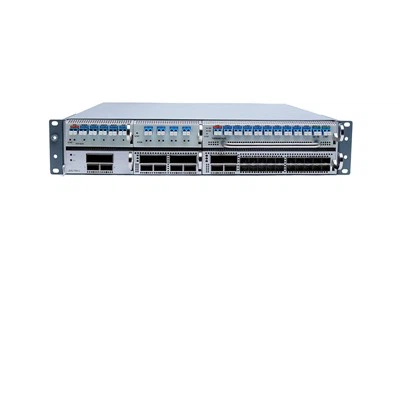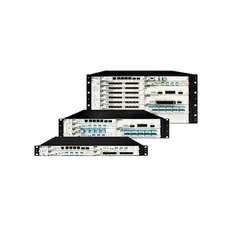
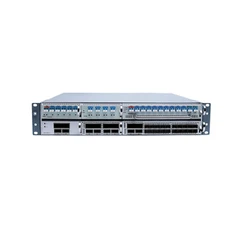

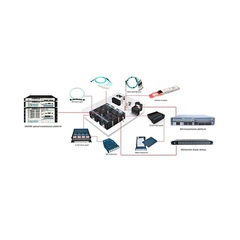


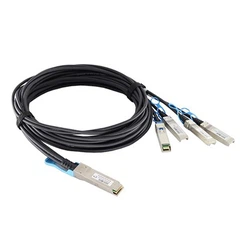
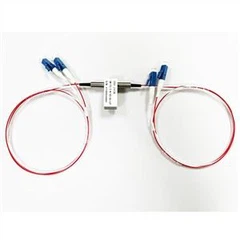
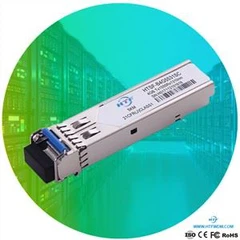


The value of flexibility and modularity lies in the ability to reconfigure the platform to meet the different needs of delivering different applications. If the platform is modular at the connector level, serial and parallel ports can be accommodated in the same end box as needed. In addition, modular connectors can be port specified by using color adapters, keyed adapters, and adapters with and without baffles.
Platform-level modular devices also allow clients to use the same end box in multiple applications while maintaining port density. If the user is using a high-core fiber optic cable, it may not be possible to pre-connect the two ends due to path constraints (such as a small catheter). The modularity of the platform should extend to end boxes so that the same end boxes with different internal components can accommodate their internal or external field splices.
Today, MPO has become the preferred parallel optical connector for data centers, with 12 cores of fiber. Recently, based on breakthrough applications, 8 active fibers in 12 cores were found to be favored. And its platform should at least support these options. The ideal solution will support 8-core and 12-core fiber connections, with additional capabilities to support newer parallel connection variants that include one line of 16-core fiber and two lines in the same MPO, namely 24-core and 32-core fiber connections. Ideally, the connector platform will be able to mix the connector boxes in the same enclosure without losing port density. Most solutions support two or three of them.
There will be a trend toward more parallel connections, which is usually the first step in increasing bandwidth. Serial applications usually enter the market first as the processing speed of transceivers increases. By adding more channels (optical fibers), the bandwidth can be increased at the same processing speed. With the improvement of transceiver efficiency and speed, serial connection solutions tend to replace the earlier parallel connection solutions, which is periodic. Most data centers start with serial applications and, as parallel applications increase bandwidth, return to serial connection solutions after a few years due to improved transceiver efficiency. The end-to-end platform should have the flexibility to easily migrate connections from serial to parallel and back to serial as the application evolves.
The ideal connection solution should accommodate these trends, easily supporting serial and parallel connections, and accommodating different types of connector and cable management requirements. By designing distribution frames that are highly modular and flexible, fiber providers can provide additional support for data center architectures.