




Application of FEC in 100G Networks
In the context of fiber-optic networking, FEC is used to address optical SNR (OSNR) - one of the key parameters that determine how far a wavelength can travel before it needs regeneration. FEC is especially important at high-speed data rates, wherein advanced modulation schemes are required to minimize dispersion and signal correspondence with the frequency grid. Without the incorporation of FEC, 100G transport would be limited to extremely short distances. To implement long-haul transmission (> 2500 km), the system gain must be further improved by approximately 2 dB. FEC's upgrade from hard-decision to soft-decision fills this performance gap.
As the push for ever-higher transmission rates has continued, soft-decision forward error correction (SD-FEC) schemes have grown in popularity. Although these can require a byte overhead around 20% — nearly three times as large as the original RS coding scheme — the gains they produce in the context of high-speed networking are substantial. FEC that results in a 1 to 2 dB gain on a 100G network, for instance, translates to a 20% to 40% greater reach.
Matters Needing Attention for FEC in 100G Networks
What to consider when configuring FEC in 100G networks? It is suggested to pay attention to the following tips.
Implementation Method
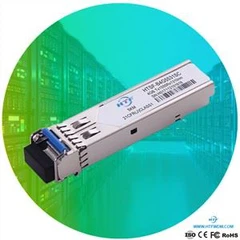
Some special modules have their own FEC functions, such as the HTF 100G CFP conversion module. While 100G QSFP28 optical module mainly relies on FEC function configuration on the device to realize error correction, such as 100G switches.
Whether the Switch Supports FEC
The configuration of FEC on 100G switches can be achieved only if the switch supports it, and not all switches do so.
Whether to Enable FEC on 100G QSFP28 Transceivers
The FEC function is not just an advantage, the process of correcting error code will inevitably cause some data packet delay. Therefore, not all 100G QSFP28 transceivers need it. According to IEEE standard protocol, it is not recommended to enable FEC when using QSFP28-LR4-100G transceivers, except which it is recommended to enable it. Since the technology of 100G QSFP28 optical modules varies from company to company, so the situation is not exactly the same.
FEC Function Consistency at both Ends of the Link
The FEC function of the port is part of the auto-negotiation. When auto-negotiation of the port is enabled, the FEC function is determined by negotiation at both ends of the link. If the FEC function is enabled at one end, the other end should also enable it, otherwise, the port is not up.
Stacking & FEC
Configuring the FEC command is not supported if the port is already configured as a physically stacking port. Conversely, ports that have been configured with FEC commands do not support configuring as a physical stacking member.
Conclusion
The role of FEC has become of critical importance in fiber optic communications, as backbone networks increase in speed to 40 and 100G, particularly as poor optical-signal-to-noise environments are encountered. Such environments become more commonplace in higher-speed environments, as more optical amplifiers are deployed in networks. With all these developments, FEC will continue to play a role in future networks. To ensure normal operation of the network, it is recommended that you pay special attention to the FEC function on optical modules, which will help you improve the performance in data transmission.