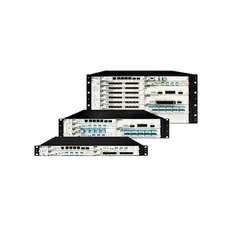
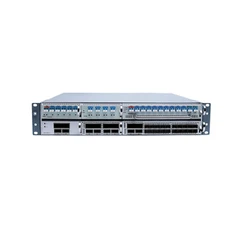

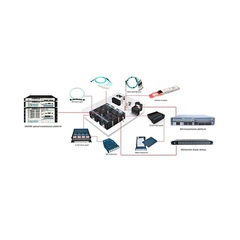


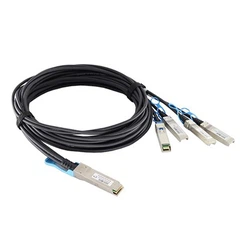


The demand for network connectivity in data centers is on the rise, especially with the increasing use of 17,286 core or 34,566 core optic cables in very large data centers. Connecting so much fiber to servers and switches is a key challenge because rack space is limited. Fiber distribution frame is the core of solving this challenge. In order to solve this problem, industry manufacturers are increasing the port density in distribution frames to meet the increasing bandwidth demand.
A challenge for data center architects is to maximize the use of valuable rack space. Each rack typically has 42 rack-cells (RU) or 48 rack-cells (RU), and the primary goal is to use this space to deploy as many servers as possible. Obviously, the less space you have for passive components, the more space you have for active hardware. Data center architects want to maximize the use of valuable data center space to deploy network-connected devices, and increasing port density is an effective solution.
At the same time, in terms of network connectivity, data center architects use different applications and fiber interfaces. Some use serial connections, while others use parallel connections to increase bandwidth. Ideally, passive infrastructure and horizontal cabling provide as much flexibility and modularity as possible to avoid buying different types of wiring solutions to meet different needs. Network connector formats are also evolving: simplex SC and duplex LC have been popular over the years. The alternative compact serial connector format is taking part in the latest "connector wars". In the past decade, parallel connection technology has made great progress.
But the performance of network connectors is improving, and everyone wants maximum flexibility in choosing the type of network connector. Whether each port duplex connectors with two optical fibers, or each port has more connection range of connector in parallel. It has been proven that each port has 72 core fibers with MTP, while it is common for each MPO/MTP port to have 24 core fibers. Port preferences can be moved from a serial connection to a parallel connection, and eventually serial connection technology. Without a flexible platform, the number of Macs facing the future will be limited and the duration of the investment will be limited.
A connector is a place where a connection is made between computing hardware and a high-core cable. During initial deployment, the user needs to deploy shielded cables and latches for ports on the connector board. Users need good cable management (conceived at platform design time and deployed at installation time) and access port latches. In some fixed panel designs, the need to enter the front and back of the panel can affect flexibility.
Some vendors offer panels with adapters that may provide more ports per panel, but they ignore cable management and have no flexibility or modularity features. Removable panels provide better port latch access, but are often less modular and flexible.
Most of these solutions provide limited modularity, so users must be aware of port types when purchasing panels. In addition, there is no panel space available for port identification when the ports of the fixed panel are filled at maximum density. With fixed panels, the panel design may deviate from the space of the 1RU panel in order to achieve maximum density, requiring 2RU, 3RU, or more rack space to achieve the highest port density.
Traditional modular connector designs limit some manufacturers to 72 ports per rack unit (RU). Some vendors have non-interchangeable platforms that are not flexible. Other solutions sacrifice port density to maintain interfaces to the Automated Infrastructure Management (AIM) solution, a lagging technology that prevents many vendors from increasing fiber density. In addition, many vendors do not want to introduce new platforms that are not compatible with previous platforms.