


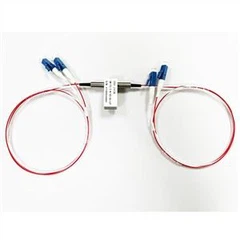
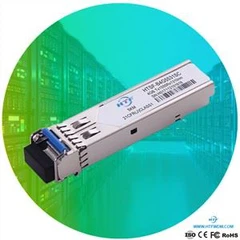


People usually think that the CWDM system is a low-cost alternative to the DWDM system that is now widely used. Because the advantage of CWDM technology lies in the use of relatively low-cost distributed feedback lasers that do not require cooling and low-cost passive filters.
Moreover, if CWDM technology is used, a cheaper small transceiver can be used. However, due to the relatively large CWDM channel spacing, the number of wavelengths available to the system will be reduced, which limits the transmission capacity of the system.
According to the current ITU G.694.2, a maximum of 18 CWDM wavelengths can be accommodated at 20nm intervals. For many applications, the average standard single-mode fiber (SSF) has a considerable loss at 8 wavelengths. Therefore, CWDM technology based on G.694.2 can only use 8 wavelengths on SSF, they are 1470, 1490, 1510, 1530, 1550, 1570, 1590 and 1610nm respectively. So far, as long as the customer's WDM network needs more channels, it must be converted to use DWDM.
Because DWDM has a small wavelength interval, it allows a large increase in the number of channels (usually 32, 64, 128 channels), and the channel interval can reach 200, 100, or even 50 GHz, but the cost of each channel has also increased significantly. Therefore, customers must evaluate the future development of their business volume and decide whether to install a CWDM system with less flexibility at a lower initial cost, or install a DWDM system with a higher initial cost with better flexibility.