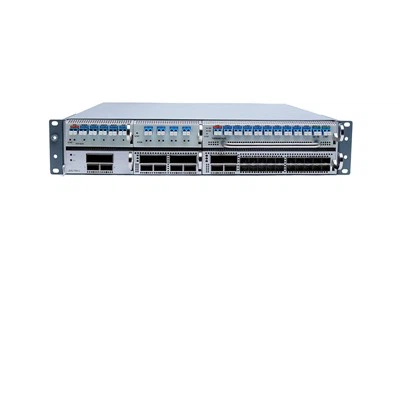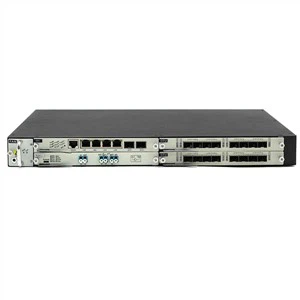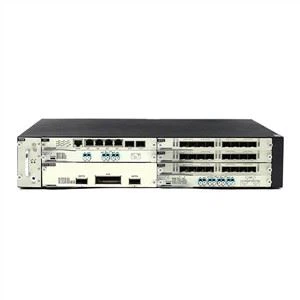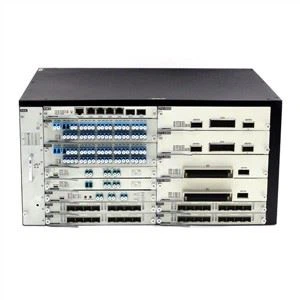



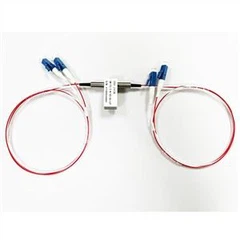
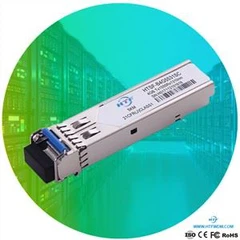


CWDM is a low-cost WDM transmission technology for access layer of man. In principle, CWDM uses an optical multiplexer to multiplex optical signals of different wavelengths to a single optical fiber for transmission. At the receiving end of the link, the mixed signals in the optical fiber are decomposed into signals of different wavelengths and connected to the corresponding receiving equipment.
Wavelength / frequency interval | 20nm |
Wavelength range | 1311 ~ 1611 (s + C + L band), max 16 waves |
Allowable frequency deviation of wavelength | 6.5nm |
Single wave rate | 1.25G、2.5G |
OTU laser | Uncooled laser (low cost / low power consumption) |
Does the system have an amplifier | None (RA can be used for CWDM) |
ITU-T protocol | G.694.1 |
Monitoring channel | ESC |
Characteristic:
Low insertion loss
High channel isolation
High stability and reliability
No glue in optical path
Low cost
Small size and easy to install
Application:
Online monitoring
WDM network system
Optical line terminal
Optical network unit
Fiber amplifier
Access network
CWDM is a coarse wavelength division multiplexing (CWDM), with wide channel spacing (20nm) and a small number of channels (16 channels within the channel width of 1200-1700nm). It is mainly used in the access network of man. The single channel transmission rate is relatively low and the system capacity is small. The rate of general CWDM application is 2.5G.

Advantages of CWDM system
1. Low equipment cost.
2. It can reduce the operation cost of network.
3. It can significantly improve the transmission capacity of optical fiber and improve the utilization of optical fiber resources.
4. Small size, low power consumption, saving room space.
5. It has good flexibility and scalability.
6. The requirement of WDM equipment system is not high.
CWDM has speed and protocol transparency, which makes it more suitable for the development of high-speed data services in man. There are many services with different protocols and different rates in man. CWDM provides a transmission channel with different rates and transparent to protocols on a single optical fiber, such as Ethernet, ATM, POS, SDH, etc. Moreover, the transparency and add / drop multiplexing function of CWDM can allow users to directly connect to a certain wavelength without converting the original signal format. In other words, the optical layer provides a transport structure independent of the service layer.
Due to the wide wavelength interval of CWDM system, the technical requirements of laser are low. Since the wavelength shift of the laser can be controlled in the range of + 5.0nm to + 5.0nm, the temperature of the laser can be controlled within the range of + 5.0nm.
CWDM MUX/DEMUX
MUX: multiplex optical signals of different wavelengths to a single optical fiber for transmission.
Demux: decomposes the mixed optical signal from the end-to-end multiplexer into the original multi-channel optical wavelength signal.

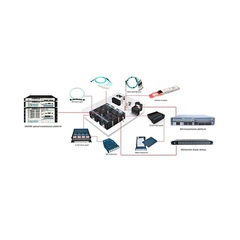
The overall structure of n-channel wavelength multiplexing CWDM system is as follows:
Optical wavelength conversion unit (OTU);
WDM: demultiplexer / combiner (ODU / OMU)
OTU: convert 850 nm and 1310 nm optical signals carrying services into CWDM specific wavelength optical signals and output them. At the same time, the original optical signals can be regenerated, shaped and amplified in different degrees.
The function of OTU: at the same time of wavelength conversion, it can also realize single / multi-mode conversion and optical signal regeneration and amplification.

Although ITU g.695 defines O, E, S, C, l five bands of CWDM, a total of 18 wavelengths are defined. However, due to the fact that too many g652 and G655 optical fibers are laid in the metropolitan area, there is a "water peak" in the E-band, resulting in too much attenuation of light transmission in this band window, and the service can not be opened normally.
The new "full wave" fiber eliminates the "water peak" near 1400nm in E-band, and the attenuation of 18 wavelengths is relatively smooth, which enables CWDM to use more wavelength transmission services.
Therefore, at present, CWDM mostly uses 8 wavelengths ranging from 1470 nm to 1610 nm.

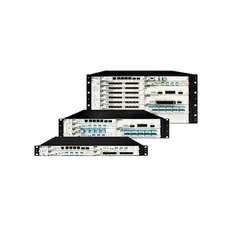
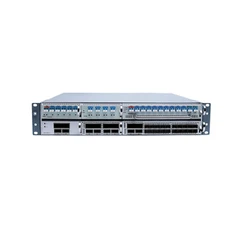
2.5u rack type CWDM equipment adopts flexible and extensible architecture, which is easy to manage and maintain. 8 OTU business cards can be inserted into the 2.5u chassis. Manage CWDM equipment. It is suitable for medium and large relay network solutions.

Requirements of optical monitoring access (OSC)
1. The pump wavelength of the optical amplifier is not limited by the monitoring channel;
2. The distance between two line amplifiers should not be limited in the monitoring channel;
3. The monitoring channel can not limit the service at 1310 nm in the future;
4. When the line amplifier fails, the monitoring channel is still available;
5. OSC transmission should be segmented with 3R function and bidirectional transmission function. At each optical amplifier relay station, the information can be correctly received, and a new monitoring signal can be added;
6. Considering the two-way transmission system on two optical fibers, OSC transmits in two directions. In case a fiber is cut off, the monitoring information can still be received by the line terminal.
The working principle of CWDM is to use optical multiplexer to multiplex optical signals of different wavelengths to a single optical fiber for transmission; at the receiving end of the link, the mixed signals in the optical fiber are decomposed into signals of different wavelengths by means of optical demultiplexer and connected to the corresponding receiving equipment.


If you need anything, you can contact HTF Zoey.
contact:support@htfuture.com
Skype:sales5_ 1909,WeChat:16635025029