





So how do we distinguish it?
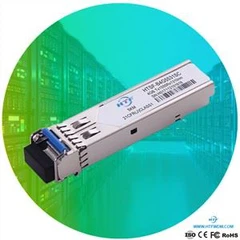
1. Appearance and use: single fiber optical module has one optical fiber interface, which connects one optical fiber; dual-fiber optical module has two optical fiber interfaces, which connect two optical fibers;
2. Conventional wavelength: the single-fiber module has two different wavelengths, and the dual-fiber module has only one wavelength;
The conventional wavelengths of single fiber mainly include the following:
Gigabit single fiber:
TX1310/RX1550nm
TX1550/RX1310nm
TX1490/RX1550nm
TX1550/RX1490nm
TX1310nm/Rx1490nm
TX1490nm/Rx1310nm
10 Gigabit single fiber:
TX1270nm/RX1330nm
TX1330nm/RX1270nm
TX1490nm/RX1550nm
TX1550nm/RX1490nm
Conventional wavelength of dual fiber: 850nm 1310nm 1550nm
3. Speed: Compared with dual-fiber optical modules, single-fiber optical modules have a wider range of applications in 100M, Gigabit and 10G speeds; but there are few in 40G and 100G high-speed transmission; but dual-fiber modules are It is a scheme that everyone often chooses.
Dual fiber: Both ends of the equipment use 10G SFP+ dual fiber optical modules with a wavelength of 1310nm.
Single fiber: One end device uses 1270/1330nm module, and the other end device needs to use 1330/1270nm wavelength module.