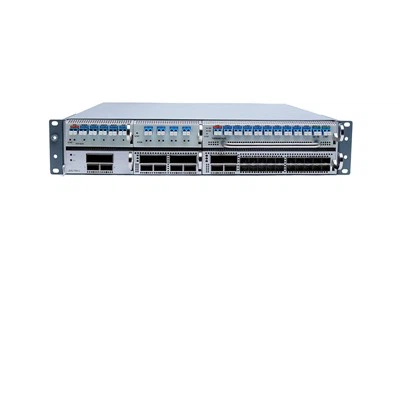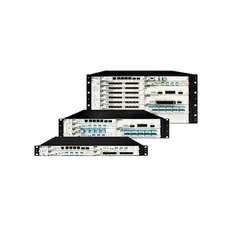
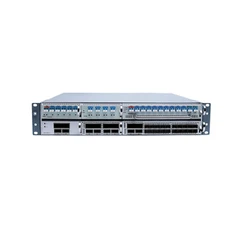

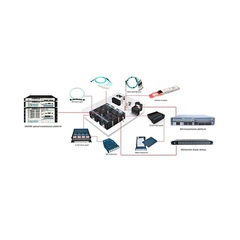


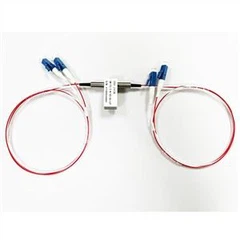
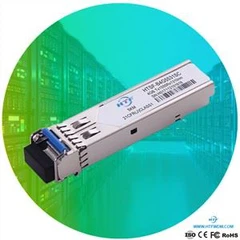


In Optical fiber communication systems, Optical Switch (OS) is mainly used to realize physical switching of Optical signals or other logical operations in Optical paths, and is often used as a key device for switching Optical paths in THE Optical cross-connect technology.
Optical switches have one or more optional transmission Windows and can be divided into 2×2, 1×N and M×N port configurations. Optical switches are widely used in optical fiber communication systems, and their realization technologies are various. Mechanical optical switch and MEMS optical switch are two kinds of optical switches widely used at present.
Mechanical optical switch
Mechanical optical switches work by physically moving optical fibers by means of mechanical devices to redirect optical signals. By means of a moving prism or a directional coupler, the input light is directed to the desired output port. There are three main types of mechanical optical switches: prism switching, mirror switching and mobile optical fiber switching.

MEMS optical switch
MEMS optical switch is based on the Micro-electro-mechanical system. It adopts optical micro mirror or optical microscope array to change the propagation direction of light beam to realize the switch of optical path. The principle of MEMS optical switch is very simple. When conducting optical exchange, the input light can be switched to different output ends of the optical switch by moving or changing the Angle of the MEMS micro mirror driven by electrostatic or magnetic power, so as to realize the switch and on/off of optical path. Its schematic diagram is shown in the following figure:

The principle of the 2×2 port optical switch based on MEMS technology is shown in the figure. Four optical waveguides are set in four directions, and a vertical MEMS micro mirror is set at a 45° Angle. When the micro mirror is not involved in the optical path, the beams from waveguide 1 and 2 are coupled to waveguide 3 and 4 respectively, and the port connection states are 1→3 and 2→4, which are the straight state. When the micro mirror is inserted into the optical path, the light beams from waveguide 1 and 2 are reflected by the micro mirror and coupled to ports 4 and 3, respectively. The connection states of ports are 1→4 and 2→3, which are cross states.

Working principle of 2×2 port MEMS optical switch, left figure: straight state, right figure: cross state
Mechanical optical switch & Comparison of advantages and disadvantages of MEMS optical switch
Comparison of advantages and disadvantages | Advantages | Disadvantages |
Mechanical optical switch | Low insertion loss; Isolation degree is high; It's independent of wavelength and polarization; The production process and technology are mature | The switching action time is long; Large volume is not conducive to making a large optical switch matrix |
MEMS optical switch | Small volume, high integration; High scalability; Low polarization loss; Fast switching speed | The high cost; Production process and technical requirements are high |
With the rapid development of optical communication, the role of optical interconnection and optical exchange as optical network nodes is more and more important, and the application of optical switches is more and more extensive. MEMS optical switch has the advantages of compact, fast switching speed and easy expansion, and has the advantages of low insertion loss, low crosstab; low polarization sensitivity, high extinction ratio and waveguide switch with high switching speed, small volume and easy large-scale integration. It will be the main trend in the development of large-capacity switched optical network switches.
Any questions or need? Please contact me.
Doris from HTF will always ready to assist you.
Email:sales2@htfuture.com
Skype:live:sales2_4719
WhatsApp:+8615816873196