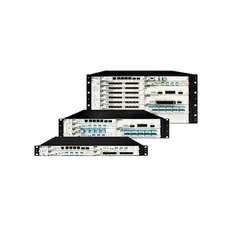
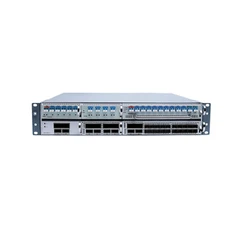

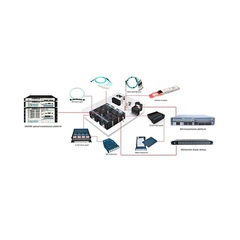


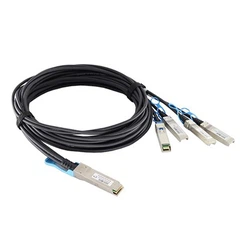


When study the Optical Communication, Do you feel confused about so many terminologies? HTF share you a cheat sheet of this knowledge. Keep it now.
1. ADM Add Drop Multiplexer
Bandwidth switching is used to implement broadband management, which allows different VCs between two STM-N signals to be interconnected, and has various interface signals (PDH) specified by G.703 without tapping and terminating the overall signal. Or the STM-N signal (SDH) is connected to any branch in the STM-M.
2. AON Active Optical Network
The active optical network is a point-to-multipoint optical communication system consisting of an ONU, an optical remote terminal OLT, and an optical fiber transmission line.
3. APON ATM Passive Optical Network ATM
An ideal long-term solution that combines ATM multi-service multi-bitrate support and passive optical network transparent broadband transmission capabilities, represents the latest development direction of broadband access technology for the 21st century.
4. ADSL Asymmetric Digital Subscriber Line
Asymmetric Digital Subscriber Line System ADSL is a digital subscriber line DSL system that uses discrete multi-tone DMT line codes.
5. AA Adaptive Antenna
An antenna provides a beam that is directed at a target, such as an antenna of a mobile phone, capable of automatically adjusting power as the target moves, also known as a smart antenna (SMART ANTENNA).
6. ADPCM Adaptive Differential Pulse Code Modulation
An encoding technique that reduces the number of bits of analog sampling from 8 bits to 3 to 4 bits to complete the compression of the transmitted signal. ITU-T recommends G.721 to define an algorithm for 32-bit ADPCM (8000 samples per second. Each sample is 4 bits long, and its transmission capacity is doubled compared to conventional PCM coding.
7. ADFE Automatic Decree Feedback Equalizer
An equalizer technique that utilizes the determined signal as an input signal to the backward tap to eliminate the effects of noise on the backward tap signal.
8. AMI Alternate Mark Inversion
A coding technique commonly used in digital transmission, with logic 0 represented by a null level and logic 1 represented by alternating positive and negative voltages.
9. AON All Optical Net
That is, the signal channel between the network and the end user node still maintains the form of light, that is, the end-to-end all-optical path, and there is no photoelectric converter in the middle. In this way, there is no obstacle to photoelectric conversion in the flow of the optical signal in the network, and the information transmission process does not need to face the difficulty in processing the information rate of the electronic device.
10. AOWC All Optical Wave Converter
A device that directly converts information from one wavelength of light to another without electrical domain processing.
11. ASK Amplitude Shift Keying
A keying technique that corresponds to a binary modulated signal that switches between on and off, also known as ON-OFF keying.
12. ATPC Automatic Transfer Power Control
The point of the technology is that the output power of the microwave transmitter changes in the ATPC control range by automatically tracking the change in the receiving level of the receiving means. It has the advantages of reducing interference to adjacent systems, reducing the upper attenuation problem, reducing DC power consumption, improving the residual error characteristics, and increasing the output power by an additional 2 dB under fading conditions.
13. AWF All Wave Fiber
The water peak of the fiber at 1383 nm is eliminated, so that more than 120 new wavelengths (interval 100 GHz) can be added in the 1350-1450 nm band. It is very beneficial for users of the urban access network.
14. AU Administrative Unit
It provides an information structure for the adaptation function between the higher-order channel layer and the multiplex section layer.
15. AUG Administrative Unit Group
It consists of one or more management units that determine the location that occupy a fixed position in the STM-N payload.
16. APD Avalanche Diode
A highly sensitive detector that utilizes an avalanche multiplication effect to multiply photocurrent.
17. BA Booster(power) Amplifier
An optical amplifier that compensates for the loss of the optical multiplexer and increases the fiber input power.
18. BBER Background Block Error Ratio
For a certain test time, the ratio of the number of BBEs present at the available time to the total number of blocks deducting the unavailable time and all blocks during the SES.
19. BR Basic Rate Access
ITU-T defines an interface rate for narrowband ISDN, also known as 2B+D, B channel 64K is the bearer channel, and D channel 16K is the digital signaling channel.
20. Bluetooth
It’s a wireless LAN standard that is jointly developed by equipment manufacturers and has a coverage of 10M, a working frequency band of 2.4G, and a transmission rate of approximately 1M.
21. C Band C
That is, the operating wavelength is in the range of 1525 to 1560 nm, and the bandwidth is about 35 nm.
22. Chirp
When the single longitudinal mode laser is operated in direct modulation, the change of the injection current causes a change in the carrier density, which in turn changes the refractive index of the active region, and as a result, the optical path length of the laser cavity changes accordingly. Causes the oscillation wavelength to drift with time. It is generally necessary to overcome it with an external modulation technique.
23. C Container C
The information structure for loading various rate service signals is denoted as C-n (11, 12, 2, 3, 4).
24. CSMA/CD Carrier Sense Multiple Access with Collision Detection
A multiple access technology applied to wired local area networks.
25. CSMA/CA Carrier Sense Multiple Access with Collision Avoidance
Since wireless products are not easy to detect whether there is a conflict in the channel, 802.11 defines a new protocol, namely (CSMA/CA). On the one hand, carrier sensing–checking whether the channel is idle; on the other hand, avoiding collisions–the probability of signal collision occurring when the channel is not idle, waiting through random time until a new idle channel occurs, so that the signal collision occurs. Minimize to a minimum. Not only that, but to make the system more stable, 802.11 also provides CSMA/CA with acknowledgement frame ACK. A signal collision can occur in the event of other noise interference, or due to a failure of the interception, and this ACK working at the MAC layer can provide fast recovery capability at this time.
26. CNR Carrier to Noise Ratio
The ratio of carrier level to noise level before any modulation is applied.
27. CP Cross polarization
Two antenna systems use the same frequency but one uses horizontal polarization and the other uses vertical polarization to improve spectrum utilization.
28. DCF Dispersion Compensating Fiber
It is a large negative dispersion fiber, which is a new type of fiber designed for the 1310nm design. A certain dispersion compensation fiber is added to the G.652 fiber to perform dispersion compensation to ensure that the total dispersion of the entire fiber line is zero.
29. DFF Dispersion-flattened Fiber
A wide range of dispersions from 1.3um to 1.55um can be used to achieve very low, virtually zero-dispersion fibers.
30. DR Diversity Receiver
Diversity reception is a measure to reduce the impact caused by fading by selecting or synthesizing two or more receiver outputs with less correlation (ie, simultaneous quality deterioration). Specifically, it can be divided into different ways such as spatial diversity, frequency diversity, polarization diversity, and angle diversity.
31. DPT Dynamic Packet Transport
This is a new transmission method proposed by Cisco – IP-optimized optical transmission technology. This technology provides high efficiency in bandwidth usage, richness of service categories, and advanced self-healing capabilities of the network.
32. ODM Optical Division Multiplexer
Multiple wavelengths are divided into individual fibers to separate the channels.
33. DSF Dispersion-Shifted Fiber
Known as the best single-mode fiber at 1550 nm, this fiber is designed to match the fiber’s refractive index profile to zero-dispersion to the 1550 nm window, which matches the minimum window of the fiber, making ultra-high-speed and ultra-long-range transmission possible.
34. DTM Dynamic Synchronous Transfer Mode
A new technology based on high speed circuit switching and dynamic time slot allocation. As the second layer of switching/transmission technology, DTM has stronger bandwidth management capabilities and adapts to the continuous expansion of fiber bandwidth.
35. DWDM Dense Wavelength Division Multiplexing
Multiple optical multiplexing of the same low loss window, relative to coarse wavelength division multiplexing of optical multiplexing of different low loss windows.
36. DLC Digital loop carrier
Active optical network for densely populated areas
37. DXC Digital cross connect equipment
A device that has one or more quasi-synchronous digital hierarchy (G.702) or digital system (G.707) signal ports that can be controllably connected and reconnected between any port signal rate (and its sub-rates).
38. EA Electricity Absorb Modulation
A loss modulator that operates at the wavelength of the absorption region of the modulator material. When the modulator is unbiased, the wavelength is in an on state. As the bias voltage on the modulator increases, the absorption coefficient at the original wavelength becomes larger, the modulator becomes off, and the on/off state of the modulator is the light intensity modulation.
39. EB Error Block
The error performance for high bit rate channels in an SDH network is a “block”, a collection of consecutive bits transmitted in a channel. When an error occurs in any bit within a block, the block is said to be a block error.
40. ECC Embedded Control Channel
The embedded control channel that transmits the network management information has a physical channel of DCC and adopts a seven-layer protocol stack required by ITU-T G.784.
41. EDFA Erbium-doped Fiber Amplifier
When fabricating the fiber, a special process is used to incorporate a very small concentration of barium ions in the core layer deposition to produce a corresponding erbium-doped fiber. The doped ions in the fiber are excited to the metastable high-excited state after being excited by the pump light, and stimulated radiation is generated under the signal light to form a coherent amplification of the signal light. The EDFA works in the 1550 window. The commercial EDFA has low noise, good gain curve, large amplifier bandwidth, compatibility with wavelength division multiplexing (WDM) system, high pumping efficiency, stable working performance and mature technology, and is favored in modern long-distance high-speed optical communication systems. At present, “EDFA” + Dense Wavelength Division Multiplexing (DWDM) + Non-Zero Dispersive Fiber (NZDF) + Photonic Integration (PIC) is becoming the main technical direction of long-distance high-speed optical fiber communication lines in the world.
42. EDFL Erbium-doped Fiber Laser
A type of fiber laser that emits light at a wavelength of 1550 nm and consists of a doped fiber and an optical pump and other related optical components, such as a wavelength selector, a polarization controller, an input/output coupler, etc., having a low threshold, and Compatible with fiber-optic communication systems. In particular, the tunable circular EDFL has a large tuning range and high output power, and becomes the mainstream of tunable lasers. The main types are polished tunable WDM devices, DFB type, fiber birefringence tuning type, and piezoelectric tuning fiber FP etalon. Type and so on. EDFL is suitable for high-capacity long-haul fiber-optic communications and WDM systems.
43. ES Errored Second
When a certain one second has one or more error blocks, the second is called a block error second.
44. ESR Errored Second Ratio
The ratio of the number of ESs present at the available time to the total number of seconds for a certain test time.
45. FEC Forward Error Correction
It is a data encoding technology. The error detection during transmission is verified by the receiver, and if there is an error, the sender is notified to resend. It allows re-encoding from a low bit error encoded data to form a column of error free data streams.
46. FWM Four-wave Mixing
Four-Wave Mixing (FWM), also known as four-phonon mixing, occurs when two or three light waves of different wavelengths interact to produce new light waves of so-called mixing products or sidebands at other wavelengths. These lights can affect normal communication. This nonlinear optical effect is called four-wave mixing.
47. FDMA Frequency Division Multiple Access
The total frequency band of the communication system is divided into a number of equally spaced channels (or channels), and the channels are reassigned to different users. These channels do not overlap each other.
48. FTTB Fiber to the Building
ONU is placed in the building
49. FTTC Fiber to the Curb
ONU is placed on the roadside
50. FTTH Fiber to the Home
ONU is at home