


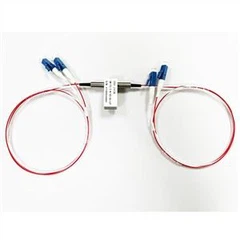
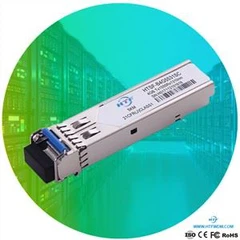


The basis and key to the realization of optoelectronic integration is still photonic integration.
(1) InP-based photonic integration technology
InP-based optoelectronic device technology is relatively mature, and the integration of optoelectronic devices with different functions can be realized by changing the band structure of quantum wells in a certain way on the InP material substrate. At present, the material growth technologies that changes the energy band structure of quantum wells mainly include quantum well hybrid technology, butt growth technology, same active area method, and selected area epitaxy technology. In order to obtain high-performance photonic integrated chips while minimizing costs, these technologies can be mixed. Among them, Guo Weihua of Huazhong University of Science and Technology and others used quantum well hybrid technology to realize on-chip photonic integration of passive and active optoelectronic devices, and fabricated InP-based monolithic integrated optical phased arrays. The monolithic photonic integrated circuit integrates lasers, beam splitters, phase shifters, semiconductor optical amplifiers, detectors and other components to realize 5°×10° two-dimensional beam deflection scanning.
(2) Silicon Photonic Integration
Silicon photonic integration can be divided into monolithic integration and hybrid integration according to materials and manufacturing processes. Silicon photonic monolithic integration is the use of Si CMOS manufacturing technology on the same silicon wafer to integrate multiple silicon-based photonic devices with the same or different functions to realize the transmission and processing of one or more optical signals on the same chip. However, some silicon-based active optoelectronic devices (especially silicon-based lasers) have not yet reached the optimal performance due to the characteristics of the materials themselves, and hybrid integration technologies have been produced.
Hybrid integration usually integrates optoelectronic device chips with different functions composed of different material systems on a silicon substrate or through bonding, interconnection or bonding on other substrates. Among them, there are many technical means for silicon photonic hybrid integration, including direct alignment coupling, grating vertical coupling, and BCB glue bonding. Several integration methods have their own advantages and disadvantages. Among them, G. Roelkens and others of Ghent University in Belgium used a special curing adhesive (DVS-BCB) to realize the III-V group device in order to realize the heterogeneous integration with the III-V optoelectronic device on the SOI optical waveguide. Tests show that the thickness of the BCB glue between the upper and lower chips is only about 45nm, and it can ensure the accuracy of the coupling process and the stability of the integration process.
(3) Optoelectronic integration
The continuous development of photonic integration technology makes large-scale optoelectronic integration technology possible. The development trend of optoelectronic integration technology mainly includes the following three aspects: First, high speed and high performance (low noise, high bandwidth, large dynamic range), which can meet the needs of end users for high-speed data transmission; second, large-scale array integration, which can Meet the backbone network's need for substantial speed increase; the third is multi-function signal processing, which integrates complex signal processing functions such as waveform generation, data judgment, clock recovery, broadband management, channel monitoring, and microwave signal generation/transmission/detection. The key technology of optoelectronic integration is undoubtedly the integration technology of photonic integrated devices and high-speed microelectronic devices. In view of the complexity of optoelectronic integration technology, the overall ideas of optoelectronic integration technologies currently mainly adopted at home and abroad are relatively consistent. They all adopt the relatively independent integration of the photonic layer and the electronic layer. The optical signal and the electrical signal are transmitted independently or layered. The electrical interconnection of electrical signals is realized through heterogeneous or heterogeneous interconnection technology between layers. The photonic layer is similar to the related technology of photonic integration. The electronic layer usually adopts standard silicon CMOS technology, and only silicon-based materials can achieve large-scale, low-cost manufacturing of VLSI. According to the types and implementation methods of optoelectronic devices used for integration, optoelectronic integration can be divided into monolithic optoelectronic integration and hybrid optoelectronic integration. The former is to realize the preparation and integration of optical and electrical devices on an all-silicon substrate, and the latter is realized on a silicon-based substrate through Silicon via (TSV) or other three-dimensional heterogeneous/heterogeneous integration technologies Integrate with many other optoelectronic devices.