


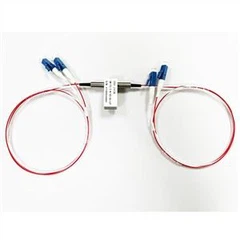
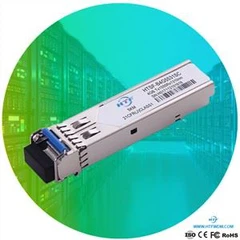


1. Optical module is a functional module, which belongs to accessories and cannot be used alone. It can only be used in switches and equipment with optical module slot; optical fiber transceiver belongs to functional device and is a separate device, which can be used alone with power supply;
2. The optical module itself simplifies the network and reduces the fault points. If the optical transceiver is used too much, the failure rate will be increased and the storage space of the cabinet will be occupied too much;
3. The optical module supports hot swap and flexible configuration; the optical transceiver belongs to fixed specifications, which is difficult to replace and upgrade;
4. The optical module is more expensive than the optical fiber transceiver, but it is relatively stable and not easy to be damaged; while the optical fiber transceiver is economical and practical, but it should consider the power adapter, fiber state, network cable status and other factors, transmission loss accounts for about 30%;
5. Optical module is mainly used for optical interface of optical network communication equipment, such as convergence switch, core router, DSLAM, OLT and other equipment, such as computer video, data communication, wireless voice communication and other optical network backbone network; optical transceiver is applied in the actual network environment where Ethernet cable cannot be covered and optical fiber must be used to extend the transmission distance, and it is usually positioned in a wide range Access layer application with man.
6. The optical module is composed of transmitting and receiving parts. The transmitting part is that LD or LED emits the modulated light signal with corresponding rate. The receiving part is: a certain bit rate of optical signal input module by the optical detection diode into electrical signals.
Application cases
The interconnection and wiring scheme of gigabit optical fiber transceiver with 1 SMP optical port + 1 RJ45 electrical port and CWDM coarse wavelength division multiplexer: when the equipment has an electrical port, the CWDM network needs to use the optical fiber transceiver. The Gigabit Ethernet copper network is converted into the Giga CWDM wavelength required by the CWDM coarse wavelength division multiplexer through the CWDM SFP gigabit optical module.
Three points should be paid attention to when connecting optical fiber module and optical fiber transceiver
1. The wavelength and transmission distance must be consistent, for example, the wavelength is 1310nm or 850nm at the same time, and the transmission distance is 10km.
2. Optical fiber jumper or pigtail must be the same interface to be able to connect. Generally, SC port is used for fiber transceiver and LC port is used for optical module.
3. The speed of optical fiber transceiver and optical module must be the same, for example, Gigabit transceiver corresponds to 1.25g optical module, 100m to 100m, and Gigabit to Gigabit.
4. The fiber type of optical module must be the same, single fiber to single fiber, double fiber to double fiber.