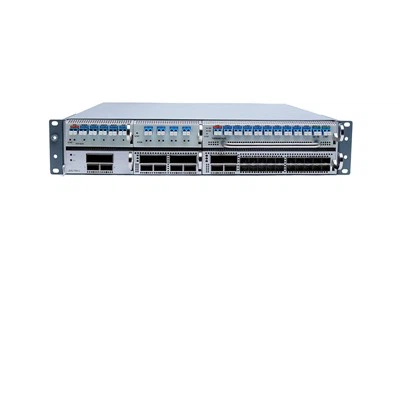





In early networks, PCS and switches, and switches and switches were connected and communicated over network lines. As the network grows, the physical distance between devices grows. But the network cable has become the bottleneck restricting the expansion of the network - the most effective transmission distance of the network cable is only 100 meters.
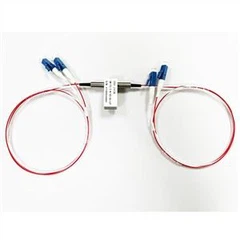
Of course, clever engineers are not to blame. When the distance between the two switches is more than 100 meters, we replace the original cable with optical fiber and use optical fiber transceivers for photoelectric conversion.
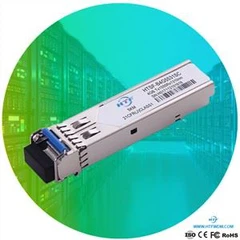
With the miniaturization of fiber-optic transceivers, an idea became a reality -- switches provided optical interfaces, fiber-optic transceivers reduced in size to optical modules, which were plugged into optical modules, and optical modules plugged into the switches' optical interfaces.
This improvement not only reduces the trouble nodes (the hidden trouble of falling off the network wire connecting switch and optical fiber transceiver, and the hidden trouble of power failure of optical fiber transceiver), but also beautifies the environment and saves costs. It can be said that it can kill more than one feather.
After taking over the fiber-optic transceiver, optical modules grew with the demand of the network and became a large family.
As an optional accessory to the switch, members of this family appear frequently in the configuration list.