




Review of the past network evolution road, 1G to 10G network upgrade is a major progress, especially in the data transmission, network bandwidth, to people's work and life has brought great satisfaction and convenience. Today's 10G to 40G network revolution means more than just the speed of the network, it is a huge leap in technology. In terms of network deployment, compared with 10G, 40G is more complex and takes more factors into consideration. This paper mainly analyzes from the following three factors.
Optical module
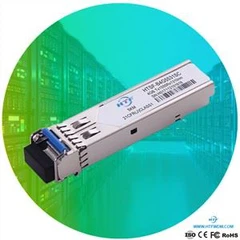
In order for a network to work properly, optical interconnection must be realized, and optical module is an important part of the realization of optical interconnection. Nowadays, in the application of 40G network, the optical module mainly has two encapsulation forms, namely QSFP+ and CFP. In terms of a single optical module, neither of these two encapsulated forms of optical modules is expensive. But in the data center, there are thousands of Optical modules that are used. This for the entire network deployment, the cost of a single optical module occupies a large proportion.
But fortunately, in the switch market is monopolized by the major brand manufacturers, each optical module manufacturers with continuous technological innovation; just take a place in the market. Now you can easily find third-party modules on the market with major brands, which have the same performance as the original brand, but at a much lower price. Many enterprises are now using optical modules to reduce costs when deploying 40G networks. However, while low cost is a very important aspect, the quality should not be underestimated, and not all third-party modules have quality assurance. Each module of HTF will be tested on the original switch before leaving the factory to ensure the quality and operability of the module.
Transmission medium
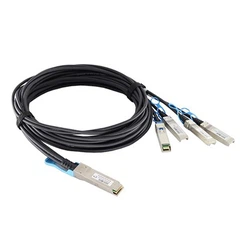
Different transmission medium has different transmission standards, although optical cable is hot, but copper cable still has an irreplaceable position. For copper cable and optical fiber transmission medium, common 40G standards are: 40gbase-cr4 (short distance copper cable transmission), 40gbase-sr4 (short distance multi-mode optical fiber transmission), 40gbase-lr4 (long distance single-mode optical fiber transmission), etc.
So the question is: in a 40G network deployment, which is better suited, copper or fiber? In terms of cost, copper cable is clearly superior. But its limitations are clear: in a 40G transmission, it can travel only a few meters. Optical fiber is less expensive than copper, but it has a long transmission distance. The maximum transmission distance of single-mode fiber can reach 10 kilometers. Although multi-mode optical fiber supports short distance transmission, its transmission range can be up to about 100 meters to 150 meters. Choose which transmission medium, or according to the different characteristics of the media depending on the specific actual situation.
40G MPO components
Because MPO technology helps increase the density of the fiber, most 40G multimode optical modules are based on MPO technology. According to IEEE802.3ba, multi-fiber push-in (MPO) connectors are generally used for multi-mode fiber connections with standard lengths. But there is a new problem: as the number of fibers increases, so does the difficulty of wiring data centers.
Unlike traditional fiber optic connections, the MPO connector is not directly connected to the terminal. Currently, most data centers choose pre-terminated MPO components to deploy 40G networks, which can save a lot of manpower and resources and is a better solution. The advice from HTF here is to determine the length of the cable and customize the pre-terminated MPO components before wiring, which can help you save a lot of time and cost.