




Distance
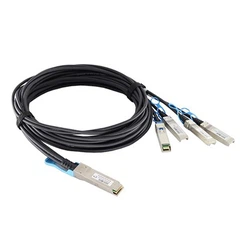
DAC can be extended to several meters, the length depends on the network speed, which is usually more than enough for the interconnection within the data center. Whether connecting between servers in a single rack or between switches in a cluster, DAC provides this function: reliable and affordable transmission with the highest available bandwidth.
Cost
When it comes to capital costs, DAC provides substantial savings. Generally speaking, the cost of passive copper cables is 2 to 5 times cheaper than optical cables of the same length. In addition, because the DAC does not consume electricity, and because its thermal design has low cooling requirements, it can significantly save data center operating expenses. If you use DAC copper cables instead of AOC optical cables, you can save hundreds of kilowatts of electricity.
Reliability and speed
One of the greatest advantages of DAC is reliability, which is measured by mean time between failures (MTBF). The MTBF of passive copper cables is approximately 50 million hours-usually an order of magnitude higher than the industry standard for optical cables. DAC provides a major benefit for enterprise data centers where reliable data transmission is critical: avoid downtime.
DAC copper cables can support 100 Gbps at a distance of up to 8 meters, which is ideal for data center deployment environments. HTF can provide cost-effective DAC copper cables. Provides lower delay, better reliability and lower power consumption, and the cost is much lower than fiber optic cables.