


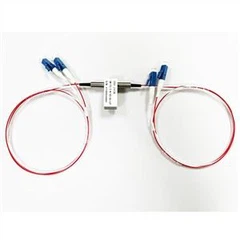
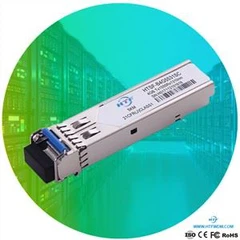


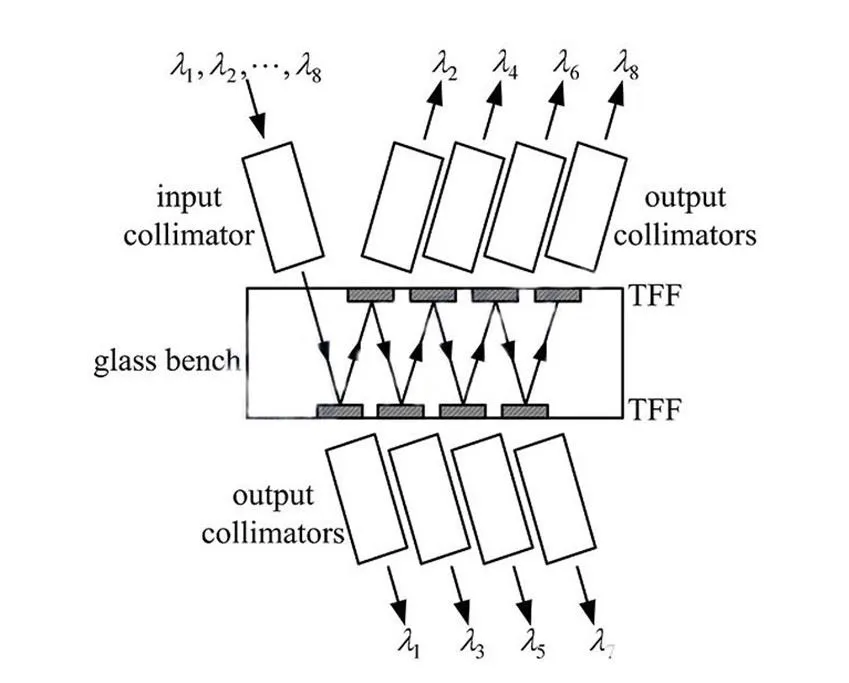
At present, there are three types of DWDM technology, which are based on AWG arrayed waveguide grating (AWG), dielectric film filter (TFF) and fiber Bragg grating (FBG). AWG is a kind of planar waveguide device. It is an array waveguide grating fabricated on chip substrate by PLC technology. Compared with FBG and TTF, AWG has many advantages, such as high integration, more channels, less insertion loss and easy batch production.
The athermal aawg has excellent thermal stability, improves the accuracy of ITU grid specified in itu-g694.1, and has wider transmission bandwidth, so it can be applied in high-end fields, such as metropolitan area network and long-distance DWDM optical fiber communication system. Better PMD characteristics (< 0.5ps) make it better meet the requirements of 40g / 100g DWDM transmission system and meet the PMD tolerance of high-speed system.
Aawg does not need external circuit control. As a pure passive device, aawg uses self compensation technology to control the external temperature adaptively, and the central wavelength is not sensitive to the change of external temperature.
Application
The basic function of AWG is wavelength combination / separation, which can realize wavelength multiplexing / demultiplexing, insertion / demultiplexing, wavelength routing, etc. By combining with optical switch, wavelength can be selected. AWG can also be used with multi wavelength laser to form multi wavelength light source.
1. Multiplexer / demultiplexer
2. Wavelength router
3. Optical add drop multiplexer
4. Multi wavelength light source
5. Optical wavelength selector (ows)
6. Multi wavelength receiver
7. Multi channel equalizer
The hot AWG uses a temperature control circuit and heater to keep the AWG chip in a constant temperature environment of about 70 ℃ and keep the wavelength of each channel stable. The non thermal AWG adopts special design and technology, which makes the wavelength not change with the change of external temperature. It does not use any heating device and control circuit, and does not need the auxiliary circuit. Without external circuit control, as a pure passive device, it uses self compensation technology to control the external temperature adaptively. The central wavelength is not sensitive to the change of external temperature. It can be widely used in metropolitan area network and long-distance DWDM optical fiber communication system.
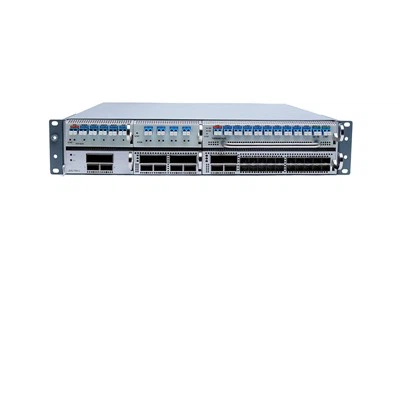
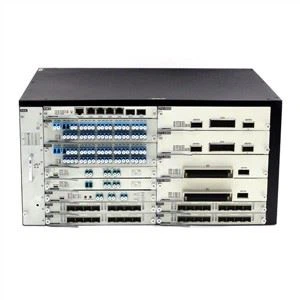
Heatless AWG module is based on arrayed waveguide grating technology, which does not need additional power supply or temperature control. It has the characteristics of low loss, polarization dependent loss and low crosstalk. It has good stability in the working temperature range from - 40 ℃ to 85 ℃. These modules can also be packaged in 19 inch metal boxes. At the same time, it can provide optical signal power monitoring port and other band expansion ports in the module.
With the vigorous development of 5g, users' requirements for bandwidth will be higher and higher. Operators will need to continuously improve data transmission rate, enhance transmission capacity, and reduce operating costs. Among them, the active WDM-PON scheme is difficult to deploy due to its high cost, while the passive WDM-PON has more application space due to its low cost, no power supply and easy installation. The heatless AWG will be widely used because of its larger channel number, more dense channel spacing, and no need to rely on power supply or temperature control.
In the construction of large capacity main transmission network, DWDM (optical dense wavelength division multiplexing system) becomes the main body of long-distance trunk transmission network due to its advantages of large capacity, multi service support and good scalability. In DWDM system construction, part of the rack planning is no power supply (such as WDM-PON). The athermal arrayed waveguide grading (AWG) is a new type of pure passive device, which is designed to meet the actual needs of field application.
A typical AWG structure is shown in Fig. 3, which consists of an input waveguide, an input star coupler (FPR in the figure), a group of array waveguides, an output star coupler and dozens of output waveguides.
Arrayed waveguide gratings are usually used in optical (DE) multiplexers in WDM systems. These devices can combine many wavelengths of light into a single fiber, thus improving the propagation efficiency of optical fiber networks.
Arrayed waveguide grating (AWG) is a key component of DWDM Network which is developing rapidly. AWG can obtain a large number of wavelengths and channels, realize the multiplexing and demultiplexing of tens to hundreds of wavelengths, and can flexibly form multi-functional devices and modules with other optical devices. High stability and good cost performance is also one of the reasons why AWG becomes the preferred technology for DWDM.
contact:support@htfuture.com
Skype:sales5_ 1909,WeChat:16635025029