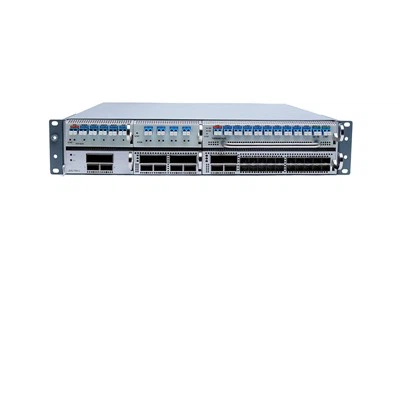



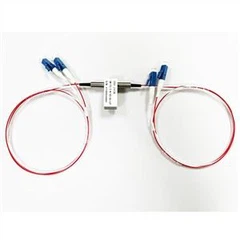
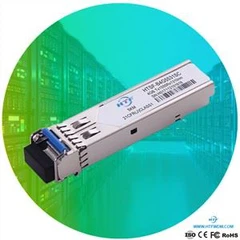


WDM combines two or more optical carrier signals of different wavelengths (carrying various information) at the transmitting end through a multiplexer (also known as a multiplexer), and couples them to the same optical fiber of the optical line. Transmission technology; At the receiving end, the optical carriers of various wavelengths are separated by a demultiplexer (also called demultiplexer or demultiplexer), and then further processed by the optical receiver to restore the original signal . This technology of simultaneously transmitting two or more optical signals of different wavelengths in the same optical fiber is called wavelength division multiplexing.
How does WDM work?
Wavelength division multiplexing (WDM) refers to the simultaneous transmission of multiple signals of different wavelengths coupled on a single fiber. It usually has multiple and partial waves. The main function of the multiplexer MUX is to combine multiple signal wavelengths in one optical fiber for transmission at the transmitting end. The main function of the demultiplexer DEMUX is to separate multiple wavelength signals transmitted in an optical fiber at the receiving end. The main purpose of wavelength division multiplexing is to increase the available bandwidth of the optical fiber. Therefore, wavelength division multiplexing systems are widely adopted by telecommunication companies and can be expanded through WDM without the need to lay more optical fibers.