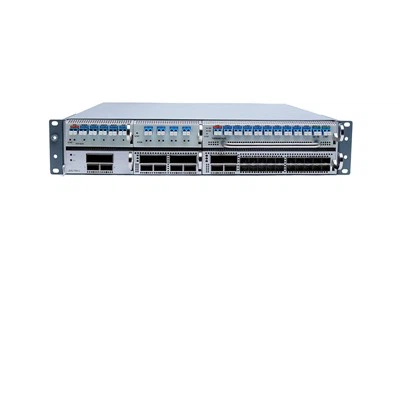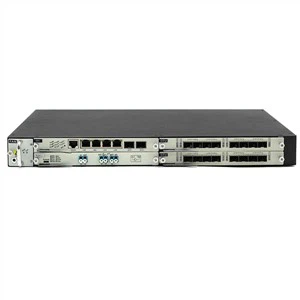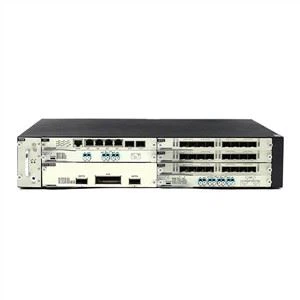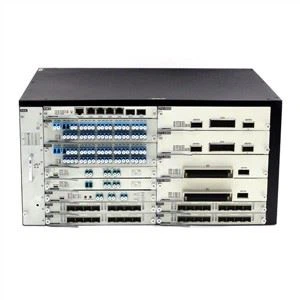






DWDM can combine and transmit different wavelengths at the same time in the same optical fiber. In order to be effective, one fiber is converted to multiple virtual fibers. Therefore, if you plan to multiplex 8 optical fiber carriers (OC), that is, transmit 8 signals in one optical fiber, the transmission capacity will increase from 2.5Gb/s to 20Gb/s.
Due to the use of DWDM technology, a single fiber can transmit more than 150 light waves of different wavelengths at the same time, and the maximum speed of each light wave can reach a transmission rate of 10Gb/s. As manufacturers add more channels to each fiber, Terabit transmission speed is just around the corner.
DWDM first allocates the incoming optical signal to a specified frequency (wavelength, lambda) in a specific frequency band, and then multiplexes the signal into an optical fiber. In this way, the bandwidth of the laid optical cable can be greatly increased.
Since the incoming signal is not terminated at the optical layer, the rate and format of the interface can be kept independent, which allows service providers to integrate DWDM technology with existing equipment in the network, while gaining access to the existing laying of optical cables. A large amount of bandwidth that is not available.
DWDM can combine multiple optical signals for transmission. As a result, these optical signals can be grouped into the same group and amplified at the same time and transmitted through a single optical fiber. The bandwidth of the network is greatly increased (see Figure 3). Each bearer signal can be set to different transmission rates (OC–3/12/24, etc.) and different formats (SONET, ATM, data, etc.).