


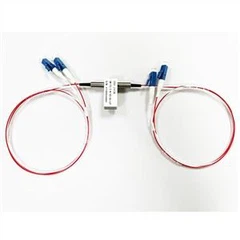
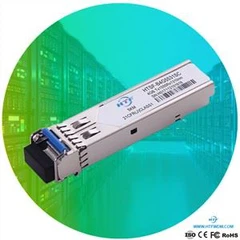


SFP + optical module is a new generation of 10 Gigabit optical module, which has the advantages of high density, low power consumption and lower system construction cost. Moreover, it has been widely used in 10 Gigabit Ethernet, SDH optical transmission network, WDM system engineering, single fiber bidirectional system engineering and so on. There are three kinds of structure of the optical module: limiting structure, linear structure and synchronous structure!
1.The difference of structure composition was as follows
2. Performance difference:
(1) Transmitter:
Because IEEE (Institute of electrical and Electronic Engineers) and fibre channel standards have very strict requirements on optical interface, and the transmitter of limiting amplitude and linear structure does not calibrate timing jitter, both of them need very high quality transmitters. In the synchronous architecture, a CDR is added at the transmitter of the SFP +. This CDR can reset the jitter budget in the module and eliminate the forwarding IC between the transmitter ASIC and the module, thus greatly reducing the requirement of ASIC for jitter performance.
(2) Receiver:
The difference between amplitude limiting, synchronous and linear structures is very obvious. In the limiting structure, the signal jitter after photoelectric conversion is not eliminated. In addition, there is a special jitter, namely PWS. When a narrow signal propagates through the loss medium, this jitter will occur when it is attenuated. In the synchronous structure, PWS will not cause any problems at all. If CDR function is added to the receiver, PWS will be effectively suppressed. Therefore, the synchronous SFP + module with CDR function can ensure low jitter and high-speed performance from PCB to ASIC. It helps to maximize the integration of motherboard and solves the standard problem of interface between motherboard and module successfully. In the linear structure, the linear characteristic of the interface helps the EDC circuit on the motherboard recover the high fading signal. Because the transmission distance of 10Gbit / s Ethernet LRM application is very long, the optical signal attenuation is very serious through this multimode fiber, so the linear interface is very suitable for this situation.
3. Cost variance:
Linear and limiting structure, because of the need to ensure high anti jitter ability, must consider statistical analysis and channel protection, so it can not achieve the low cost of Ethernet or fibre channel. In synchronous architecture, CDR is expected to reduce the cost of development, testing and manufacturing.