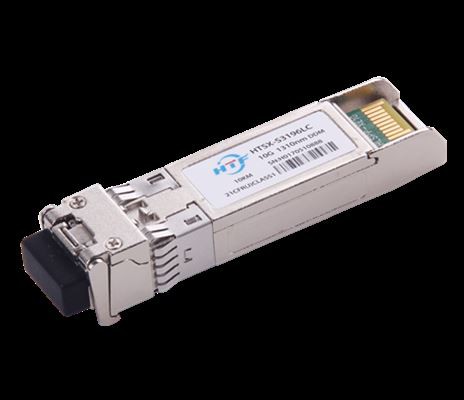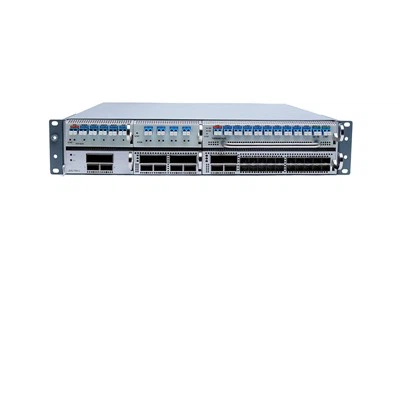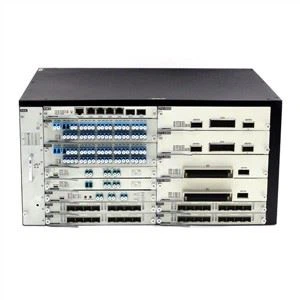




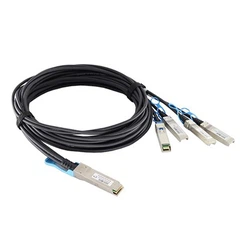
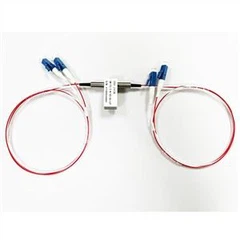
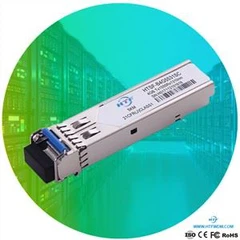


SFP optical module is an interface device that converts Gigabit electrical signals into optical signals. It is an industry-standard small pluggable Gigabit optical transceiver integrated module that can be inserted in network equipment such as switches, routers, media converters, etc. The SFP port is used to connect optical or copper network cables for data transmission. Usually we can find it in Ethernet switches, routers, firewalls and network interface cards.
What is the SFP port?
As mentioned above, SFP ports are common in network devices such as switches, routers, media converters, etc. Do you really understand SFP ports? The SFP port is mainly used for signal conversion and data transmission. Its port conforms to the IEEE 802.3ab standard (such as 1000BASE-T), and the maximum transmission distance can reach 1000 Mbps (the SFP port of the switch supports 100/1000Mbps)
The advantages of SFP port
The SFP port is a hot-swappable I/O interface (refers to the input/output interface), which has strong flexibility and is suitable for a variety of products, such as 1000BASE-SX, 1000BASE-LX/LH, 1000BASE-ZX or 1000BASE -BX10-D/U ports are exchanged, and SFP ports are backward compatible, supporting 10/100/1000Mbps.
The volume of the SFP optical module is reduced by half compared to the GBIC optical module. The number of SFP ports on the same panel will be twice that of the GBIC optical module. Similarly, the SFP optical module has a plug-and-play mini fiber slot, which is in line with the data The high density of the center requires that SFP optical modules will replace GBIC optical modules in the data center in the future.