


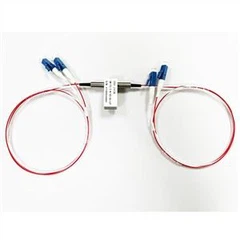
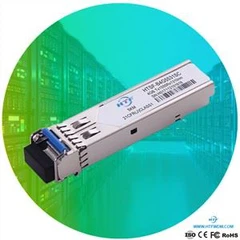


As we all know, optical module is an important part of optical communication network. With the popularization of optical communication network and the continuous development of optical communication technology, the quality of optical module is required to be higher and higher.
Detection of optical module before assembly
First of all, before the assembly of the optical module, the incoming inspection and patch inspection will be carried out. Among them, the incoming inspection refers to the manufacturer's inspection of the incoming components before assembling the optical module, such as the inspection of the optical transmitting component (TOSA), optical receiving component (ROSA) and optical transmitting receiving component (BOSA), so as to ensure the quality of the optical module, reduce the rework rate and defect rate, and avoid the damage of expensive optical components. Patch detection is mainly to detect whether the PCB patch is correct and whether there is pollution, so as to ensure the performance of the optical module.
Parameter test of optical module
Secondly, after the optical module is assembled, it is necessary to test a number of parameters, mainly the signals at the transmitter and receiver. When the average output optical power, extinction ratio, optical modulation amplitude (OMA), bit error rate, receiving sensitivity, eye diagram, wavelength and other parameters meet the relevant standards of MSA, the quality and performance of the optical module can be ensured.
Average output optical power detection
Average output optical power is an important parameter of optical module, which directly affects the quality of communication. As the name suggests, the average output optical power refers to the average optical power output by the optical module under normal working conditions. It can measure the output optical power of the optical module through the optical power meter, so as to complete the average output optical power test. For long-distance optical module, the average output optical power is generally greater than the maximum input optical power.
Bit error rate and receiving sensitivity test
Bit error rate (BER) is one of the parameters to measure the ability of optical module to transmit code correctly. Bit error rate refers to the ratio of the number of received bit error symbols after photoelectric conversion at the receiving end and the number of symbols given at the output end of the bit error meter within a specified time. The bit error rate test needs to receive the optical signal with pseudo-random signal output by the tested optical module through the standard receiver test unit. At the same time, the standard receiver test unit is used to demodulate and compare to complete the bit error rate test.
Receiving sensitivity is one of the key parameters to measure the performance of optical module receiver. The receiving sensitivity test needs the programmable optical attenuator to attenuate the power of the signal, so that the optical module receiver receives different power signals. Finally, the bit error rate under different optical power is compared by the bit error rate tester to complete the receiving sensitivity test. Among them, the better the receiving sensitivity is, the smaller the minimum receiving optical power is. Vice versa, if the receiving sensitivity is poor, the higher the requirements for the optical module receiver devices.
Eye diagram test
Eye pattern test and adjustment is an important stage to ensure the optical module to obtain the best signal. The so-called eye diagram is formed by superposition and accumulation of all the captured waveforms according to every three bits through the afterglow function of the oscilloscope. The digital signal quality of the optical module can be seen from the eye diagram test results. The performance of the optical module can be judged by carefully observing the eye height, eye width, jitter and duty cycle of the eye diagram. The larger the eye is, the smaller the inter symbol crosstalk is, and the better the performance of the optical module is The better.
Wavelength test
Since the optical modules used on both ends of the equipment must emit the same wavelength to establish communication, the manufacturer must test the wavelength of the optical module before shipment to ensure that it is within the deviation range. Generally, manufacturers will use spectrometers and other instruments to measure the central wavelength of optical modules, and the measured central wavelength value of optical modules will usually deviate from the standard value. The deviation of different types of optical modules is different, but it is recognized as long as the deviation is within the allowable range. For example, the central wavelength of the optical module of sfp-10g-lr is 1310nm, and its deviation is ± 50nm, and the deviation of the optical module of sfp-10g-sr is ± 50nm The central wavelength is 850nm and the deviation is ± 10nm. The center wavelength of dwdm-sfp10g-40 optical module is 1560.61nm, and its deviation is ± 0.8nm. If the test value is inconsistent with the standard specification, the optical module is considered as defective.
In addition, the optical module also needs to carry out extremely low temperature test, high and low temperature cycle test and constant damp heat test. As long as the optical module can work normally, its components are free of dislocation and damage, and the shell package is free of fracture; and the indicators of the optical interface meet the technical requirements, it means that the optical module has passed the test.
Other important tests
At the same time, in order to ensure the stability of the optical module, high temperature aging test, real machine test and interface test are also needed.
Aging test
Manufacturers usually use the photoaging box to simulate the limit conditions to test the optical module, so as to verify whether the performance of the optical module is up to the standard. After the aging test is completed, it is necessary to test the transmitter and receiver, mainly to check whether the optical power, extinction ratio, sensitivity and other parameters meet the requirements.
Real machine testing
The so-called real machine test is mainly for the compatibility test of the compatible module. The optical module is inserted into the switch of the corresponding brand for testing. If the communication is normal, it means that the optical module passes the test. If it cannot communicate, it means that the optical module is not compatible with it.
Interface detection
After each test item, the optical module needs to be inspected for dirt and scratches by microscope. If there is dirt, it needs to be cleaned. In fact, each test item will involve inserting the optical module into the equipment or instrument, so the optical module is easy to be polluted. Therefore, before shipment, the optical module needs to be tested under the microscope. If there is no dirt, it can be ready for packaging and shipment, but if there is dirt, it needs to be cleaned.
What tests does a high-quality optical module go through and the significance of its parameter test will help you to identify the quality of an optical module more quickly.
HTF's products quality is guaranteed, and the accessories are imported.
Contact: support@htfuture.com
Skype :sales5_ 1909,WeChat :16635025029