




There are any different wavebands in the transmission process of optical fiber, such as C-band (1530nm-1560nm) and L-band (1560nm-1600nm).
Because of the different wavelengths of different wavebands, communication will be affected. Therefore, it is necessary to amplify the span of the optical fiber link. The band channel can guarantee the normal communication effect.
EDFA fiber amplifier just caters to this demand. It can use residual fiber as a gain medium to amplify optical signals and amplify a wide wavelength range (1500nm-1600nm), which is sufficient to amplify the highest data rate data channel. This feature can play a greater role in the WDM multi-channel optical transmission system, and therefore has become an indispensable part of the WDM system.
Advantages of EDFA fiber amplifier ?
The gain of the EDFA fiber amplifier is high. The gain value of the fiber amplifier is one of the important parameters. A better fiber amplifier has a gain of 33dB, while the gain of an EDFA fiber amplifier is about 30-40dB, which has a higher gain.
The noise figure of EDFA fiber amplifier is small. EDFA fiber amplifier can radiate noise spontaneously, so its noise index is smaller than normal, generally 4~7dB.
The frequency bandwidth of the EDFA fiber amplifier. The EDFA fiber amplifier has a frequency band of 20-40nm at a wavelength of 1550nm, which can carry out multi-channel transmission and increase the transmission capacity.
The EDFA fiber amplifier has low loss. The working wavelength of the EDFA fiber amplifier is just the best wavelength for fiber communication (1500~1600nm), which belongs to the lowest loss area, so the loss of the EDFA fiber amplifier is low and the transmission distance is relatively long.
Application of EDFA fiber amplifier
1. Optical fiber wiring system
2. FTTX, FTTH
3. Dense Wavelength Division Multiplexing (DWDM) optical communication network
4. Video optical transmission system and CATV
5. Long-distance transmission of analog & digital CATV optical signal
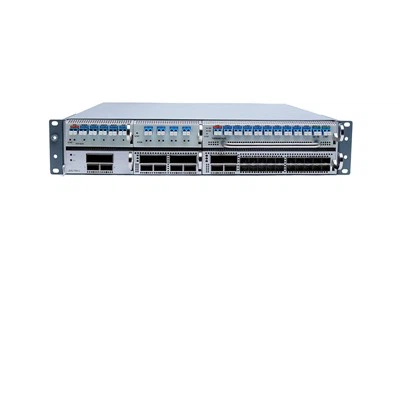
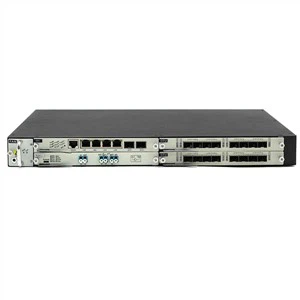
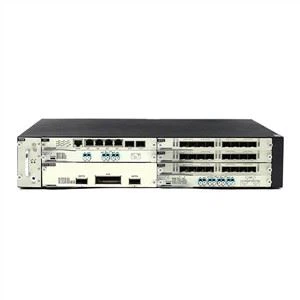
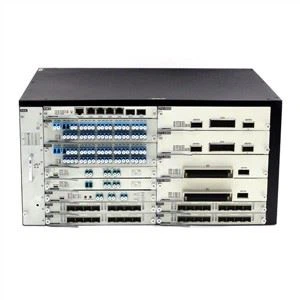
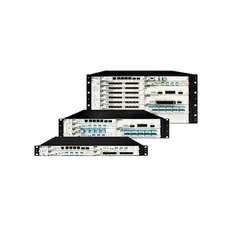
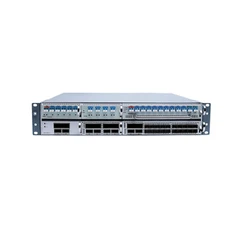
HTF provide multi-function EDFA optical amplifier modules, low noise, Erbium-Doped Fiber Amplifier (EDFA) solutions, the amplifier modules can be operated at constant gain (Automatic Gain Control AGC), constant output power (Automatic Power Control, APC). Integrated VOA can be automatically adjusted to achieve smooth gain spectrum. It can amplify the C-Band signal with or w/o middle stage access (MSA), which brings great flexibility for the network application.
Many model options serve all the traditional amplifier applications in an extended optical link: booster, in-line, and pre-amplifier A booster amplifier operates at the transmission side of the link. It features high input power, high output power, and medium optical Gain . Boosters are designed to amplify aggregated optical input power for reach extension.
An in-line amplifier operates in the middle of an optical link. It features medium to low input power, high output power, high optical Gain , and a low noise figure. In-line amplifiers are designed for optical amplification between two network nodes on the main optical link.
A pre-amplifier operates at the receiving end of an optical link. It features medium to low input power, medium output power, and medium Gain . Pre-amplifiers are designed for optical amplification to compensate for losses in a demultiplexer located near the optical receiver.
For more informations, please contact HTF team:
Email: melanie@htfuture.com
Tel/Whatsapp: +86 181 1124 5405