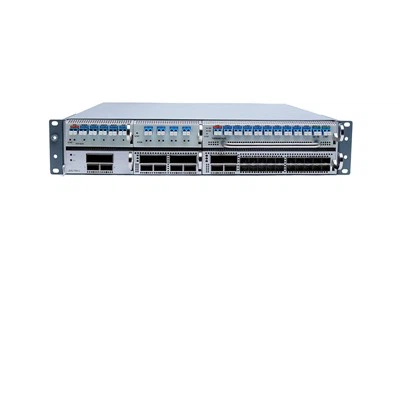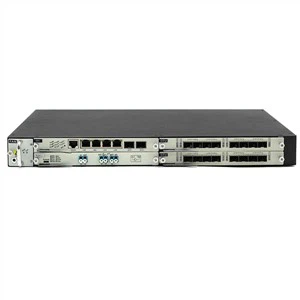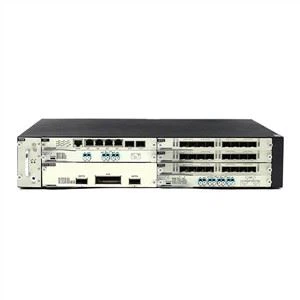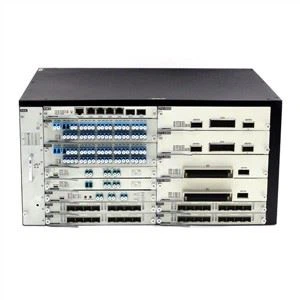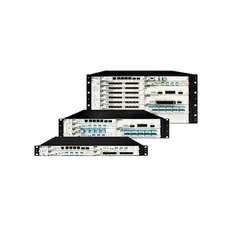
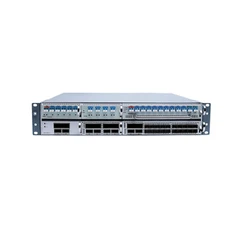

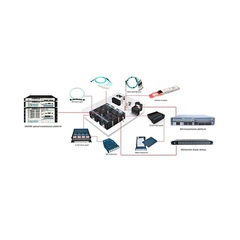


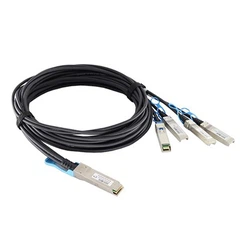
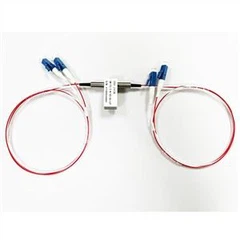


Optical fiber multiplexing equipment essentially USES 8 ~ 16 wavelength of rough wavelength division to perform WDM, and can synthesize different wavelength optical signals into a beam of light, which can be decomposed at the receiving end, so as to realize single-fiber multi wavelength division. New types of fiber multiplexing equipment mainly include 1:6 polymerizations, 1:8 polymerization, 1:12 polymerization and 1:18 polymerization. The wavelength ranges from 1271nm to 1611nm, and the number of channels that can be synthesized or separated is 6, 8, 12 and 18, respectively. The maximum transmission capacity is up to 80Gbit/s, supporting a variety of network bands including 2G, 3G, 4G and 5G. Compared with the old WDM equipment, this new type of optical fiber multiplexing equipment is more advanced in technology and more refined in appearance, quality and form, etc. It can be applied in all kinds of network construction environments, so that it can be deployed in multiple ways and timely alleviate the shortage of fiber core brought by large-scale station construction.
In 4G network base station construction scheme, operators of base station according to the physical location and stand type size, including the classification, we use the macro station as an example to illustrate the construction strategy of optical multiplexing equipment, first of all, we define the baseband processing units called BBU, radio frequency processing unit RRU for short, between the BBU and RRU through light module, optical signals between the antenna and RRU connection through the feeder etc., amplify the signal form the three sectors, so as to achieve coverage effect, therefore, in this article we will form a three RRU considered a set of base stations, and is defined as a light direction.
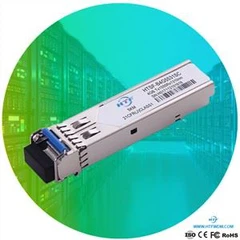
Using a 1:6 aggregation recovery device is composed of two fiber expander, network construction strategy is already defined in the direction of each light on the use of a set of, rapid expansion and complete fiber core resources, the specific scheme is placed matching fiber expander in proximal lateral BBU, for access to the corresponding three RRU, choose three in BBU light mouth, respectively using the wavelength of 1271 nm, 1311 nm and 1351 nm of 10Gbit/s colorful light module to connect. At this time, the service of the three optical ports converges on the single-core bidirectional optical fiber on the online side through WDM technology, and transmits through the optical fiber to the optical intersection box at the remote RRU. In order to continue the transmission of optical signals to RRU at the remote end, another optical fiber extender is placed in the optical transmission box, and then connected to RRU again through 10Gbit/s color light modules at 1291nm, 1331nm and 1371nm, respectively, to realize the optical communication between the proximal BBU and the remote RRU, thus completing the network construction.