



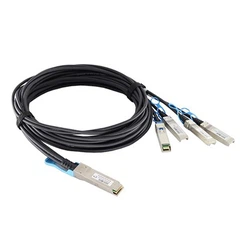
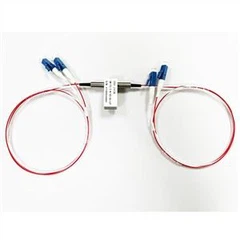
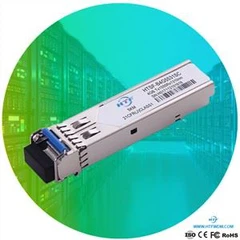


With the advent of 5G era, the optical module market, which started to decline after the completion of the global 4G basic deployment, has returned to the peak 5G era. The wireless network has increased the intermediate transmission link, and the specifications and quantity of optical modules have been improved synchronously.
More heat resistant: the whole network architecture evolves from CPRI to ecpri, and more importantly, the BBU end migrates to RRU end, which will inevitably lead to more and more power consumption of RRU end, so the heat-resistant ability of optical module is required to be stronger.
Save more fiber: there is a migration of the front-end architecture from dran to cran, which brings a shortage of fiber resources. Therefore, the optical module needs to be able to provide some more fiber-saving solutions.
Cheaper: the whole 5G frequency band is higher than before, and its coverage is smaller, so more base stations and more optical modules are needed. From the perspective of operators, optical modules need to be cheaper.
Higher speed: no matter the operation of the whole 5G is in the low and medium frequency or millimeter wave, if millimeter wave is used, the start is hundreds of megabytes, and the bandwidth of the whole process will be higher and higher, so a higher speed optical module is needed.
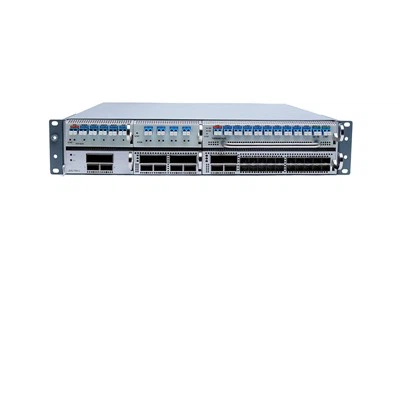
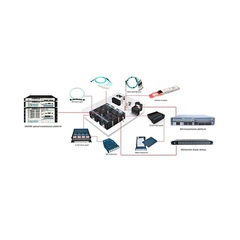
There are four typical schemes for 5G forward transmission, which are optical fiber direct connection, passive WDM, active WDM / OTN and SPN. The number of optical modules consumed by active / passive WDM and SPN scheme is twice as much as that of fiber direct connection.
Optical fiber direct connection is the simplest and the lowest cost, but it can not meet the management functions of network protection and monitoring, so it can not provide high reliability for the business , and consumes the most optical fiber resources;
The passive WDM scheme uses the color optical module, which consumes less optical fiber resources, and the passive equipment is easy to maintain, but it still can not achieve the functions of network monitoring, protection, management, etc;
Active WDM / OTN can save optical fiber resources, realize OAM functions such as performance overhead and fault detection, and provide network protection. This technology has the characteristics of large bandwidth and low time delay naturally, and its disadvantage is high cost of network construction;
SPN scheme can also realize OAM function, and provide network protection, with the characteristics of large bandwidth and low delay. At the same time, it can meet the requirements of different application scenarios through network slicing, with the disadvantage of high network construction cost.
With the continuous promotion of 5G, the pick-up of 5G capital expenditure drives the demand for optical modules to rise in China. 5G, as a once-in-a-decade iterative upgrade, will be the next explosive opportunity for the optical communication industry.