




In Critical Industries, Communications Are Never Just an Ordinary Network
Government services, energy grids, transportation systems and public safety agencies all rely on communications networks as their nervous system. These networks carry control commands, monitoring video, operational data and emergency signals. Any interruption does more than slow operations-it can jeopardize safety, disrupt order and undermine continuity. For this reason, the first principle of building an industry private network is not speed but stability, controllability and reliability.

The Core Challenge: Complex Services Under Long‑Term Operational Pressure
Industry networks often need to support multiple services simultaneously: IP data, synchronous digital hierarchy, fibre channel storage, high‑definition video and specialized control signals. These diverse systems must coexist for years, sometimes decades. At the same time, the operating environment can be harsh, from remote substations without staff to tunnels and stations exposed to temperature swings and moisture. Networks must run 24×7, year after year. Security and autonomy are paramount: data must be isolated where necessary, access must be controllable and maintenance must be transparent.
A Purpose‑Built Optical Foundation: The 5U DWDM Transmission Platform
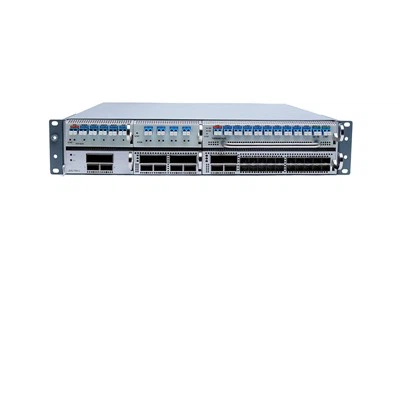
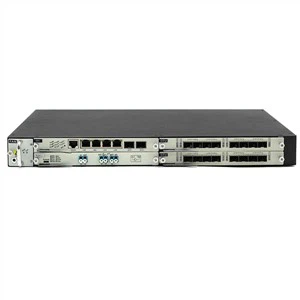
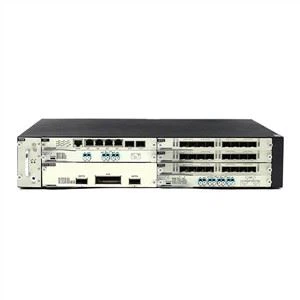
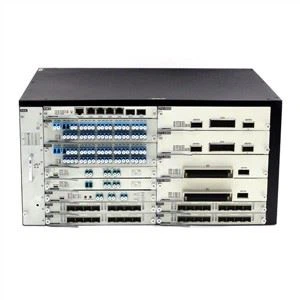
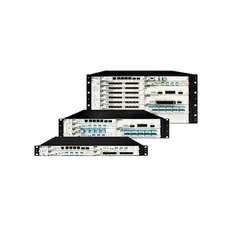
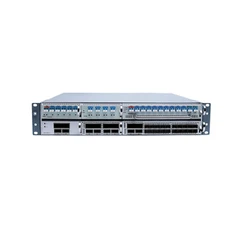
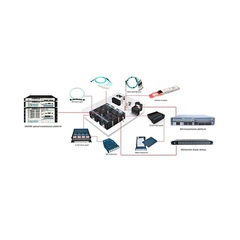
To address these realities, the 5U Fiber Optical DWDM Transmission System combines multi‑service access, dense wavelength division multiplexing, optical amplification, dispersion compensation, optical line protection and intelligent management into one chassis. Its goal is not to provide a single function but to serve as a building block for private networks that span dozens of sites and evolve over a decade or more. By supporting heterogeneous services on a unified optical layer, it reduces duplicate construction and simplifies long‑term operations.

Multi‑Service Convergence: One Network to Support Many Systems
One of the biggest costs in traditional private networks is running separate links for each system. A police surveillance feed, an energy dispatch channel and a municipal data stream might each have their own fiber, equipment and operations team. This fragmentation raises both capital and operational expenditures. The 5U platform allows different service cards to be inserted into the same shelf, enabling fibre channel, Ethernet, SDH and video to coexist. By aggregating everything onto a single optical layer, it reduces the number of physical routes and makes network management more coherent.
Designed for Reliability: Ensuring Continuous Operation for Critical Tasks
Stability is a system capability, not an optional feature. The platform provides dual power supplies (AC 220 V or DC ‑48 V) to guarantee uninterrupted power. Its optical line protection performs 1+1 switching, so that when one path is cut or hardware fails, the backup path immediately takes over. In critical links-whether for power dispatch, rail transit control or emergency command-this protection at the optical layer is far quicker and more reliable than relying on higher‑layer rerouting.

From Construction to Operation: Visibility and Evolution Over the Long Term
Building the network is only the first step; keeping it running for decades is the real test. Without adequate visibility, fault location can take hours or days and upgrades can be risky. The 5U platform's EMS integrates centralized monitoring, alarms and performance dashboards. Operations teams can see the status of links and nodes at a glance, anticipate failures and plan maintenance with confidence. As networks grow and more sites come online, the same interface scales to manage them without a proportional increase in staff.
Modular Expansion: Evolving with Business Growth Rather Than Ripping and Replacing
Industry private networks often span decades. As smart cities, digital energy grids and intelligent transportation continue to develop, bandwidth and service types will evolve. Thanks to its modular architecture, the 5U platform allows incremental upgrades: additional wavelengths for more capacity, new service cards for new protocols, or more amplification for longer reaches. This protects the initial investment and avoids the need to build new networks every few years.
Typical Scenarios: Government Networks, Energy Dispatch, Transportation Backbones, Public Safety
In a smart city, the platform can provide secure, high‑capacity links between government data centers and department offices. In an energy dispatch network, it connects substations, control centers and communication hubs with consistent reliability. For rail transit or highway systems, it carries monitoring video, train control and passenger information across tunnels and stations. In public safety and emergency command environments, it ensures that key links remain operational even under adverse conditions. The common thread across these scenarios is the need for a network that remains stable and controllable under constant load and occasional stress.

Conclusion: When Communication Becomes Infrastructure, Reliability Becomes the Top Technical Metric
Building a private network for critical industries is about pursuing stability, not chasing the latest trends. Choosing a DWDM platform with large capacity, multi‑service convergence, optical layer protection and unified management is essentially investing in a communications foundation you can rely on for the long haul. Critical industries do not need one‑off projects; they need systems that endure. The 5U DWDM industry private network solution ensures that your communications will stay stable, resilient and long‑running for years to come.