




As Generative AI Enters Classrooms and Labs, Campus Networks Face Unprecedented Challenges
As generative AI enters classrooms and labs, campus networks face an unprecedented trio of challenges: bandwidth, latency/jitter, and stability. AIGC courses and live demos multiply data synchronization across multi-campus deployments; 4K/8K lecture capture, VR/AR labs, and remote guidance are highly sensitive to jitter and packet loss; and multi-site interconnects spanning the main campus, new campus, science parks, affiliated hospitals, and field stations push operational complexity ever higher. To build a visible, controllable, and evolvable AI education network without disruptive overhauls, the key is to pack more services into the same fiber while making reliability and observability first-class priorities.
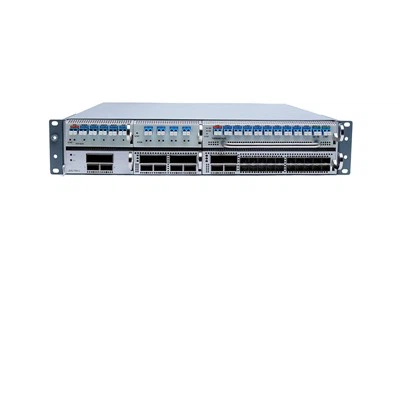
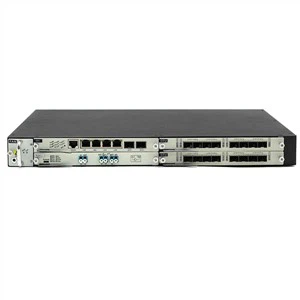
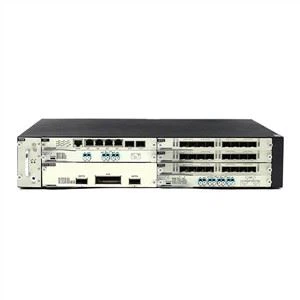
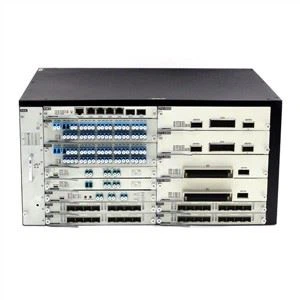
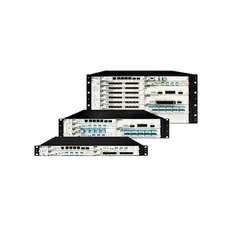
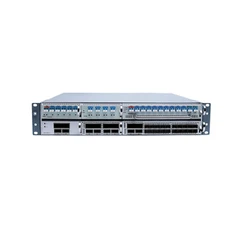
HT6000 Series DWDM Optical Transport System
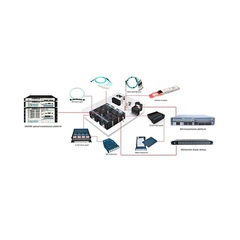
The HT6000 Series DWDM Optical Transport System is designed for exactly this mission. With a compact chassis, high-density DWDM, and coherent high-bitrate transmission, it helps universities and research institutes scale from 10G to 100G/200G/400G without adding new fiber.
01 Multi-Service on One Fiber – Dual Engines for Teaching and Research
It enables transparent transport for GE/10GE/25GE/100GE and FC/SDH/CPRI. Wavelengths can be sliced by school, department, service domain, or project to keep data streams mutually isolated. 4K/8K capture, VR/AR, remote labs, and model inference can run concurrently without contention.
02 Big Bandwidth, Tight Windows – Move PB-Scale Data on Time
Equipped with coherent 100G/200G/400G modules featuring tunable wavelength/power and loopback functions. Combined with 80/96-channel MUX/DEMUX and staged EDFA amplification, cross-campus/cross-city dataset migration and parameter distribution are completed faster, ensuring GPU clusters stay fully supplied with data.
03 Millisecond Optical Protection – Never Drop the Ball at Critical Moments
1+1 client-side and OLP line protection with <30 ms switchover keeps defense systems, live streams, and surgical teaching sessions online. Single-fiber bidirectional (blue/red) technology further improves fiber utilization, allowing expansion even when fiber strands are scarce.
04 OSC Remote OAM and Visual NMS – Ops Pressure Down, Confidence Up
Provides end-to-end visibility for OSNR/BER/power metrics, ALS safety functions, in-service upgrades, and port loopback. Changes and alarms are traceable and auditable. Cross-span unified control eliminates blind spots caused by siloed tools.
Typical Deployment Patterns
Intra-city multi-campus interconnect: 2U chassis + 100G coherent + 40/80-channel MUX/DEMUX + BA/PA EDFA + OLP 1+1. One fiber carries teaching, research, and administrative domains; plug-and-play setup enables same-day activation.
Research data migration: 200G/400G coherent + multi-stage amplification + DCM. Moves TB–PB scale data within maintenance windows, with replayable migration logs for verification.
GPU/HPDA/SC access: 100G/200G coherent + OLP protection + OSC remote OAM. Phased expansion based on project cycles helps control total cost of ownership (TCO).
Medical school imaging (PACS) interconnect: 100G coherent + 1+1 client protection + OLP. Enables near-instant cross-hospital image retrieval, with easier compliance and acceptance.
Why Upgrade Now?
Global traffic growth and the surge in AI-driven applications are pushing throughput and concurrency to new highs. National research and education (R&E) backbones are accelerating the shift to 100G/400G wavelengths. For AI-intensive teaching and research, the network is no longer a mere "pipe"; it is the primary productivity engine for improving teaching quality and research speed. By combining dense DWDM, coherent high-bitrate transmission, and end-to-end observability, the HT6000 enhances capacity, reliability, and operability-all without changing your existing fiber infrastructure. AI classes stream smoothly, data migration runs faster, and multi-campus links remain robust.
What's Next? (Start with Your Education Hardware Resources)
Run a quick self-check to help us match the right link design:
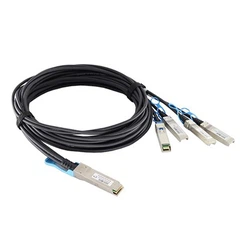
Classroom capture/studio/VR-AR interfaces and uplinks: e.g., 12G-SDI/HDMI 2.1, and 10/25/100GE uplinks.
GPU/AI servers and storage (NAS/parallel FS): Identify where aggregate bandwidth bottlenecks exist.
Available fiber pairs/strands between campuses, departments, and hospitals; can single-fiber bidirectional technology save strands?
Which services require 1+1/OLP protection (defense systems, key live events, surgical teaching)? Is replayable migration needed for acceptance?
Rack space & power (AC220V / DC-48V): Do they meet dual-PSU 1+1 requirements?
Share the above information, plus site distances (with estimated loss) and target bitrates (10/25/100/200/400G). Within 48 hours, you will receive a link budget, topology sketch, and tailored proposal & quote. The HT6000 helps your AI education network move from "enough" to "excellent, durable, and evolvable."