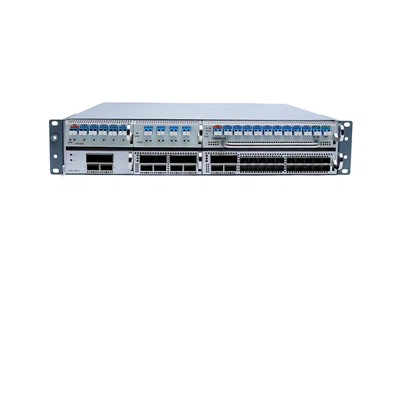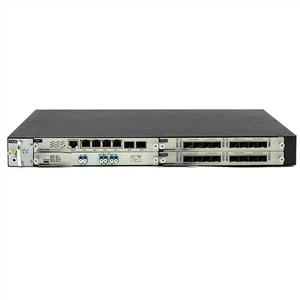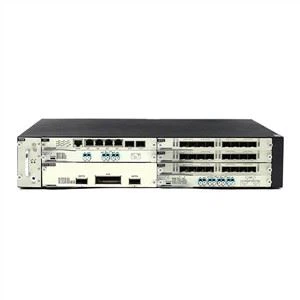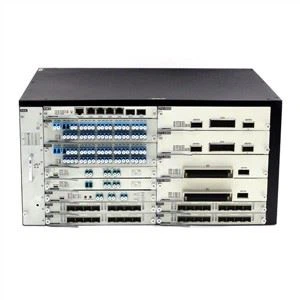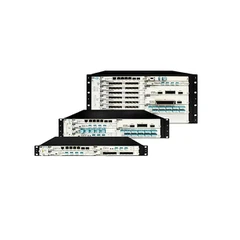
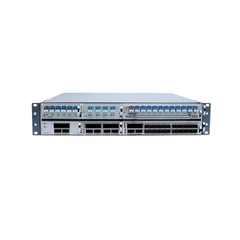

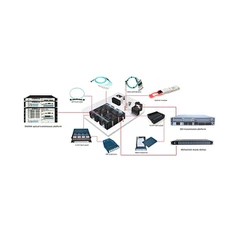


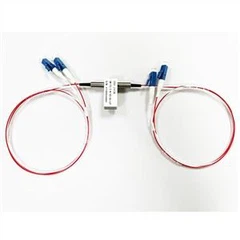
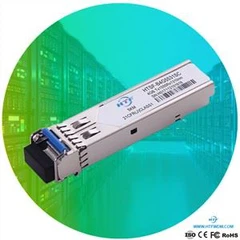


The application of optical fiber multiplexing equipment in 4G network is becoming more and more mature. In the complex 5G network construction scene, the application of optical fiber multiplexing equipment can also realize the fast reconstruction of optical fiber. A pair or one optical fiber can be used to realize the connection between multiple AAU and BBU (CU+DU), so as to achieve the purpose of fast 5G network construction.
1. Scene of subway tunnel 5G network construction
Subway as a stream of populated area, 5G network construction is necessary, but in the practical engineering construction, transmission cable resources construction often by subway, the subway company owner party often needs to consider three carriers to build model for fiber optic cable construction cost, leading to the deployment of 5G network coordination when the line is difficult.
Therefore, in order to speed up complete 5G network construction, the key area in carriers deployed in advance construction of 5G, can be in the subway "A station (proximal BBU)" to "stand distal (AAU) B" sections of A transmission line using optical multiplexing equipment capacity of the original fiber core resources, achieve rapid reconstruction, using fiber 1:12 polymerization multiplexing equipment, excavated from the subway network now existing between distal and proximal BBU AAU fiber resources, again through the WDM technology will light signals to article 1 of optical fiber transmission, fiber core resources only 1 core can complete network construction cost, It is highly scalable for 5G networks with high density, which is conducive to the rapid and large-scale deployment of 5G networks in special subway scenes.
2. Construction scenario of 5G Access network based on C-RAN
C-ran is newly developed wireless access network architecture. Its baseband processing units are deployed centrally to form a baseband unit pool, which can reduce the number of physical machine rooms, thus reducing the space occupied by the machine rooms and the investment in construction. By using high-speed optical transmission network and distributed remote wireless module, multi-level cooperation among multiple cells can be realized to achieve the purpose of resource sharing and dynamic scheduling, and a high-quality, high-speed and low-power wireless network can be built.
In the era of 4G networks, the transmission models of resource constraints and early site, C - RAN in the construction of base station failed to large-scale applications, but in the 4G era, facing the big challenge brought by the rapid development of Internet companies, operators in such aspects as energy consumption, operational cost has put forward the concept of efficiency of authors and sustained growth in profits, some provinces have started using CRAN website building. Therefore, in the 5G era, it will be a trend to adopt c-RAN access network architecture in the network networking scheme. However, in this construction mode, the demand for optical fiber resources in the transmission network is relatively high, and in the face of fierce market competition, it is in urgent need of rapid reconstruction of optical fiber resources to achieve rapid station construction.
Form ring in the traditional way of meshing transmission equipment, the construction site BBU equipment is scattered distribution, not placed centrally, to solve the problem of the construction mode, the network construction will be 18 core optical fiber demand convergence in optical multiplexing equipment (1:18 polymerization), Shared only takes 1 core loop through optical fiber transmission, and save a large amount of fiber core resources, can quickly reconstruct fiber resources, fast complete C - RAN network construction.
3. Indoor distribution system 5G construction scene
Before the indoor distribution system became an important scene covered by 5G network, there was a large demand for optical fiber resources in the actual construction process. However, considering the complexity of the construction scene, it often appeared that the optical fiber resources in the vertical shaft pipe were monitored and intercom and other equipment were used, leading to the shortage of optical fiber resources. The infrastructure construction does not reserve enough space to lay new optical cable resources and so on.
In order to solve these problems, optical fiber multiplexing equipment can be used to realize the fast reconstruction of optical cable in the rapid deployment of 5G network, so as to meet the construction requirements.
4. 5G coverage scenarios such as high-speed railway
With the development of high-speed railway and other special high-speed scenes, the future transportation system will develop in a faster and more convenient direction. Compared with 4G network, 5G network can support high-speed railway speed of 500km/h and interface delay is reduced by 90%, which can better meet the needs of high-speed traffic network construction.
In the construction of high-speed railway 5G network, THE BBU-AAU pull out mode is the main network construction plan. Under this plan, the coverage of high-speed railway network is to combine multiple AAU cells to form a single cell to form a network. All AAU in a single cell can only be pulled out and connected to the BBU in the computer room of the combined cell. In addition, considering the regional and geomorphological characteristics of high-speed rail, the span is often longer. The longer the span is the more AAU mergers it corresponds to, and the more fiber core resources it consumes. Therefore, in this scenario, we can also consider using optical equipment to save fiber core resources and realize rapid construction.