




In the digital economy era, data is the new fuel and computing power is the engine. With the rapid rise of artificial intelligence, cloud computing, and the metaverse, demand for compute is exploding. According to official statistics, by mid-2025 China's intelligent computing power had reached 788 EFLOPS, with more than 10.85 million racks in service and storage capacity exceeding 1,680 EB-a nearly 40% increase compared with 2023.
Yet, the geographic distribution of computing power does not align with energy resources. Eastern China faces surging demand but struggles with land and energy constraints, while the western region boasts abundant renewable energy and land but limited compute demand. To balance this mismatch, the national "East-to-West Data and Compute Allocation" initiative was launched, channeling data demand from the East to the West's supply of compute, building a nationwide integrated computing network.
But building data centers alone is not enough. The more pressing question is: how to schedule and dispatch compute power? Across vast geographies, how can ultra-low latency, massive bandwidth, and high reliability be ensured for cross-regional collaboration? The answer lies in advanced optical transmission networks.
Network Bottlenecks: Compute Exists, But Data Cannot Flow
Data generated in eastern data centers must be transmitted to western compute centers for processing. Otherwise, compute resources risk becoming idle.
Today's cross-province and cross-region optical transmission faces several challenges:
- Bandwidth and congestion: AI model training and supercomputing tasks generate massive traffic, far exceeding the sustained capacity of legacy 100G or 200G links.
- Latency accumulation: Long-haul links spanning hundreds or thousands of kilometers introduce additional delays with every regeneration or relay, undermining real-time scheduling.
- Operational complexity: Multiple vendors and protocols coexist, making unified scheduling difficult.
- Energy and cost pressure: Large-scale relays and power-hungry equipment inflate costs and undermine green computing goals.
- National plans make it clear: by 2025, China aims to achieve 1 ms latency in city-level networks, 5 ms in regional networks, and 20 ms across major hub nodes. In this framework, the transmission network is no longer a supporting role-it becomes the lifeline of compute scheduling.
HT6000: Built for Compute Dispatch and Scheduling
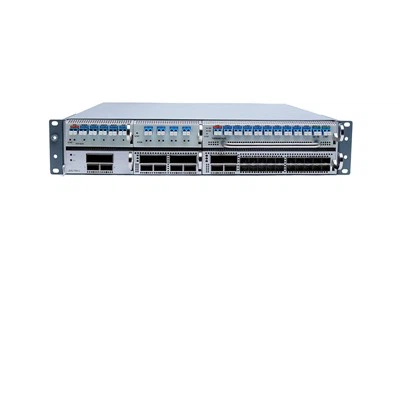
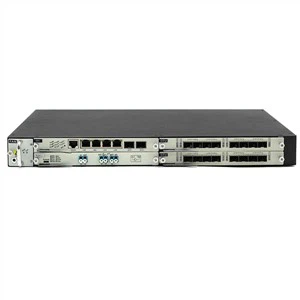
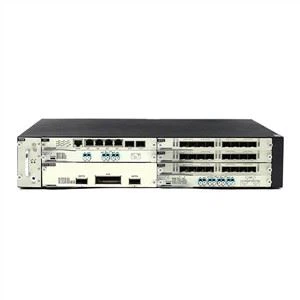
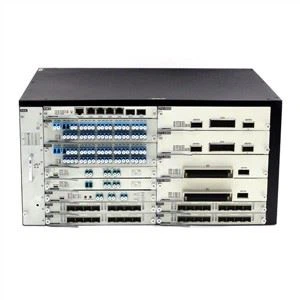
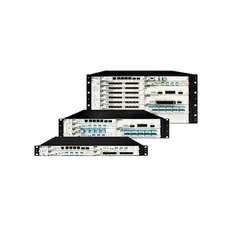
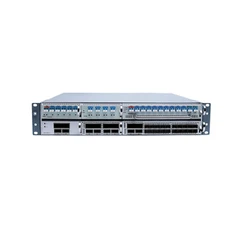
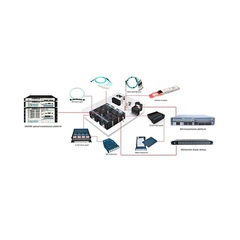
In this grand national project, a truly capable optical transmission platform is essential. The HT6000 DWDM Optical Transmission System is designed precisely for this scenario.
- High throughput capacity
Supports 10G/100G/200G/400G hybrid networking, expandable up to 1.6T per chassis, ensuring backbone-level performance for hub-to-hub and hub-to-edge interconnection.
- Ultra-long distance without regeneration
With advanced FEC, HT6000 achieves 1,000–1,500 km of error-free transmission without electrical regeneration, reducing delays and intermediate points.
- Intelligent scheduling
Through its full-visual NMS management platform, HT6000 integrates scheduling commands and network states: dispatch decisions can be delivered to the transport layer, while real-time link status feeds back to the scheduling center, forming a closed-loop system.
- High reliability by design
Features 1+1 optical line protection, redundant power supplies, and modular hot-swappable design to guarantee mission-critical uptime.
- Green and energy-efficient
Modular low-power architecture and on-demand activation align with the national carbon neutrality goals.
With these capabilities, HT6000 is not just a transmission device-it is the core infrastructure enabling national compute scheduling.

Practical Scenarios: Enabling the Flow of Compute
In practice, HT6000 can be deployed in multiple critical scenarios:
- Interconnection of Eastern and Western hubs
Linking western compute hubs with eastern industrial centers, carrying compute flows and data exchange. By Q1 2025, China's eight national hub nodes had reached 215.5 EFLOPS of compute, with intelligent computing accounting for 80.8%; the 20 ms latency circle between hubs has been largely realized.
- Cross-province supercomputing collaboration
Provincial supercomputing centers, universities, and cloud platforms can connect via high-performance optical backbones, enabling collaborative training, shared results, and optimized scheduling.
- Energy + compute integrated bases
Western renewable energy bases (wind, hydro, solar) and compute centers can be integrated with transmission networks to make the vision of "power + compute + network" a reality.
Industry backbone networks
Finance, government, healthcare, and transportation sectors can rely on HT6000 to ensure secure, reliable backbone connections for cross-regional collaboration.
In all these cases, HT6000 acts as both the main artery of compute networks and the strategic enabler of flexible scheduling.
User Value: Optimized Costs, Efficiency, Reliability, and Future-Proofing
By deploying HT6000 in East-to-West compute scheduling projects, users gain:
- Cost optimization: Reduced investment in duplicate long-haul lines and lower O&M costs.
- Efficiency gains: Idle compute resources can be activated across regions, boosting utilization rates.
- Robust reliability: High availability design ensures mission-critical services never go offline.
- Future readiness: Smooth upgrade path to 400G/800G, securing long-term technology evolution.
These benefits appeal not only to operators and cloud providers but also to governments, industry users, and hub operators at a strategic level.
Outlook: A New Era of Compute Powered by Light
The East-to-West initiative is not only a technological project-it is a strategic restructuring of national infrastructure in the digital era. In the coming years, a national integrated computing network will form the backbone of China's digital economy.
The HT6000, with its ability to support national-scale compute scheduling and flexible upgrades, is poised to become the backbone of this "highway for compute."
Together, let us deploy HT6000 to power East-to-West data and compute allocation, enable compute mobility, and build the optical engine for the future of national computing.