



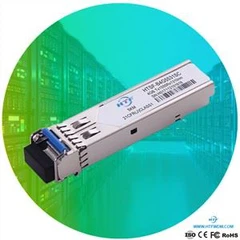


Super computing is an important field that focuses on the development and application of high-performance computing systems. In recent years, there have been significant advances in supercomputing technology(basing constructure DWDM large data transfer), driven by factors such as the increasing demand for data processing and analysis, the development of new algorithms and architectures, and the availability of more powerful hardware components.
One of the key trends in supercomputing is the move towards exascale computing, which refers to systems capable of performing at least one exaflop (one quintillion floating-point operations per second) of computation. This represents a significant increase in performance compared to current petascale systems, which can perform up to one quadrillion floating-point operations per second.
Another important trend in supercomputing is the growing use of accelerators, such as graphics processing units (GPUs) and field-programmable gate arrays (FPGAs), to improve the performance and efficiency of high-performance computing systems. These accelerators can offload computationally intensive tasks from traditional CPUs, allowing them to perform more efficiently and enabling faster and more accurate simulations and analyses.
In addition to these technical developments, there are also ongoing efforts to make supercomputing more accessible and user-friendly, through initiatives such as cloud-based services and open-source software platforms. (basing constructure DWDM large data transfer)
Overall, super computing is a dynamic and rapidly evolving field, with many exciting developments and opportunities for innovation in the years ahead.