




In the data center, the most expensive commodity is rarely "a few more cables." What truly costs money is the downtime required for expansion, the immovable rack space that can't accommodate growth, and the human labor costs of managing a chaotic tangle of cords. As port densities climb, traditional point-to-point cabling quickly pushes infrastructure into a state of complexity: cable counts explode, pathways become congested, labels lose consistency, and any adjustment threatens to disrupt multiple connections. At this moment, adopting a pre-terminated, high-density, modular cabling system is not an "optimization"; it is the only path toward sustainable scaling.
The Triple Squeeze of the High-Density Era: Space, Efficiency, and Risk
When switch uplinks evolve from 10G/25G to 40G/100G, parallel optics and multi‑fiber connections become commonplace, and every centimeter in the rack becomes precious. More cables mean disrupted airflow; denser wiring makes installation and troubleshooting vulnerable to mis-plugging; and when maintenance windows shrink to mere minutes, the unpredictability of onsite splicing and repeated testing becomes a hidden risk in project delivery.
More realistically, high‑density cabling is not a one-off task. A data center's life cycle involves continuous expansion, adjustment, migration, and upgrades. If the cabling system cannot be modular, each change means high cost and high uncertainty. To make cabling as easy to assemble, reuse, and rapidly deploy as building blocks, the value of pre-terminated trunks is being rediscovered.

Pre-Terminated Trunks: Moving Complexity to the Factory, Delivering Certainty On-Site
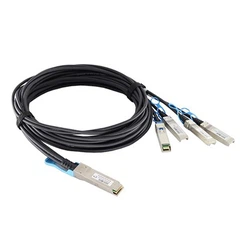
OM3 12 Fibers MTP Cable is more than just "12 cores." It serves as the backbone of a high‑density cabling system: by pre‑terminating trunks and standardizing connections, it moves the most error‑prone, time‑consuming parts of installation into the factory. Onsite work shifts from "splicing and repeated adjustments" to "plug-and-validate," accelerating project timelines and ensuring more stable deliveries.
In large deployments, this certainty is critical. Uniform endface quality, stable insertion loss, and the plug-and-play efficiency gains scale dramatically when you have hundreds or thousands of links. A data center's goal is never "barely working" but rather "replicable and scalable."
How OM3 12 Fibers MTP Cable Reshapes Cabling Logic
MTP multi‑fiber connections make "less is more" a reality. A single OM3 12‑core MTP trunk can establish clear connectivity between high‑density patch panels, enclosures, adapter plates, and optical modules. With fewer cables to manage, routing becomes cleaner, labels and management become consistent, and potential failure points diminish. More importantly, when you're planning racks and pathways, trunk‑based cabling allows topology to be designed in advance, making expansion and migration routes easier to anticipate.
This not only improves installation efficiency but also enhances the operations experience. For an operations team, the ideal cabling system is one they can "understand, control, and change." When structure is clearer, troubleshooting time naturally shortens, and the likelihood of mistakes drops significantly.

Performance Foundations for High-Density Scenarios: Low Loss and Reliable Consistency
High-density systems are more sensitive to link budgets; insertion loss and consistency directly affect overall performance and stability. OM3 12 Fibers MTP Cable is rigorously tested before delivery to ensure clean endfaces and insertion and return loss that meet stringent standards. For environments requiring numerous parallel connections, this consistency means fewer reworks, fewer anomalies, and more predictable acceptance tests.
Leaving Room for Upgrades: Putting the Future into Today's Architecture
Data center upgrades are rarely about "starting over"; they involve evolving upon existing infrastructure. Choosing OM3 12‑core MTP trunks and modular cabling systems makes upgrade paths smoother: as services need to transition from lower speeds to 40G/100G, parallel optics reduce the friction of system retrofits, making investments more sustainable. In other words, you're not just buying a cable; you're laying the groundwork for the next round of expansion.

Typical Use Cases: Turning Cabling from a Project into a System
OM3 12 Fibers MTP Cable is ideal for data center trunk cabling, MTP patch panel and enclosure systems, MTP‑LC modular solutions, and quick delivery of new builds and expansions. In these scenarios, its value lies not in "pretty specifications" but in enabling more controllable project schedules, more efficient installation, and easier operations.
Conclusion: Truly Advanced Data Centers Always Start with Cabling
In the high‑density era, cabling determines expansion efficiency and operational cost. Choosing OM3 12 Fibers MTP Cable is choosing a connection methodology designed for scale: reducing complexity through cleaner structure, lowering risk through better consistency, and freeing up installation windows through faster deployment. When cabling becomes a "system," your data center growth becomes more confident and composed.