




Industry trend: back to growth
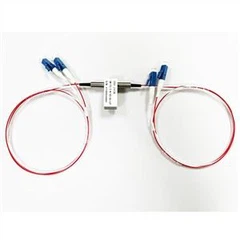
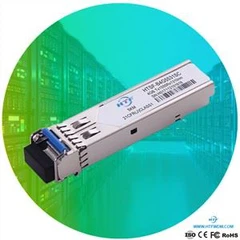
For wired communication, the laying of optical fiber determines the width of communication, while the optical module determines the quality of communication. The optical module is the optoelectronic device for photoelectric and electro-optic conversion. The sending end converts the electrical signal into the optical signal, and the receiving end converts the optical signal into the electrical signal after the transmission through the optical fiber. It is an important device in the communication system.
The advent of global 5G era has also brought the explosion of market demand for high-speed optical modules. According to the data analysis, since 2010, the global demand for optical modules has been increasing year by year. Although the demand declined in 2018, with the promotion of 5G and data center, the global demand for optical modules has re-entered the channel of rapid growth since 2019. For now, the growth of wireless optical modules will be mainly based on 5G, while the 5G optical module market is mainly based on China.
According to the analysis, the optical modules will still be in the growth period in the next few years, among which the number of 10G wireless optical modules will be greatly reduced, and 25G / 50G / 100G modules will become the dominant one. At the same time, when the 5G market is surging, a large number of upstream and downstream, parallel industry players have entered the high-end optical module market; market competition will become increasingly fierce.
Development direction: 12-wave WDM into the prequels is popular
Driven by the flood of consumption upgrading, China's optical module consumption market is also changing. In addition to the rising demand for optical modules in the 5G era, higher speed requirements are also put forward to promote the improvement of optical chip performance mainly reflected in: higher operating temperature, less consumption of fiber resources, lower cost, faster single wave rate, etc.
The current 5G application mode of multi-operator Shared base stations doubles the bandwidth demand of a single base station, requiring at least 6 25G interfaces to meet the demand. In terms of macro stations, when 4G co-stations or higher spectrum widths are required, a single base station is required to support 12/24 prequel interfaces. In addition, medium-scale c-ran will become the main networking scenario for 5G prequel networks, and the adoption of 12-wave WDM technology is conducive to saving fiber resources. These reasons make the 12-wave prequel interface a popular choice for 5G base stations.