




The new generation of artificial intelligence is no longer defined by how smart a model is, but by how fast it can think.
From OpenAI GPT-5 to Anthropic Claude 4.5 and Google Gemini 2.5 Pro, each leap in scale multiplies the number of parameters, the size of training sets, and the volume of inter-node communication. As models evolve toward multimodal reasoning and real-time generation, their brains have grown vast-yet their thoughts can only move at the speed of light.
According to OpenAI's Technical Report (2025), GPT-5's training corpus exceeds 70 PB (Petabytes), running across more than 300 000 GPU nodes. Each second generates billions of data exchanges between those GPUs.
Anthropic Claude 4.5 now handles a 1-million-token context window, while Gemini 2.5 Pro interprets and generates multi-stream video in milliseconds. Behind these milestones lies one decisive factor: an optical network capable of extreme throughput and near-zero latency.
Research by Fluix AI (2025) shows that in large-model training, communication traffic is typically 3–6 times heavier than pure computation. Every additional millisecond of latency can reduce overall system throughput by 3–5 percent. Meanwhile, Markets and Markets (2025) projects that total AI-data-center interconnect bandwidth is growing at a 47.2 % CAGR, expected to exceed 1 600 Tbps by 2030.
This is why 400 G optical transport has become the backbone of large-model intelligence.
According to Dell'Oro Group (2025), global deployments of 400 G ports will surpass 120 million units by 2027, pushing the market beyond USD 11 billion.
Cisco (2025) reports that compared with 100 G networks, 400 G architectures deliver 3.8× more bandwidth density with only 1.5× power consumption, a perfect balance for high-performance, energy-efficient AI clusters.
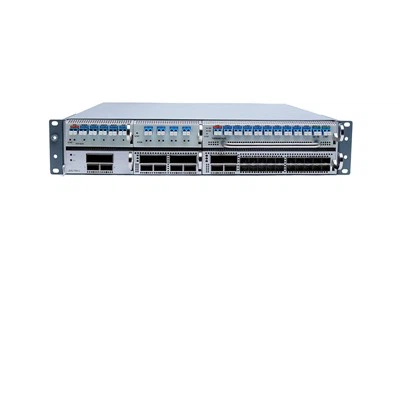
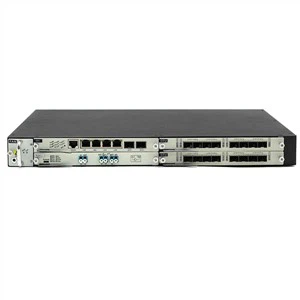
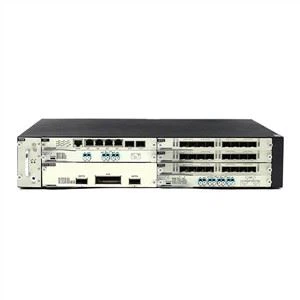
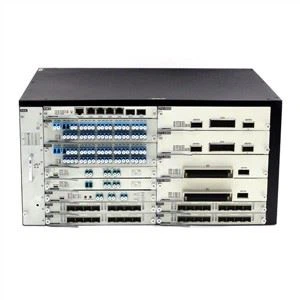
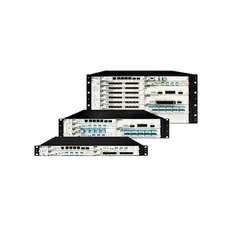
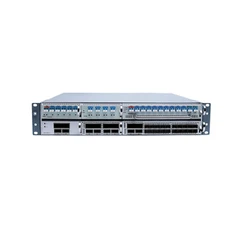
At the heart of this transformation sits the HTF 400 G OTN Muxponder-the silent engine behind the world's fastest thoughts.
It aggregates multiple 100 G or 200 G client signals into a single 400 G wavelength, providing ultra-dense, low-latency, long-reach data transmission. Equipped with forward-error correction (FEC) and CFP2 coherent-optics technology, it sustains bit-error rates below 10⁻¹⁵ even across 300 km links, and scales to 64 × 400 G = 25.6 Tbps total throughput.
In effect, it turns distance into an afterthought, keeping GPU clusters synchronized at light speed.
Within GPT-5's massive distributed training cycles, hundreds of thousands of GPUs use All-Reduce algorithms to share weights and gradients, and network communication can consume up to 40 % of total training time.
Claude 4.5's real-time reasoning relies on low-latency interconnects to deliver human-like dialogue continuity, while Gemini 2.5 Pro's multimodal video generation demands gigabit-per-second feature-exchange between nodes.
Here, 400 G OTN does more than transmit data-it enables zero-wait coordination across an AI brain spread over continents.
The latest LightCounting (2025) survey confirms that although 800 G and 1.6 T modules are advancing, 400 G will remain the dominant AI-backbone wavelength through 2028. Its proven maturity, energy efficiency, and cost stability make it irreplaceable for near-term AI infrastructure.
Dropbox Infrastructure (2025) reports that migrating to 400 G interconnects cut per-node energy use by 22 % while raising bandwidth utilization by 37 %.
The speed of AI thinking depends on how fast information travels through fiber.
The HTF 400 G Muxponder is more than transport hardware-it is the optical nervous system of the intelligent era. It links every parameter, every weight, every update at the speed of light, empowering GPT, Claude, and Gemini to think without friction.
With over a decade of innovation in WDM and OTN systems, HTF (Shenzhen HTFuture Co., Ltd.) serves clients in over 100 countries and regions, holding 160 + patents and 120 + independent IP rights. Its solutions span AI data centers, cloud computing, 5 G cores, and high-performance computing networks-delivering high-reliability, low-latency, intelligently programmable optical connectivity worldwide.
As AI thought races forward, HTF uses light to shatter bottlenecks.
In the new age of intelligence, computing is the brain, algorithms are the mind, and light is the speed of thought.