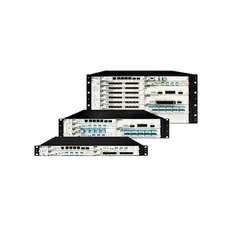
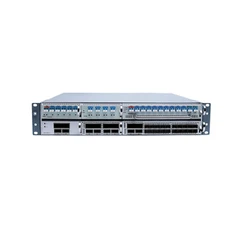

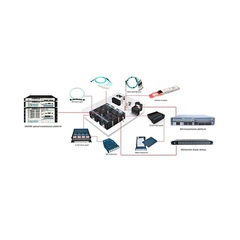


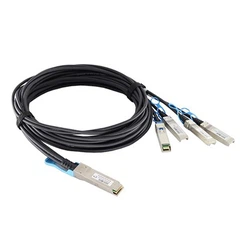
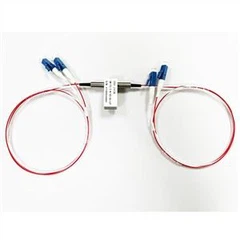
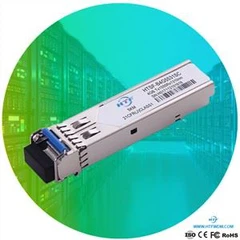


Overview of 10GBASE-T copper module, SFP+ optical module, SFP+ high-speed cable.
The 10GBASE-T SFP+ copper module is specially designed for the high-speed communication link of 10Gb Ethernet, which can be transmitted on Cat 6a/7 network cable. It is the first 10G module to provide 10Gb/s rate via Ethernet copper cable, and it complies with SFF-8431 and SFF-8432 MSA standards. More information about the 10GBASE-T SFP+ copper module can be found in this article: Comprehensive Introduction to 10GBASE-T SFP+ Copper Module.
The 10GbE SFP+ optical module can also be used for 10G network transmission, and the maximum transmission distance is 100km. It has many models, such as 10GBASE-SR, 10GBASE-LR, 10GBASE-ER, 10GBASE-ZR, etc. You can learn more about different 10GbE SFP+ module types through the article "Module Guide: 10G SFP+ Module Type Classification".
For SFP+ DAC high-speed cables, it uses 10GbE copper cables as active or passive dual coaxial cable assemblies, with SFP+ connectors at both ends, so as to realize 10G short-distance connections. Therefore, SFP+ high-speed cables are usually used for stacking connections of ToR switches, and short-distance connections between switch ports and Ethernet interfaces on servers and storage devices in racks.
What is the difference between 10GBASE-T copper module, SFP+ optical module and SFP+ DAC high-speed cable?
Flexibility & backward compatibility
The 10GBASE-T copper module uses the interoperable 10GBASE-T technology, which can use RJ45 connectors and can automatically negotiate between 10/100/1000Mbps and 10G rates. In other words, 10GBASE-T copper modules are backward compatible with standard copper network equipment. 10GbE SFP+ optical module can be applied to 10G Ethernet and 10G fiber channel, but it is not compatible with copper cabling system, but sometimes it can be used in 1G fiber network. As for the SFP+ DAC high-speed cable, it is not compatible with existing Gigabit Ethernet switches and is only used for the connection of 10G Ethernet switches.
As the utilization of private cloud applications increases, the demand for low latency in large data centers is growing rapidly. Low latency is essential to ensure fast response time and reduce CPU idle cycles, which can improve the efficiency and ROI of the data center. The 10GBASE-T copper module adopts the PHY standard and can use block coding to transmit data on the copper cable without errors. The standard defines the transmission and reception time of 10GBASE-T copper modules as 2.6 microseconds. SFP+ optical fiber uses simplified electronic equipment without encoding, and the delay time of each link is about 300 nanoseconds. As can be seen from the table below, the delay of SFP+ fiber is lower than the other two products.