




At present, 10G-25G-100G and 10G-40G-100G are two common ways to upgrade the network to 100G. The key to upgrade the network is the deployment of 25G and 40G. So what's the difference between the two? Do you choose 25G Ethernet or 40G Ethernet for network deployment?
25G Ethernet VS 40G Ethernet: what's the difference?
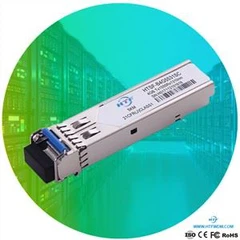
The 25G Ethernet standard (IEEE 802.3by) was issued by IEEE and IEEE-SA in 2014, which makes up for the low bandwidth of 10G Ethernet and the high cost of 40G Ethernet. 25G Ethernet adopts 25Gb / s single channel physical layer technology, which can realize 100G transmission based on four 25Gbps fiber channels. Since the SFP28 package is developed based on the SFP + package, and their sizes are similar, the 25G SFP28 port can be compatible with the 10G SFP + port, but the bandwidth of the 25G SFP28 optical module is 2.5 times that of the 10G SFP + optical module. Compared with 40G Ethernet, 25G Ethernet has significant performance advantages, which can provide higher port density and lower bandwidth cost. In recent years, 25G products (such as 25G switch, optical module, DAC, AOC, etc.) have been widely used in cloud data center and 5G network.
25G Ethernet makes the road to 100G smoother. 25Gbe uses four optical fibers and paired copper cables in parallel to achieve 100G Ethernet transmission rate through four 25Gbit / s channels, which is more cost-effective and lower power consumption.
25G scheme has the advantages of enhancing the efficiency of computing and storage, providing higher bandwidth and faster connection, and can run two 25G channels to achieve 50G, or run four channels to achieve 100G. When transiting to the next generation network, its capital and operating expenses should be relatively balanced. Moreover, 25Gbe is backward compatible and can communicate with 10G, so it can still work with existing network devices after adding a new server.
Optical module of 25G Ethernet & optical cable solution
There are two kinds of optical modules suitable for 25G Ethernet: sfp28 (1 × 25 Gbps) and QSFP28 (4 × 25 Gbps).
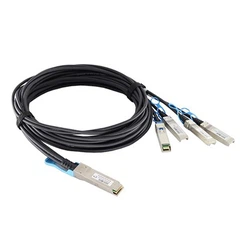
25Gbase-sr sfp28 optical module is a kind of 25G optical module with working wavelength of 850nm. Different from other optical modules, the transmitter inside this optical module is VCSEL, so it needs to be used together with 50 / 125 μ m OM3 / OM4 multimode fiber. The transmission distance of 25Gbase-sr sfp28 optical module used with OM3 multimode fiber is 70m, and that used with OM4 multimode fiber is 100m. For the interconnection application of switches in data center, using sfp28 high-speed cable is a more common and cost-effective solution. In addition, QSFP28 to 4xsfp28 high speed cable is an ideal solution for short distance connection between 100G switch and 25G switch.
40G Ethernet standard (IEEE 802.3ba) was issued by IEEE in 2008. It appeared before 25G Ethernet standard and was the only path mainly used to realize 100G transmission at that time. 40G QSFP + optical module mainly realizes 40Gbps data transmission through four 10Gbps fiber channels. With the maturity of 40G Ethernet technology and the increase of 40G product suppliers in the market, the cost of 40G products (such as 40G switch, optical module, DAC, AOC, etc.) is decreasing. However, due to its own reasons, the development of 40G Ethernet is not optimistic. For example, in the 100G network upgrade, 40G is not cost-effective and energy efficient to be used in Tor (rack top) switches provided by cloud providers.
40G Ethernet is an Ethernet standard formulated by ieee802.3ba working group. It supports 40G Ethernet frame transmission per second, and establishes physical layer specifications for communication through backbone network, copper cable wiring, multi-mode optical cable and single-mode optical cable. The core of 40G Ethernet network layer is a pair of optical modules connected by optical cables (OM3 / OM4). The optical module is then inserted into the network server or network interface card, switch and other network devices.
Optical module of 40G Ethernet & optical cable solution
The standard packaging style of 40G optical module has undergone a series of changes. CFP optical module is the first generation of 40G optical module. It has 12 optical signal transmitting channels and 12 optical signal receiving channels, and the transmission rate of each channel is 10Gbps. Therefore, it can provide three 40G Ethernet ports or one 100G Ethernet port in total, supporting multi-mode optical fiber cable and copper cable applications. With up to 24 transceiver channels, we can imagine that the volume of CFP optical module is very large. Therefore, this kind of optical module can’t meet the growing demand of high-density ports. As a result, engineers developed CXP optical module. Like CFP optical module, this optical module also has 24 optical signal transmitting and receiving channels, and supports multi-mode optical fiber cable and copper cable applications. However, its volume is much smaller than CFP optical module. Now the most common 40G optical module on the market is QSFP optical module. Its volume is similar to CXP optical module, but there are only four optical signal transmitting channels and four optical signal receiving channels, which can support single-mode optical fiber cable, multi-mode optical fiber cable and copper cable applications.
Both optical cable and copper cable can be used in 40G Ethernet. It should be noted that the transmission distance of optical cable is much longer than that of copper cable. OM3 / OM4 optical cable is a more popular cabling solution for 40G Ethernet cabling in data center, because it is more flexible than copper cabling solution and lower cost than single-mode optical fiber cable solution. In addition, the common connector in 40G Ethernet wiring is MPO / MTP connector (the common connector in traditional network wiring is duplex LC connector). This is because 802.3ba standard stipulates that multimode optical module should be used together with MPO / MTP connector to transmit data through multiple parallel fiber channels.
Characteristics / requirements | 25GbE | 40GbE |
Number of pci3.0 channels per port | 4 | 8 |
Bandwidth utilization of PCI e 3.0 | 78% | 62.5% |
Clock frequency | 25.78GHz | 10.31GHz |
SerDes channel | Single channel | Four channels |
Server / tor, 3:1 overutilization | 96 | 24 |
Connector | SFP28 | QSFP+ |
DAC cable | Thin, 4-wire | Thicker, 16 lines |
Cable material cost | low | High |
Easier transition to 100G | Support | Unsupported |
25G VS 40G Ethernet: how to choose?
According to the above introduction, there are differences between 25G Ethernet and 40G Ethernet. For 100G network, 25G Ethernet is easier to deploy. In the face of network deployment, should we choose 25G Ethernet or 40G Ethernet? The following three aspects can be considered:
1. Application
25G is mainly used for the access from tor switch to server and 100G or even higher speed network upgrade. 40G is mainly used for the connection between switches in the data center to help break the bottleneck of the connection between access switches and distribution switches. If 25G can be widely used in switch interconnection, it will promote the further development of 25G Ethernet. At the same time, with the arrival of 5G network, the demand of 5G forward transmission for 25G WDM optical module will make 25G Ethernet usher in a new peak of development. For 40G, because its efficiency is higher than 10G and cost is lower than 100G, it is still the best choice for high bandwidth.
2. Switch
Switch compatibility and port density are the factors to be considered in the selection. First of all, for the compatibility of switch, the compatibility of 25G switch and 40G switch depends on the supplier, and the compatibility of 25G Ethernet is higher than that of 40G Ethernet. Secondly, for the port density of the switch, the 25G Ethernet adopts the single channel SerDes technology, which is the same as the 25G Ethernet with four 10Gbps channels.
3. Wiring
For 10G-25G, 25G SFP28 DAC / AOC can be directly used for short-distance switch interconnection; for long-distance transmission, SFP28 optical module and LC jumper are generally used, among which LC jumper can directly use the LC jumper used in the original 10G network, effectively saving the wiring cost. For 10G-40G, 40G QSFP + DAC / AOC can be directly used for short distance switch interconnection.
Advantages of 25G Ethernet over 40G Ethernet
1. Optimal I / O performance and fiber capacity;
2. 2.5 times the performance of 10G Ethernet;
3. Higher port density, lower power consumption and more cost saving;
4. Fewer tor switches and cables are needed;
5. It is consistent with 100G Ethernet standard.
Compared with 40G Ethernet, 25G Ethernet seems to be more suitable for cloud data center and network scale data center applications with lower cost. This is because 25G Ethernet can reuse the components of 10G and 100G Ethernet, which helps network operators expand their data centers more easily. The future network is bound to develop in the direction of high speed, high bandwidth and high density.
HTF's optical module products quality is guaranteed, and the accessories are imported.
Contact: support@htfuture.com
Skype :sales5_ 1909,WeChat :16635025029