




Nowadays, the network is developing at high speed. 10G network can no longer meet the data transmission needs of data centers. 25G network has developed rapidly with high density, low cost and low power consumption. In recent years, 25G switches have become more and more popular. 25G will relay 10G technology to become the infrastructure of future Ethernet.
Data center operators such as Amazon, Microsoft, Google and Facebook are expanding their data centers globally and upgrading their network speeds to 100G, 400G or even higher speeds. With the speed and capacity expansion of the upper structure, 10G networking cannot meet bandwidth requirements and must be supported by higher bandwidth. Therefore, manufacturers continue to apply 25G to the access layer and ToR switches. It only needs a small cost to increase the throughput of the entire network system by 2.5 times. Why not? In addition, based on 25G, upgrading to 50G, 100G or even higher rates is simple and efficient.
5G adds mid-pass in transmission, forming three parts: front pass, mid pass and back pass. The front pass refers to the part where the active antenna unit is connected to the distributed unit, the middle pass refers to the part where the distributed unit connects to the centralized unit, and the back pass refers to the part above the centralized unit.
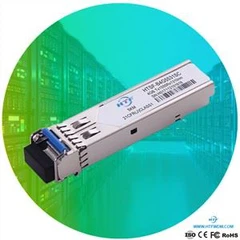
These three parts have different requirements for 5G communication optical modules. In the 5G fronthaul, the typical 5G wireless bandwidth is 100M~1G, the peak value is 20G, the antenna port may be 64 or 128, and the granularity of the 5G fronthaul network is 25Gbps. It can be seen that the future 5G fronthaul will have an optical module rate requirement. Will take 25Gbps as the mainstream. Optical modules such as 25G SFP28 SR4 and LR4 are mostly used for direct fiber connection in 5G fronthaul.
In addition, the 5G era has spawned a large number of applications, the Internet of Things technology has developed and grown, and AI-driven intelligent services are on the rise. The development of these species puts forward higher requirements for network coverage and network capacity. 25G BiDi optical modules With a longer transmission distance, this problem can be effectively solved.