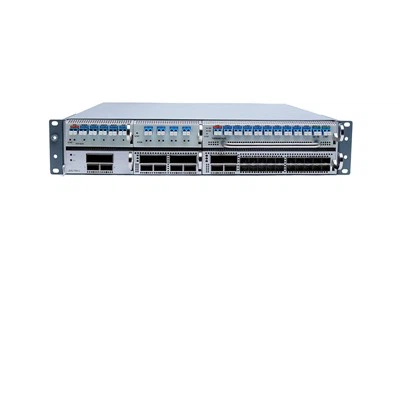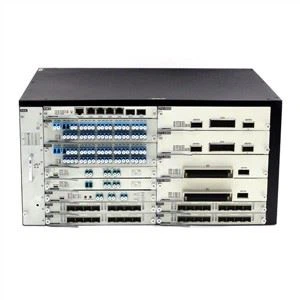





An optical fiber access network refers to an access network in which the transmission medium is optical fiber.
Optical access networks can be technically divided into two broad categories: active optical networks (AON, Optical, Network, Active) and passive optical networks (PON, Passive, Optical, Network).
Active optical network can be divided into AON based SDH and PDH based AON, and passive optical network can be divided into narrowband PON and broadband PON.
Because the transmission medium optical access network is the use of optical fiber, optical fiber according to the in-depth user group, can be divided into FTTC optical access network (FTTC), FTTZ (fttz), FTTB (fiber to the building), FTTO (FTTO) and FTTH (FTTH), which are collectively FTTx. FTTx is not a specific access technology, but rather the degree of advancement or use of optical fiber in the access network.

Access network structure
The three system structures of optical fiber access network are FTTN, FTTC and FTTH. In the process of network development, each structure has its application advantages, and each structure is a key link in the evolution of network to full service. The benefit of FTTN is that it pushes fiber further into the user network. It establishes an access platform that provides voice, high-speed data, and video traffic to many families without the need for full reconstruction of access loops and distribution networks. As needed, a plug-in can be added to the fiber node to provide the required business. Before moving the fiber node to the roadside FTTC or home (FTTH) due to business drive or network reconstruction, the FTTN will be superimposed and distributed over the existing copper wire network.
The basic requirement of this network structure is to provide broadband data services and video services, and the distance between the node and the house should be within 4000 to 5000 feet. Today's nodes generally have service distances of up to 12000 feet. Therefore, each service area needs to set 3 to 5 FTTN nodes.
FTTC has several advantages over FTTN. When FTTC is used to reconstruct the existing network, the delay and interference caused by the cable transmission can be eliminated. It enables fiber to go deeper into the user network, which reduces potential network problems and deteriorates performance due to field operations. Currently, FTTC is the most robust and deployable network that will evolve into FTTH networks in the future. It is also the most economical network construction plan for new and reconstruction areas.
One drawback of this network structure is the need to provide a power supply system for copper wire devices. Remote power supply system in the end of the bureau can give 50 to 100 roadside optical network unit power supply, each node power supply unit price alone by the roadside is very high and in a long time when the power will affect the user's business requirements.
As the ultimate form of fiber home, FTTH removed the entire copper wire facility: feeders, wiring, and incoming lines. For all broadband applications, this structure is the most reliable and long-lasting solution for the future. It also removes all the maintenance work required of copper wires and greatly prolongs network life. The connection ends of the network are user premises devices. In the user's home, a network terminating device is needed to convert the bandwidth and data stream into the received video signals, data services and voice services.
Steps for fiber access:
The client of the card or the ordinary router, the client is connected with the photoelectric converter;
The client of the photoelectric converter directly by fiber and fiber optic equipment from the client connected to the nearest metropolitan area network node;
Lastly through the backbone network access ISP company to Internet.
Applicable range of optical fiber access
Different fiber access technologies have different applications.
Active optical access technology is suitable for enterprises and institutions with high bandwidth requirements and high communication security. It can also be used in feeder segments and distribution lines of access networks and mixed with other access technologies based on wireless or copper wire transmission.
ATM-PON can be used to solve the access of enterprises and users, and also to solve the access of residential users. Some operators use "ATM-PON xDSL" hybrid access program to solve residential users or enterprises and users broadband access.
Narrowband PON mainly for residential users, but also can be used to solve the small and medium-sized enterprises and users access.
In addition, PON services range of no more than 20 km, but through the "active optical network passive optical network" hybrid networking program, can make up for this deficiency.
Fiber access mode
Optical fiber access enables users to provide 10Mbps, 100Mbps, 1000Mbps high-speed bandwidth, which can be directly connected to the CHINANET backbone node. Mainly for commercial group users and intelligent residential LAN high-speed access and INTERNET high-speed internet.