




1. Divide fiber optic connectors according to interface types
(1) LC fiber optic connector
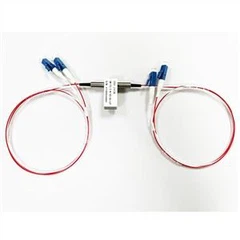
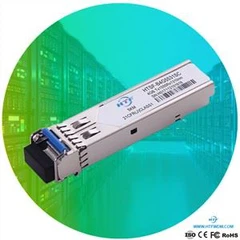
LC fiber optic connector has become the ubiquitous fiber optic connector in today's optical communication applications, especially the fiber optic connector connected with SFP and SFP+ optical modules. As a popular SFF (small profile) connector, LC fiber connector has a 1.25mm ring, which can be divided into single-mode LC connector and multi-mode LC connector, making it an ideal choice for high-density wiring. According to the structure of connector, LC connector can be divided into LC duplex connector and LC simplex connector.
(2) SC fiber optic connector
Unlike the LC connector, the SC fiber connector USES a circular 2.5mm ring to accommodate single-mode fiber (SMF), and it has a "square" connector body, the source of the name "square connector". Because of its excellent performance, fiber optic SC connectors are the second most common type of polarization maintaining applications. SC fiber optic connectors are ideal for connecting switches to routers and other devices in data communications and telecommunications applications, including point-to-point passive optical networks.
(3) ST optical fiber connector
The ST fiber connector has a insertion loss of about 0.25dB and holds a ceramic material with a spring load of 2.5mm ring. The ST fiber optic connector can be used for both long and short distance applications, such as campus construction multi-mode fiber applications, enterprise network environment and military applications.
(4) FC optical fiber connector
FC fiber optic connector is the first fiber optic connector using ceramic sleeve, but unlike plastic body SC and LC fiber optic connector, it is made of nickel plated or stainless steel circular spiral device. The end face of the FC fiber connector depends on the alignment key for proper insertion and is then secured to the adapter/socket using thread clips. Despite the complexity in manufacturing and installation, FC fiber optic connector is still the preferred connector for precision measurement equipment such as optical time-domain reflectometer, and also the choice of single-mode fiber.
(5) MPO/MTP optical fiber connector
The MPO/MTP fiber connector is a multi-core fiber connector that combines 12 to 24 fiber cores in a rectangular sleeve. It is often used for 40G and 100 G optical parallel connections. Compared with other fiber optic connectors mentioned above, MPO/MTP fiber optic connectors are more complex, because MPO/MTP fiber optic connectors not only have key keys, but also have female/male head
2. Divide fiber optic connectors according to transmission mode
Fiber optic connectors can not only be classified into the above types, but also can be divided into simplex and duplex connectors according to the transmission mode of optical signals. Simplex connection means that signals can only be sent one way at a time. For example, when the signal is transmitted from device A to device B simplex fiber optic cable, it cannot return from device B to device A at the same time. It must go through two simplex fiber optic cables. But the modified transmission can be realized by duplex connector and duplex optical cable, that is, a duplex connector to achieve signal round-trip transmission. In addition, simplex optical fiber connectors are usually connected to a bundle of glass or plastic optical fiber, while duplex optical fiber connectors need to be connected to two optical fibers at the same time. The following image shows the contrast between LC single/duplex fiber connector and SC single/duplex fiber connector.
3. Divide optical fiber connectors according to polishing type
Fiber optic connectors can also be classified into APC connectors and UPC connectors, depending on the type of polishing. The main difference between the APC connector and the UPC connector is the optical fiber end face. The APC optical fiber connector is at an Angle of 8 degrees with the optical fiber cladding, which makes the connection between the optical fibers very tight, but the return loss can be up to -60 dB. Although the UPC connector has a convex end, its surface is smoother and its return loss ranges from -40 dB to -55 dB, allowing it to reliably transmit signals. In addition, the color code for APC fiber optic connectors is green and blue for UPC connectors. That's why we see LC APC connectors, SC APC connectors, and other fiber optic connectors in different colors.
4. Divide optical fiber connectors according to single/multi-mode of optical fiber
As we all know, the basic difference between single-mode fiber optic cable and multi-mode fiber optic cable is the mode of light transmission. Single-mode fiber allows only one light mode at a time. Multimode fiber can go through many modes at once. Because single-mode fiber connectors and multi-mode fiber connectors are combined with the corresponding type of fiber, they are fundamentally different. With the development of technology, fiber optic connector factories continue to provide single/multi-mode fiber connectors that are compatible with single-mode and multi-mode fiber optic cables, such as SC, LC and FC.