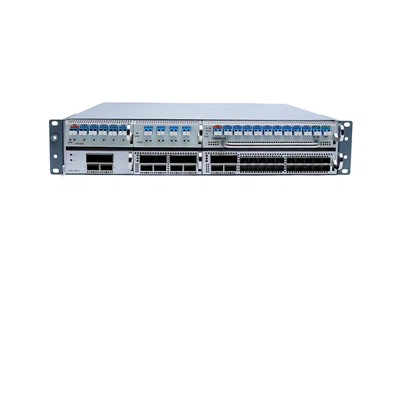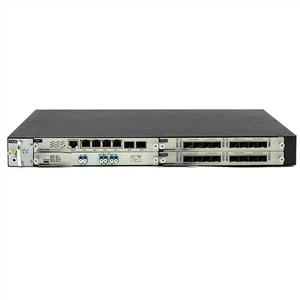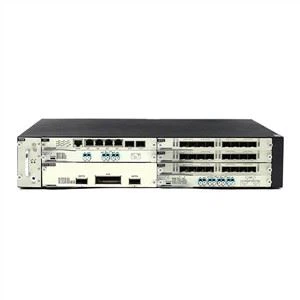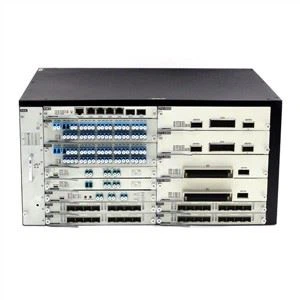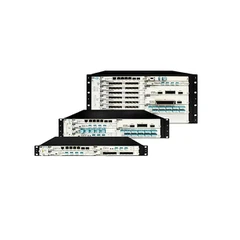
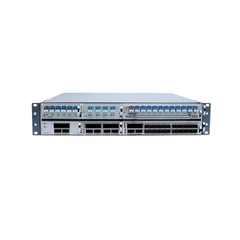

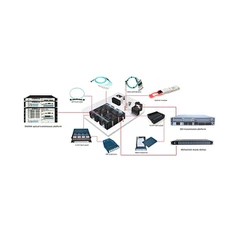


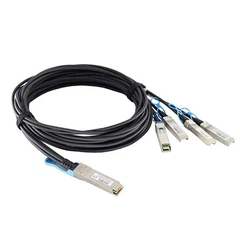
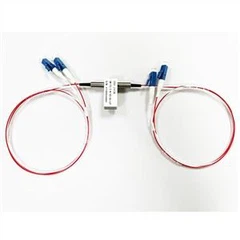
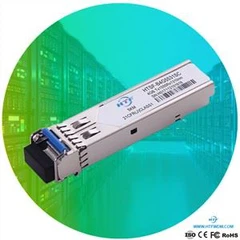


Optical fiber transceiver is a kind of Ethernet transmission media conversion unit which can exchange short-distance twisted pair electrical signal and long-distance optical signal. It is also called fiber converter in many places. The products are generally used in the actual network environment where the Ethernet cable cannot cover and optical fiber must be used to extend the transmission distance, and are usually located in the access layer application of broadband man; for example, the high-definition video image transmission of monitoring security engineering; at the same time, it also plays a huge role in helping to connect the last kilometer line of optical fiber to the man and the outer network.
Optical fiber transceivers are generally used in the actual network environment where Ethernet cable cannot cover and optical fiber must be used to extend the transmission distance. At the same time, they also play a huge role in helping to connect the last kilometer of optical fiber line to the metropolitan area network and the outer network. With optical fiber transceiver, it also provides a cheap solution for users who need to upgrade the system from copper wire to optical fiber and lack of funds, manpower or time. The function of optical fiber transceiver is to convert the electrical signal we want to send into optical signal and send it out. At the same time, it can convert the received optical signal into electrical signal and input it to our receiving end.
With the popularization of high-definition and intelligent video surveillance cameras, the requirements of video transmission signal quality, bit stream bandwidth and transmission distance are improved, and the existing copper cabling system is difficult to match. This paper will discuss a new wiring scheme, which uses optical fiber wiring and optical fiber transceiver, and can be used in CCTV and IP network video monitoring system.
Overview of video monitoring system
Nowadays, video monitoring network is becoming more and more popular, and there are many schemes to build video monitoring system, among which CCTV monitoring and IP camera monitoring are the most common schemes.
Closed circuit television monitoring system (CCTV)
In a typical CCTV monitoring system, a fixed analog video camera (CCTV) is connected to a storage device (such as VCR or DVR) via coaxial cable. If the camera belongs to PTZ camera (support horizontal rotation, tilt and zoom), an additional PTZ controller is needed.
IP network video monitoring system
In a typical IP network video monitoring network, IP cameras are connected to the LAN through unshielded twisted pair (i.e. category 5, super category 5 and other network jumpers) and switches. Different from the above analog cameras, IP cameras mainly send and receive IP datagrams through the network without sending them to storage devices. At the same time, the video captured by IP cameras is recorded on any PC or server in the network. The biggest characteristic of IP network video monitoring network is that each IP camera has its own independent IP address, which can quickly find itself in the whole video network. At the same time, because the IP address of IP cameras is addressable, they can be accessed all over the world.
The necessity of optical fiber transceiver in CCTV / IP network video monitoring system
The two video monitoring systems mentioned above can be used in commercial or residential network environment. Among them, the fixed analog cameras used in CCTV are generally connected by coaxial cable or unshielded twisted pair (more than three kinds of network cable), and IP cameras are generally connected by unshielded twisted pair (more than five kinds of network cable). Because both of the two schemes use copper cabling, the transmission distance and network bandwidth are not as good as optical fiber cabling. However, it is not easy to replace the current copper cabling with optical fiber cabling, and there are the following challenges:
The copper cable is usually fixed on the wall. If the optical fiber is used, the optical cable needs to be laid underground. However, it is impossible for the general users to complete the operation. Professionals should be invited to complete the laying, and the wiring cost is not low;
In addition, the traditional camera equipment is not equipped with optical fiber port.
In view of this, the use of optical fiber transceiver and analog camera / IP camera with optical fiber routing method has attracted the attention of network administrators. Among them, optical fiber transceiver realizes the connection between copper cable and optical fiber by converting the original electrical signal into optical signal. It has the following advantages:
It doesn't need to move or change the previous copper cable wiring. It only needs to realize the photoelectric conversion through different interfaces on the optical fiber transceiver, and connect the copper cable and the optical fiber, which can effectively save time and energy;
To provide a bridge between copper and fiber media, that is to say, the device can be used as a bridge between copper and fiber infrastructure.
Generally speaking, optical fiber transceivers provide an economic and effective way to extend the transmission distance of the existing network, the service life of non optical fiber devices and the transmission distance between two network devices.
How to use optical fiber transceiver in analog / IP network video monitoring system?
At present, there are many kinds of optical fiber transceivers on the market, such as non network management optical fiber transceivers, network management optical fiber transceivers, industrial optical fiber transceivers and Poe optical fiber transceivers. These optical fiber transceivers can realize the conversion of photoelectric signals, and Poe optical fiber transceivers can also supply power for POE equipment through network cable. The following are application examples of fiber optic transceivers and Poe fiber optic transceivers.
In fact, using optical fiber instead of coaxial cable and unshielded twisted pair can improve the video quality, network bandwidth and transmission distance of video monitoring system. Using optical fiber transceiver in CCTV / IP network video monitoring system can ensure high-quality image and extend the transmission distance of signal, which will save more manpower, time and cost to upgrade the network.