


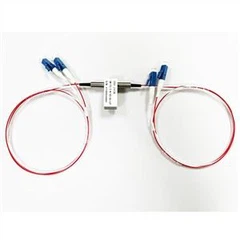
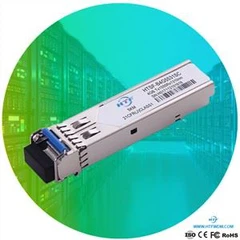


PON is the abbreviation of passive optical network, which means that the optical distribution network does not contain any electronic devices and electronic power supply. ODN is composed of passive components such as splitter, and does not need expensive active electronic equipment. A passive optical network consists of an optical line terminal (OLT) installed in the central control station and a batch of supporting optical network units (onus) installed at the user's site.
The optical distribution network (ODN) between OLT and ONU contains optical fiber and passive splitter or coupler. GPON (Gigabit capable PON) technology is the latest generation broadband passive optical integrated access standard based on ITU-TG. 984. X standard. It has many advantages, such as high bandwidth, high efficiency, large coverage, rich user interface and so on. It is regarded as an ideal technology for broadband and comprehensive transformation of access network services by most operators.
Structure of PON
The PON system structure is mainly composed of optical line terminal (OLT) in central office, optical distribution network (ODN) containing passive optical devices, and optical network unit / optical network terminal (ONU / ont) at user end. The difference is that ont is directly located at the user end, while there are other networks (such as Ethernet) and network element management system (EMS) between ONU and users. Usually, the tree topology structure of point to multipoint is adopted.
In the downlink direction, IP data, voice, video and other services are distributed to all ONU units on PON through the 1:n passive optical distributor in the ODN by the OLT in the central office. In the upstream direction, the multiple service information from each ONU is coupled to the same optical fiber through the 1:n passive optical combiner in the ODN, and finally sent to the OLT receiver at the office, which is similar to the point-to-point structure.
Characteristics of PON
The complexity of PON lies in the signal processing technology. In the downlink direction, the signal from the switch is broadcast to all users. In the upstream direction, each ONU must adopt some kind of multiple access protocol, such as time division multiple access (TDMA) protocol to complete the information access of shared transmission channel. At present, the main PON technologies used for broadband access are EPON and GPON.
Advantages of PON system
1. Relatively low cost, simple maintenance, easy to expand, easy to upgrade. PON structure does not need power supply and electronic components in the transmission, so it is easy to lay, basically does not need maintenance, and saves a lot of long-term operation and management costs
2. Passive optical network (PON) is a pure medium network, which can completely avoid electromagnetic interference and lightning impact, and is very suitable for use in areas with poor natural conditions.
3. PON system takes up little resources of the local office, has low initial investment, easy expansion and high return on investment
4. Provides very high bandwidth. EPON can provide 1.25gb/s bandwidth symmetrical up and down, and can be upgraded to 10Gb / s with the development of Ethernet technology. GPON has up to 2.5gb/s bandwidth.
5. The service range is large. As a point to multipoint network, PON uses a fan-shaped structure to save co resources and serve a large number of users. The way that users share office equipment and optical fiber can save user investment.
6. Bandwidth allocation is flexible and quality of service (QoS) is guaranteed. G / EPON system has a complete system for bandwidth allocation and guarantee. Can achieve user level SLA.
PON system adopts WDM (dense wavelength division multiplexing) technology to realize single fiber bidirectional transmission.

In order to separate the signals from multiple users on the same optical fiber, the following two multiplexing technologies are adopted:
The downlink data flow adopts broadcasting technology;
1.TDMA technology is adopted for uplink data flow.
2.Each PON port can achieve a maximum transmission speed of 1.25g in uplink and 2.5G in downlink
The basic components of PON system are as follows:
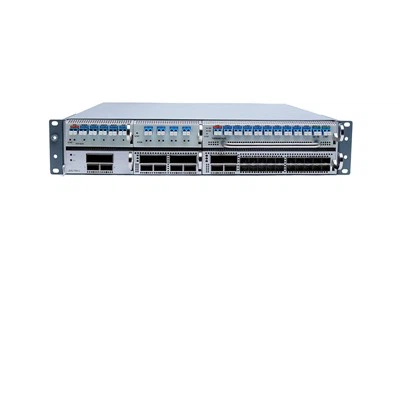
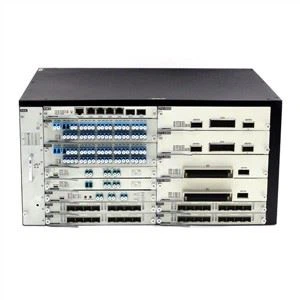
Optical line terminal (OLT) equipment at the office end
ODN refers to the optical distribution network used to connect the OLT equipment at the office and the ONU equipment at the remote end. The ODN only contains passive components or facilities
Optical network unit (ONU / ONT).
Optical line terminal (OLT)
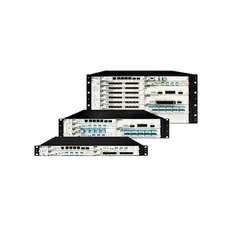
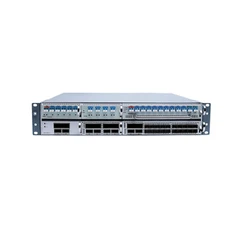
The function of optical line terminal (OLT) is to provide the optical interface between service network and ODN, and provide various means to transmit various services. OLT is composed of core layer, service layer and common layer. The service layer mainly provides service ports to support multiple services; the core layer provides cross connection, multiplexing and transmission; the public layer provides power supply, maintenance and management functions.
The existence of OLT can reduce the tight coupling between the upper layer service network and the access side equipment, such as the specific interface, bearing means, networking form and equipment management, and can provide a unified management interface of optical access network.
The core functions of OLT include aggregation distribution function and DN adaptation function.
OLT service interface functions include: service port function, service interface adaptation function, interface signaling processing, service interface protection.
The public functions of OLT mainly include OAM function and power supply function.
The main consumption of optical power from OLT is as follows:
1. Splitter: the more the number of shunt, the greater the loss.
2. Optical fiber: the longer the distance, the greater the loss.
3. ONU: the more the number of onus, the higher the OLT transmission power required. In order to ensure that the power of each ONU is higher than the receiving sensitivity and has a certain margin, the budget should be made according to the actual number and geographical distribution.
Optical network unit (ONU)
The optical network unit (ONU) is located between the ODN and the user equipment, providing the optical interface between the user and the ODN and the electrical interface with the user side, realizing the processing and maintenance management of various electrical signals. ONU is composed of core layer, service layer and public layer. Service layer mainly refers to user port; core layer provides multiplexing and optical interface; public layer provides power supply and maintenance management.
ODN is located between ONU and OLT, providing optical transmission means for OLT and ONU, completing the task of optical signal transmission and power distribution.
ODN usually has a tree branch structure, which mainly includes the following devices:
1. Local distribution facilities: optical distribution frame, etc
2. Optical distribution point facilities: optical distribution frame, optical junction box, optical junction box, optical splitter, optical junction box, etc
3. Optical user access point facilities: optical splitter, optical junction box, optical branch junction box, etc
4. User terminal facilities: user intelligent terminal box and optical fiber information panel
5. Other basic equipment: optical cable, optical fiber connector, pigtail, etc
Implementation of FTTH in PON
According to the different positions of optical fiber arriving at the user side, the application modes of broadband optical access network include the following modes, which are collectively referred to as FTTx, mainly including: fttn (fiber to the node), fttz (fiber to the zone), fttcab (fiber to the cabinet), FTTC (fiber to the curb), FTTB (fiber to the building), FTTP (fiber to the premise), FTTH (fiber to the cabinet) The Home)、FTTO(Fiber To The Office)。
Among them, FTTH, FTTB / C, fttcab are the most important applications. FTTH, FTTO and FTTP are the most ideal broadband optical fiber access mode
FTTH typical network structure
The typical network structure of FTTH is shown in the figure. According to the different business needs of users and the home wiring situation, the home network can adopt different home networking modes, either wired or wired + wireless AP access mode, which can conveniently and flexibly access voice, broadband data, IPTV, WLAN and other services.


If you need anything, you can contact HTF Zoey.
contact:support@htfuture.com
Skype:sales5_ 1909,WeChat:16635025029