




Fiber to the home, FTTH is a transmission method of optical fiber communication. FTTH refers to the installation of optical network unit (ONU) at home users or enterprise users. It is the optical access network application type closest to users except FTTD (fiber to desktop).
There are two main paths to the development of FTTH: active optical network and passive optical network.
Active optical network has the characteristics of long transmission distance, but the equipment is highly specialized, not suitable for user intensive areas, and the port price is relatively high. In addition, the active characteristics also make the equipment installation is greatly limited, and it is easy to be affected by electromagnetic interference in the surrounding environment, which increases the fault points of the network and leads to higher maintenance costs.
Passive optical network (PON) is a pure medium network, which has the ability of natural anti electromagnetic interference, reduces the failure points of access network, and has high system reliability and low maintenance cost. At the same time, the FTTH of passive optical network mode has good transparency, can support a variety of applications, and is more suitable for large-scale development of users. Passive optical network has gradually become the mainstream development direction of FTTH.
The physical layer of FTTH is optical fiber, and the use of optical network provides a good foundation for high bandwidth service transmission. But only the physical layer is not enough, to achieve information transmission, the more important is the two-layer control. Therefore, the development of FTTH has experienced a revolution on the two-layer network, from ATM to Ethernet, corresponding to APON and E / GPON respectively.
FTTH not only provides more bandwidth, but also enhances the transparency of data format, speed, wavelength and protocol, relaxes the requirements of environmental conditions and power supply, and simplifies the maintenance and installation.
FTTH has five advantages
1. It is a passive network, which can be basically passive from the office to the user;
2. Its bandwidth is relatively wide, and the long distance is just in line with the large-scale application mode of operators;
3. Since it is a service carried on optical fiber, there is no problem;
4. Because of its wide bandwidth, it supports more flexible protocols;
5. With the development of technology, more perfect functions have been developed including point-to-point, 1.25g and FTTH.
In the optical access family, there are FTTB (fiber to the building) fiber to the building, FTTC (fiber to the curb) fiber to the roadside, fttsa (fiber to the service area) fiber to the service area, etc.
Connecting optical fiber directly to user's home has no limitation on bandwidth, wavelength and transmission technology. It is suitable for introducing various new services. It is the most ideal service transparent network and the final way of access network development.
Although the development speed of mobile communication is amazing, due to the limited bandwidth, the terminal volume can not be too large, and the display screen is limited, people still pursue fixed terminals with relatively superior performance, that is, they hope to realize fiber to the home. The charm of fiber to the home is that it has a huge bandwidth. It is the best solution to solve the "last mile" bottleneck phenomenon from the Internet backbone to the user's desktop.
Description of FTTH solution based on PON system:
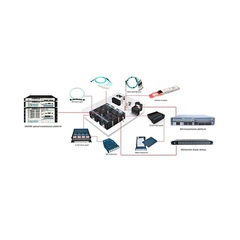
Office end (computer room) OLT is the core of the whole PON system. It provides high-speed interface for voice, data and other information access, and provides PON interface for passive optical distribution network downward. OLT is the control center of PON system, through which the network management system completes the operation, management and maintenance of PON system.
ONU provides users with data, network video and telephone service interfaces. Ethernet, gem and other protocols are used to realize the transparent transmission of user data by PON system.
The ODN network between OLT and ONU is a passive optical distribution network composed of optical splitter and optical fiber. Its function is to complete the distribution and aggregation of optical signals, so that the downlink data is distributed to each ONU terminal, and the uplink data is gathered to the OLT equipment. ODN network can adopt one-stage or two-stage splitting scheme according to the actual use environment.
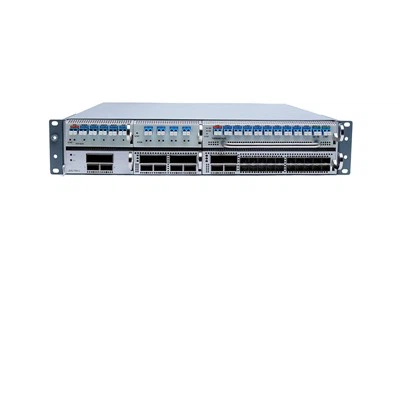
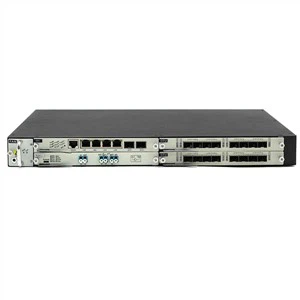
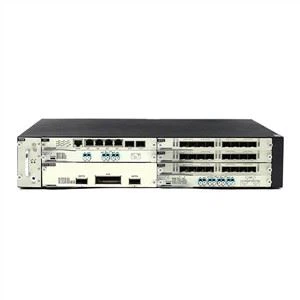
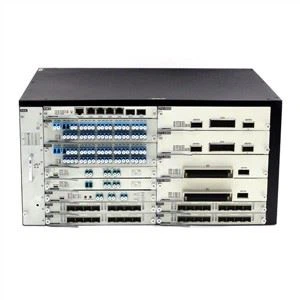
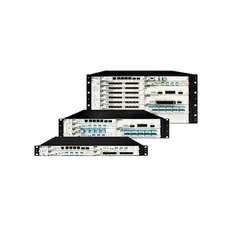
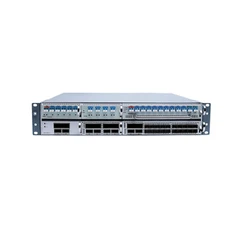
OLT products include box OLT, compact OLT, card OLT and field OLT products. Box type OLT and mini OLT series products are 1U high and support 19 inch standard rack installation. They are small and convenient, flexible to use, easy to deploy and high-performance, and meet the requirements of equipment performance and volume in compact computer room environment.
Mini OLT is more compact, which can meet the installation requirements of corridor or equipment box.
OLT is highly flexible and can be configured according to the requirements of different products.
Field type OLT adopts cast aluminum IP65 full waterproof shell, which can meet the use scenarios of pole, floor box or corridor.
The products are mainly for the construction of two-way network of radio and television networks and telecom operators, providing solutions for optical fiber access in the last kilometer and broadband access for key customers. At the same time, it is also applicable to the three in one application of network, voice and video integrated access of government, public security and large enterprises, as well as HD video monitoring system.


If you need anything, you can contact HTF Zoey.
contact:support@htfuture.com
Skype:sales5_ 1909,WeChat:16635025029